


.avif)



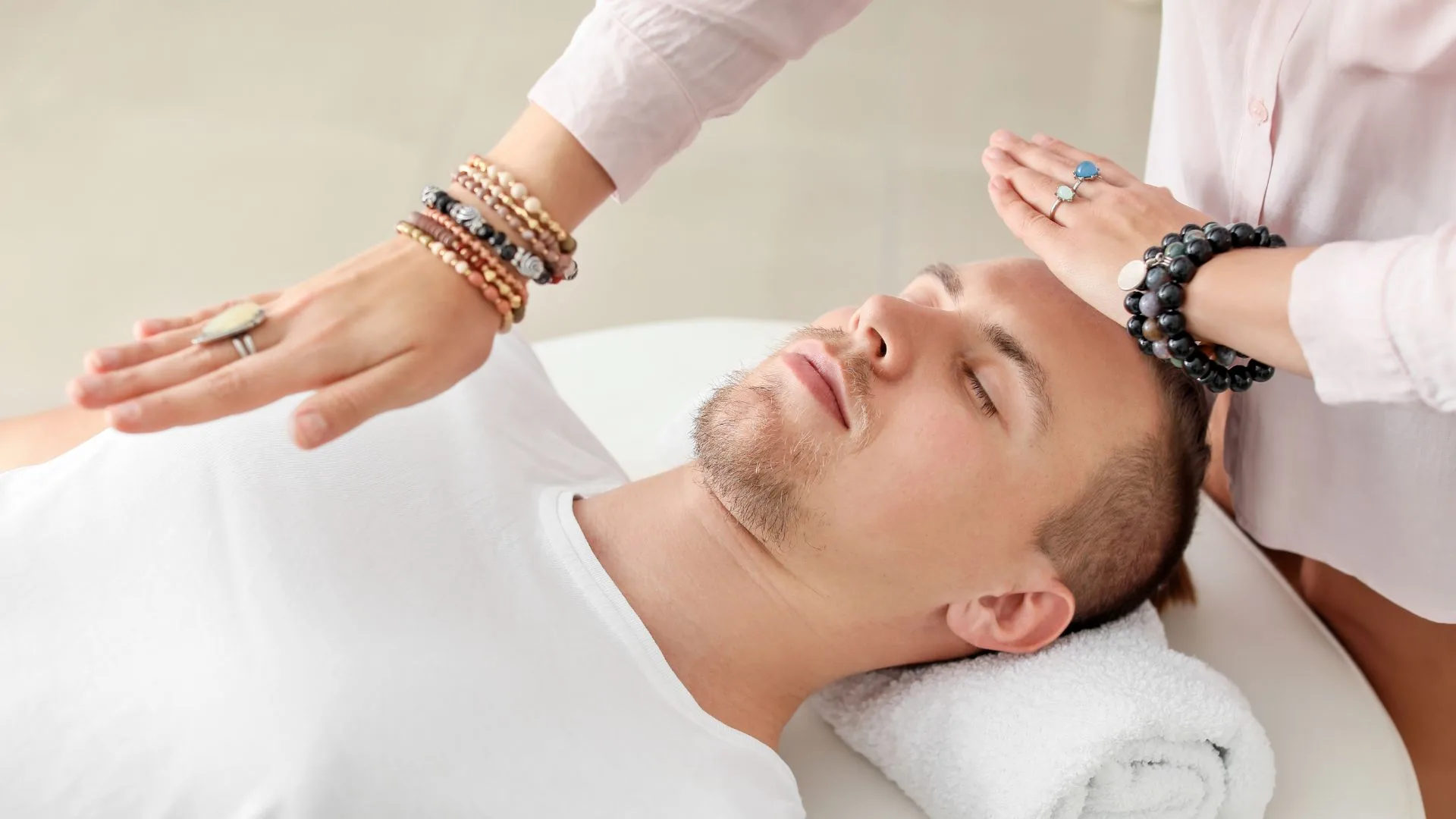
The benefits of Reiki healing are lower stress, reduced anxiety, improved mood, better sleep, and eased pain. Those are the outcomes that controlled research supports. Reiki does not treat, cure, or replace medical care for any disease, and any honest account of it has to say both things in the same breath.
Most articles on this subject pick one side. Some present Reiki as proven medicine. Others dismiss it as wishful thinking. The research picture is more specific than either, and more useful. Below we walk through what the evidence actually shows, what happens in your body during a session, what a session feels like, what to do afterward, and where Reiki fits alongside conventional care.
What Are the Benefits of Reiki Healing?
The benefits of Reiki healing cluster around how you feel rather than what a test can measure in your bloodwork. Research supports Reiki for reducing stress, easing anxiety and depressive symptoms, improving mood, supporting better sleep, lowering pain perception, and improving quality of life during difficult treatment. Those six outcomes are the honest list.
A 2024 systematic review of five studies in cancer patients, cited by Healthline, found Reiki sessions reduced fatigue, eased pain and stress, and improved participants' quality of life. No side effects appeared in any of the five studies. Quality of life is a soft-sounding measure, and for someone deep in treatment it is often the measure that matters most.
What is not on the list matters just as much. Reiki does not shrink tumors, correct blood pressure disorders, replace medication, or cure illness. Practitioners who claim otherwise are ahead of their evidence. We offer Reiki sessions as a way to help people feel calmer and more resourced, not as treatment for disease.
Does Reiki Healing Actually Work?
Reiki healing works for specific outcomes and does not work for others. That sounds evasive. It is actually the precise finding, and the reason it sounds evasive is that almost nobody explains how the studies were built.
The key design detail is sham Reiki. In a well-built trial, an untrained person who knows nothing about Reiki is taught to copy the hand positions of a trained practitioner. Participants cannot tell which one they received. That controls for expectation, which is the single biggest objection to this kind of research. If people improve simply because someone attentive spent an hour with them in a quiet room, both groups should improve equally.
A 2022 systematic review by Zadro and Stapleton, published in Frontiers in Psychology, pooled 14 randomized placebo-controlled trials built this way. The authors then rated the strength of the findings using GRADE (Grading of Recommendations, Assessment, Development and Evaluations), a standard system for scoring evidence quality. The GRADE rating came back high for clinically relevant stress and depression, and moderate to high for clinically relevant anxiety. Ratings for normal-range stress, burnout, and everyday low mood were weaker, sitting between low and moderate.
Now the other half. The National Center for Complementary and Integrative Health (NCCIH), the federal agency that studies these practices, states that Reiki has not been clearly shown to be effective for any health-related purpose, that much of the research is low quality, and that there is no scientific evidence supporting the existence of the energy field Reiki is traditionally described as working through. Cancer Research UK states there is no scientific evidence that Reiki can prevent, treat, or cure cancer or any other disease.
Some of the weaker research deserves that criticism. One frequently cited review of Reiki for pain covered only 212 participants in total and relied on people rating their own pain before and after. Self-reported scales are easy to influence.
Both positions are correct, and they are answering different questions. Reiki produces measurable improvements in how people feel, tested against a placebo that controls for attention and expectation. Reiki has no demonstrated mechanism and no ability to treat disease. Anyone telling you only one of those things is leaving out the half that inconveniences them.
What Does Reiki Do to Your Body?
Reiki shifts your body into a rested state, and several trials have measured that shift with instruments rather than questionnaires. Studies have recorded changes in blood pressure and pulse rate during Reiki sessions, along with improvements in oxygen saturation. These are small changes, and they point consistently in the direction of physiological calm.
A 2021 controlled trial published in Complementary Therapies in Medicine studied female caregivers of people with cancer. One group received Reiki. The other spent the same 45 minutes with a therapist placing hands at the same nine body points, without Reiki being given. The Reiki group reported lower stress and fewer physical complaints after six weeks, and researchers recorded a measurable relaxing effect on blood pressure and pulse rate.
Surgical settings show something similar. A 2023 controlled trial of 93 people awaiting open abdominal surgery found Reiki reduced fear, anxiety, and pain scores compared with both a placebo group and a control group. Oxygen saturation improved as well.
Those measurements describe a body that has stopped bracing. For anyone whose baseline is chronic tension, that shift is the whole point, and it is why Reiki sits comfortably within stress management rather than within disease treatment.
Does Reiki Reset the Nervous System?
Reiki does not reset the nervous system, and it does shift the balance of it. The plausible mechanism is activation of the parasympathetic nervous system, the branch that governs rest, digestion, and recovery, in place of the sympathetic branch that governs alertness and threat response. The word reset is a metaphor. Nothing switches off and reboots.
The parasympathetic shift explains most of what people describe. Heart rate settles. Breathing slows and deepens. Muscles that were quietly holding tension let go. Blood pressure and pulse changes recorded in the caregiver trial fit this pattern exactly.
Lying still for 50 minutes in a warm, quiet room with someone attending to you is itself a powerful parasympathetic trigger. Whether the effect comes from that setting, from the practitioner's hands, or from both together is the open question in this field. What the sham-controlled trials suggest is that the setting alone does not account for all of it.
Does Reiki Release Trapped Emotions?
Reiki does not release trapped emotions in a literal, physical sense, and people frequently report emotions surfacing during sessions. Trapped emotions is a practitioner model rather than a physiological finding, and the experience it describes is real and commonly reported. Being clear about that distinction protects you from anyone who promises more than they can deliver.
Emotional surfacing has a plainer explanation. When your nervous system drops out of alert mode, feelings you were holding at arm's length have room to arrive. Most people spend their days with enough stimulation to keep that from happening. An hour of stillness removes the distraction.
A 2021 systematic review of 11 studies spanning 30 years of research found Reiki consistently associated with reduced symptoms of depression, anxiety, and stress. Emotional movement during a session is part of how those changes tend to show up. Clients drawn to this territory sometimes also explore Emotion Code, which works with emotional patterns through a different framework.
Why Do People Cry During a Reiki Session?
People cry during a Reiki session because deep relaxation lowers the guard they usually keep up. Crying during Reiki is common, harmless, and not a sign that anything has gone wrong. Practitioners see it regularly and are trained to hold space for it without making it into an event.
Tears in this setting are rarely about sadness. People describe them as release, or relief, or simply the body letting go of something it had been carrying without noticing. Some cry without being able to name a reason at all. That is a normal report.
Across the 14 placebo-controlled trials in the 2022 Frontiers in Psychology review, no adverse effects were reported. Emotional responses during sessions do not appear in the research as harms. They appear as part of the experience.
If tears do arrive, there is nothing you need to do about them. Let them happen, then give yourself some quiet afterward. This is one of the more common reasons people find Reiki useful for their emotional wellbeing.
How Can You Tell If Reiki Is Working?
You can tell Reiki is working by how you feel during and after the session rather than by any sensation during it. Common sensations include warmth, tingling, heaviness, a floating feeling, and deep calm, and feeling nothing at all during a session is also a normal outcome. That last point gets left out of most descriptions, and leaving it out sets people up to think they failed at lying down.
Sensation and benefit are not the same thing. Some people report vivid warmth and notice no change afterward. Others feel nothing on the table and sleep better for three nights. The useful measures are downstream: mood, sleep, tension, and how you handle the next stressful thing.
A 2024 controlled trial of 42 people with knee osteoarthritis measured this well. Participants who received Reiki reported lower pain and higher wellbeing scores than the control group, with wellbeing assessed across sadness, cognitive awareness, and general mood. The gains showed up in daily experience, not in what people felt during the appointment.
Give it a few days before deciding. Judging a session in the parking lot is judging it too early.
What Happens If You Fall Asleep During Reiki?
If you fall asleep during Reiki, nothing is lost and the session continues normally. Falling asleep is one of the most common things that happens during a Reiki session, and practitioners generally read it as a sign the body reached the rested state it needed. Your practitioner will simply carry on and let you know gently when the session is finished.
Sleep is the natural endpoint of parasympathetic activation. Getting there in a treatment room usually means you arrived tired and your body took the opening.
Sleep quality is one of the better-studied outcomes here. A 2024 controlled trial of 87 people with cancer who were experiencing insomnia as a side effect of hormone therapy found that four weeks of Reiki significantly improved sleep quality.
What Happens After a Reiki Session?
After a Reiki session, most people feel calm, slowed down, and a little dreamy for the rest of the day. The most commonly reported after-effects are deep relaxation, tiredness, thirst, emotional lightness, and unusually good sleep that night. Reactions vary widely, and none of these are cause for concern.
Commonly reported after-effects include:
- Deep calm that lingers for several hours
- Tiredness or heaviness, particularly after a first session
- Thirst, which most practitioners expect and plan for
- Emotional lightness or a sense of having set something down
- Better sleep on the night of the session
- Mild grogginess for the first twenty minutes or so
A 2024 systematic review of five studies in cancer patients reported reduced fatigue and improved quality of life following Reiki, with no side effects across any of the five. Whatever you feel afterward, the research record suggests it is unlikely to be unpleasant. Booking a Reiki session at the end of a workday rather than in the middle of one lets you use the calm instead of fighting it.
What Should You Avoid After a Reiki Session?
You should avoid strong caffeine, alcohol, and a packed schedule after a Reiki session. Cancer Research UK advises resting, drinking plenty of water, and steering clear of strong caffeine-based drinks such as coffee following a session. Those three habits protect the state you just spent an hour reaching.
A simple sequence for the hours afterward:
- Sit up slowly and stay seated for a minute or two before standing.
- Drink water before you leave, and keep sipping through the afternoon.
- Skip coffee and energy drinks for the next few hours.
- Leave the evening loose rather than scheduling something demanding.
- Go to bed a little earlier than usual if you feel tired.
Thirst afterward is common enough that most practitioners mention it before you get off the table, and staying hydrated is sensible aftercare for any therapy that leaves you deeply relaxed. Alcohol works against the calm and tends to flatten the benefit by evening.
How Long Do the Effects of Reiki Last?
The effects of Reiki last from a few hours to a few days after a single session. A first session commonly produces calm lasting the rest of that day and better sleep that night, while benefits from a course of sessions build and hold for longer. Duration varies more between people than almost anything else about this practice.
The research points clearly toward accumulation rather than one-off effect. A 2021 study of breast cancer patients undergoing chemotherapy found participants reported less fatigue and better quality of life after six sessions compared with a control group. A separate controlled study of 180 cancer patients receiving three weekly sessions over seven months found sustained reductions in pain and fatigue.
Single sessions are worth having, and they behave like a good night's rest rather than like a course of treatment. Repeated sessions are where the durable changes show up, particularly for people using Reiki as sleep support or for ongoing stress.
How Many Reiki Sessions Do You Need?
Most people need three sessions in fairly close succession before judging whether Reiki suits them. Cancer Research UK reports that many practitioners recommend three sessions within a short space of time, followed by a break before deciding on more. That is a reasonable trial, and it costs you less than committing to a long course upfront.
Research protocols run longer than three sessions, which is worth knowing when you read study results:
ProtocolPopulationReported Outcome3 sessions, short intervalGeneral practitioner guidanceEnough to assess personal response45 minutes weekly, 6 weeksCaregivers of cancer patientsLower stress, fewer physical complaints, measurable blood pressure and pulse effects6 sessionsBreast cancer patients in chemotherapyLess fatigue, better quality of life versus control4 weeks87 people with hormone-therapy insomniaSignificant improvement in sleep quality3 weekly sessions, 7 months180 cancer patientsReduced pain and fatigue versus control and versus guided imagery
Sources: Cancer Research UK; Özcan Yüce & Taşcı, Complementary Therapies in Medicine, 2021; Cancer Nursing, 2021; 2024 controlled trial reported in Journal of Clinical Oncology abstracts; 2021 controlled study of Reiki and guided imagery.
Our own sessions run 50 minutes, with clients fully clothed on a treatment table. People often pair Reiki with massage therapy on alternating weeks rather than choosing between them.
Is Reiki Safe?
Reiki is safe for almost everyone. No adverse effects were reported across the 14 randomized placebo-controlled trials in the 2022 Frontiers in Psychology review, and the NCCIH states that Reiki has not been shown to have any harmful effects. A 2024 review of five cancer studies likewise reported no side effects in any of them.
Nothing is inserted, ingested, or manipulated. You stay clothed. Some practitioners never make physical contact at all. That combination puts the physical risk close to zero, which is unusual among therapies of any kind, and it is why Reiki appears in hospices and hospital integrative programs for people who are too fragile for much else.
The one caution that matters has nothing to do with the session itself. Choosing Reiki instead of appropriate medical evaluation is the real risk. A symptom that needs investigation needs investigation, and an hour of deep calm will not change that. Reiki belongs alongside pain management and other clinical care, never instead of it.
Practitioner training is worth asking about. Reiki has three recognized levels, where Level 1 covers self-practice, Level 2 is the practitioner level required to treat others, and Level 3 denotes a Reiki master or teacher. Anyone treating you should hold at least Level 2.
How Does Reiki Fit Alongside Medical Care?
Reiki fits alongside medical care as a complementary therapy, which means in addition to conventional treatment rather than in place of it. Reiki cannot prevent, treat, or cure cancer or any other disease, and using it as a substitute for evidence-based care is the one way it becomes dangerous. Every serious source on this subject says the same thing, and we say it too.
Within that boundary, medicine has been reasonably receptive. Memorial Sloan Kettering began offering Reiki to patients undergoing chemotherapy and radiation in 1998. An American Hospital Association survey found roughly 15 percent of US hospitals, more than 800 of them, offered Reiki as part of patient services. A 2012 survey found over 55 percent of US integrative medicine clinics used healing touch or Reiki.
Hospitals are not offering it as a cure. They are offering it because people in treatment are frightened, exhausted, and in pain, and an hour of structured calm helps with all three. That is also how we frame it for anyone exploring cancer treatment support options while under the care of an oncology team.
Tell your doctor about any complementary therapy you use. Not because Reiki interacts with anything, but because your care team works better with the full picture.
What Therapies Pair Well With Reiki?
Reiki pairs well with other calm, non-invasive therapies that work on stress and rest. The natural pairings are therapies that deepen the same parasympathetic state rather than ones that stimulate or challenge the body. Stacking a Reiki session with something demanding tends to waste both.
Reiki was developed by Mikao Usui in Japan in the early 20th century, and the name comes from two Japanese words: rei, meaning universal, and ki, meaning life energy. It has always been practiced as one part of a broader approach to wellbeing rather than as a standalone fix.
Many of our members book Reiki alongside time in the EESystem, since both are passive, both are done lying still, and both leave people in a similar state afterward. Salt room sessions work the same way.
At our Bedford Hills center we see people combine two or three modalities in a single visit fairly often. Doing that works best when you leave the rest of the day loose. Whichever combination you land on, energy healing tends to serve people better as a regular habit than as an occasional rescue.
Frequently Asked Questions
Does Reiki Help With Anger?
Reiki may help with anger indirectly by lowering the overall stress load that makes anger easier to trigger. Research supports Reiki for stress and mood rather than for anger specifically. One controlled study in children with cerebral palsy did report reduced anger alongside reduced pain and stress. Persistent anger that affects your relationships or work deserves attention from a mental health professional.
Can a Reiki Master Feel Your Energy?
Reiki masters describe feeling differences in temperature, density, or resistance as they move their hands over the body. Whether that corresponds to an energy field is not something science has been able to confirm, and the NCCIH states there is no scientific evidence supporting the existence of such a field. What practitioners are perceiving remains an open question rather than a settled one.
Do You Have to Believe in Reiki for It to Work?
You do not have to believe in Reiki for it to work. The strongest evidence comes from randomized placebo-controlled trials in which participants did not know whether they were receiving real or sham Reiki, and the real-Reiki groups still showed greater improvement. Skepticism is a reasonable position to arrive with.
Can Reiki Be Done Remotely?
Reiki can be done remotely according to practitioners, who describe sending Reiki over a distance to someone in their own home. Remote sessions were excluded from the 2022 systematic review of placebo-controlled trials, so the evidence base for distant Reiki is considerably thinner than for hands-on sessions. In-person work is the better-studied option.
Is Reiki Safe During Pregnancy?
Reiki is generally considered safe during pregnancy, and many pregnant people use it for relaxation and stress relief. Nothing is ingested, inserted, or manipulated, which keeps physical risk minimal. Always check with your obstetric provider before starting any new therapy while pregnant.
Is Reiki Safe for Children?
Reiki is safe for children, and existing evidence indicates no risk to physical or mental health in this group. Sessions for children are typically shorter than adult sessions. Reiki should support rather than replace pediatric care, and any ongoing symptom in a child needs a doctor's assessment first.
Does Reiki Help You Sleep?
Reiki helps some people sleep better, and sleep is among the better-supported outcomes in the research. A 2024 controlled trial of 87 people with treatment-related insomnia found four weeks of Reiki significantly improved sleep quality. Separate 2024 studies in people with epilepsy and with multiple sclerosis reported similar improvements.
Putting It All Together
Reiki healing earns its place for stress, anxiety, mood, sleep, and pain perception. Placebo-controlled trials using sham Reiki back those outcomes, and the safety record across that research is close to spotless. What Reiki does not do is treat disease, and no amount of enthusiasm changes that. Holding both facts at once is what lets you use it well.
If you are considering it, three sessions in reasonably close succession will tell you more than reading another article will. Notice how you sleep, how you handle the next stressful week, and whether the calm holds past the drive home. Some people find it becomes a fixture of how they take care of themselves. Others feel very little and move on, which is a perfectly good outcome to arrive at honestly.
We are always glad to talk it through before you commit to anything, including whether Reiki is the right starting point for what you are dealing with. Our center is at 7-9 Norm Ave in Bedford Hills, NY. Dr. Michelle Adams and our team can answer questions or help you book a session whenever you are ready.
The whole approach at Quantum Healing & Wellness rests on giving people accurate information and letting them decide for themselves.
Disclaimer: This information is for informational and educational purposes only and is not intended to replace or substitute the advice and/or services of a physician or other health care professional. It is not our intention to prescribe or make specific health claims for any of our technologies or products. Any attempt to diagnose and treat illness should come under the direction and supervision of your health care practitioner.
Read our recent Blogs
Quantum Healing and Wellness PMA in Westchester NY is commited to wellness conent for you








.avif)
.png)
.png)