


.avif)



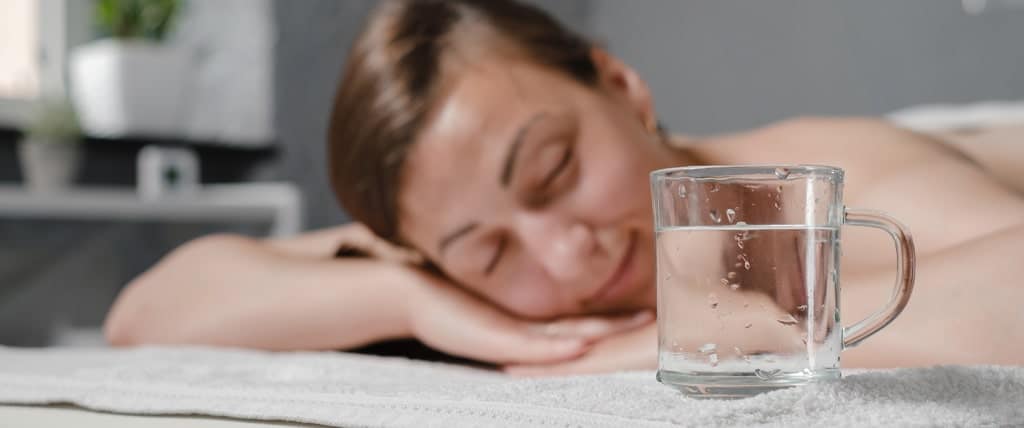
Yes, you should drink water after a massage, and the reason is simpler than the one most people are given. Water supports normal hydration, and normal hydration keeps soft tissue pliable, recovery comfortable, and next-day soreness milder. What water does not do is flush toxins out of your muscles, because massage does not release toxins into your bloodstream in the first place.
That gap between the advice and the explanation confuses a lot of people. Below we walk through what actually changes in your body during a session, how much water your body genuinely needs, when to drink it, when to stop, and which parts of standard massage aftercare hold up under research.
Should You Drink Water After a Massage?
You should drink water after a massage, though the benefit comes from staying normally hydrated rather than from the massage itself. Two separate claims usually travel together in this advice. The first claim is that hydration matters for muscle and connective tissue. That claim holds up well. The second claim is that a massage creates a special fluid debt you have to repay. That claim does not hold up at all.
Separating the two changes what you do afterward. Hydration matters for massage the same way it matters for sleep, training, and recovery, as a daily baseline rather than a single glass of water at the end of a session. A daily baseline protects tissue quality across every appointment you book, not just the one you finished twenty minutes ago.
Tissue quality is exactly what people are paying attention to. The American Massage Therapy Association (AMTA) reported in its July 2025 consumer survey that 91 percent of surveyed adults view massage as beneficial to overall health, and that consumers averaged 2.7 sessions in the previous twelve months. People booking massage therapy several times a year have a real stake in getting the aftercare right.
Why Do Massage Therapists Tell You to Drink Water After a Massage?
Massage therapists tell you to drink water after a massage because the advice has been standard aftercare guidance in the profession for decades. Standard guidance tends to outlive the reasoning behind it. The reasoning offered most often involves a sponge model of muscle, where a dry muscle is stiff and rigid, a hydrated muscle is supple, and pressure squeezes stored fluid and waste out into circulation.
The sponge model is easy to picture, which is part of why it spread. Picturing something is not the same as measuring it. Much of this guidance took shape before massage training routinely included detailed anatomy and physiology coursework, when practitioners relied largely on what their hands reported. What the hands report is real information about tension and texture, and it is also information that varies enormously from one person to the next.
A second influence came from sport. Aggressive hydration messaging dominated endurance racing through the 1980s and 1990s, and that messaging spread into adjacent recovery fields including manual therapy. Manual therapy inherited the language without inheriting the underlying physiology, and the language stuck.
Does Massage Release Toxins That Water Flushes Out?
No, massage does not release toxins that water flushes out. Your liver, kidneys, and lymphatic system process metabolic waste continuously, and massage does not trigger a sudden release that requires extra fluid to clear. A comprehensive review of massage mechanisms by Weerapong, Hume, and Kolt, published in Sports Medicine, examined the physiological effects of massage on performance and recovery and identified no toxin-clearance pathway.
Lactic acid gets blamed most often, and lactic acid is the clearest case. Research by Hall and colleagues in PM&R found that lactate clears from muscle within 30 to 60 minutes after exercise, which is well before most people arrive for a session. Lactate also does not cause the soreness people attribute to it. A review by Cheung, Hume, and Maxwell in Sports Medicine concluded that lactic acid is not the mechanism behind delayed onset muscle soreness (DOMS).
None of this makes the water pointless. It relocates the benefit. Water helps because your body runs better hydrated, not because a massage dug something out of your tissue that needs rinsing. Our companion piece on skipping hydration covers what people actually report feeling when they forget.
What Chemical Is Released After a Massage?
The chemicals that change after a massage are cortisol, serotonin, and dopamine. Cortisol is the primary stress hormone, and it falls. Serotonin and dopamine are activating neurotransmitters, and they rise. A research review by Field and colleagues in the International Journal of Neuroscience pooled studies measuring these markers in saliva and urine and found cortisol decreased by an average of 31 percent, serotonin increased by an average of 28 percent, and dopamine increased by an average of 31 percent following massage therapy.
Those neurotransmitter shifts explain a great deal of what people describe after a session. Lowered cortisol tracks with the calm, heavy, unhurried feeling that follows good bodywork. Raised serotonin and dopamine track with the lift in mood that many people notice by the evening.
Inflammatory and growth markers move as well. Stenbäck and colleagues, publishing in the International Journal of Molecular Sciences, measured circulating interleukin-6 and insulin-like growth factor 1 after a single Swedish massage session and recorded measurable changes in both. Skubisz and colleagues, writing in BioMed Research International, found classical massage influenced markers of oxidative stress.
Every one of these changes is a signalling change. Signalling changes cost your body no meaningful fluid, which is why none of them create a hydration requirement. They do explain why massage helps with the stress response in ways that go well beyond feeling relaxed for an hour.
Does a Massage Dehydrate You?
A massage does not dehydrate you in any measurable way. Muscle is not a sponge that can be wrung out by hand pressure, and manual manipulation does not extract water from muscle tissue. Water accounts for roughly 60 percent of adult body weight, as documented by Jéquier and Constant in the European Journal of Clinical Nutrition, and that fluid sits in a tightly regulated system that a pair of hands cannot meaningfully drain.
Fluid loss during a session does happen, and it comes from ordinary sources. Warm treatment rooms cause light sweating. Heated tables and hot towels add a little more. An hour on a warm table in a warm room might cost you a small amount of fluid, similar to an hour spent anywhere else warm. That is the honest scale of it.
Feeling thirsty afterward is also common, and thirst is not proof of depletion. A warm room, a long stretch of quiet breathing, and a shift out of a busy day all make people notice thirst they were already carrying. People who arrive at appointments carrying chronic muscle tension often arrive underhydrated as well, and the session simply makes them notice.
How Does Dehydration Affect Your Muscles and Soft Tissue?
Dehydration makes your muscles and soft tissue stiffer, weaker, and harder to work on. This is where hydration genuinely earns its place in the conversation. A meta-analysis by Savoie and colleagues in Sports Medicine found that a fluid deficit of 3 percent of body mass reduced muscle endurance by roughly 8 percent and reduced strength by roughly 5 percent. Those are meaningful decrements from a deficit most people would not describe as feeling dehydrated.
Tissue mechanics change too, and they change in ways a therapist can feel. Khorami and colleagues, publishing in PLoS One, measured hip soft tissue under hydrated and dehydrated conditions and found that dehydration increased the force required to compress soft tissue and reduced tissue thickness. Dehydrated tissue is literally harder to press into.
Recovery capacity drops as well. Luk and colleagues, writing in The Journal of Physiology, found that passive dehydration increased oxidative stress and altered mTOR signalling after resistance exercise in young men. Higher oxidative stress and disrupted signalling mean slower repair, which is the opposite of what anyone books therapeutic massage hoping to achieve.
Notice the direction all of this points. Every one of these effects describes the state of your tissue before and during the work, not after it.
Should You Drink Water Before a Massage?
You should drink water before a massage, and this habit matters more than the glass you drink afterward. Hydration determines the condition of the tissue your therapist works on. Well-hydrated tissue compresses more easily, tolerates pressure better, and responds to the session more comfortably. Dehydrated tissue resists.
Timing is forgiving here. Steady intake across the day before your appointment does far more than a large glass in the parking lot, because your body absorbs and distributes fluid over hours rather than minutes. A morning that includes normal fluid with breakfast and lunch sets up an afternoon session well.
Broader recovery follows the same logic. López-Torres and colleagues, in a systematic review and meta-analysis published in Nutrients, found hydration status affected glycogen restoration and recovery outcomes after exercise. Recovery works best when hydration is already in place, not when it is being corrected afterward.
How Much Water Should You Drink After a Massage?
You should drink 8 to 16 ounces of water within an hour after a massage. That amount replaces light fluid loss from a warm room comfortably and without excess. Beyond that single glass, the target that actually matters is your daily total, not your post-session total.
The National Academies of Sciences, Engineering, and Medicine (NASEM) set adequate total water intake at approximately 3.7 liters per day for men and 2.7 liters per day for women. Those figures include water from all sources. The Institute of Medicine estimated that food supplies roughly 19 percent of total water intake in United States survey data, which means the amount you need to actually drink runs meaningfully below the headline number.
Body size is a useful adjustment. Perrier and colleagues, in a narrative review published in the European Journal of Nutrition, described a target of 40 to 45 milliliters per kilogram of body weight per day from all beverages and food combined. Anyone wanting help translating general targets into a practical daily pattern can raise it during nutritional counseling.
Common ClaimWhat Research SupportsWhat To Actually DoMassage releases toxins that water flushes outNo toxin-clearance pathway identified in massage mechanism researchDrink for normal hydration, not for flushingWater clears lactic acid after a sessionLactate clears in 30 to 60 minutes post-exercise and does not cause DOMSIgnore lactic acid entirely as a reasonMassage dehydrates your musclesBody water is tightly regulated at roughly 60 percent of body weightReplace only what a warm room costs youHydration has no real effect on massage3 percent fluid deficit cuts endurance ~8 percent and strength ~5 percent; dehydrated tissue resists compressionHydrate consistently, especially beforehandMore water after a massage is always betterExcess plain water dilutes sodium and carries its own risk8 to 16 ounces, then return to normal intake
Sources: Weerapong, Hume & Kolt, Sports Medicine; Hall et al., PM&R; Cheung, Hume & Maxwell, Sports Medicine; Jéquier & Constant, European Journal of Clinical Nutrition; Savoie et al., Sports Medicine; Khorami et al., PLoS One; National Academies of Sciences, Engineering, and Medicine.
How Soon After a Massage Should You Drink Water?
You should drink water within the first hour after a massage. Sipping steadily across that hour works better than drinking a large volume at once, because your body absorbs fluid gradually and passes the excess through instead of using it. There is no window that closes, and nothing goes wrong if you get to it later.
A simple sequence keeps it practical:
- Sit up slowly and stay seated on the table edge for a minute before standing.
- Drink 8 to 16 ounces of water across the first hour, in sips rather than in one go.
- Return to your normal fluid pattern for the rest of the day.
- Have a glass of water with your evening meal.
- Check urine color the next morning, where pale yellow indicates adequate hydration.
Harder sessions shift the numbers slightly upward. The Team Physician Consensus Statement published in Medicine and Science in Sports and Exercise recommends replacing roughly 1.5 times the fluid lost during exertion, which is a useful benchmark, if your appointment followed a hard training session.
Can You Drink Too Much Water After a Massage?
Yes, you can drink too much water after a massage. Drinking large volumes of plain water in a short period dilutes blood sodium, a condition called hyponatremia, and the instinct to chug water afterward pushes in exactly that direction. The condition is uncommon in everyday circumstances and it is worth knowing about, because the advice people hear rarely includes an upper limit.
The same Team Physician Consensus Statement that sets replacement targets also cautions against overdrinking plain water during prolonged activity, for this reason. Fluid balance depends on sodium and other electrolytes alongside water, and flooding the system with plain water alone disturbs that balance rather than supporting it.
Practically, this means a glass or two afterward, then normal drinking. Nobody needs to work through a large bottle to make a session count.
What Can Happen If You Don't Drink Water After a Massage?
If you do not drink water after a massage, you may notice a mild headache, extra tiredness, or slightly more soreness the next day. These effects are usually mild and short-lived. A cross-sectional study of 100 clients by Cambron and colleagues, published in the Journal of Alternative and Complementary Medicine, found that 10 percent of massage clients reported some minor discomfort afterward, with headache and bruising each reported by 1.1 percent, and most symptoms resolving within 36 hours.
The same study recorded something people rarely hear about. Twenty-three percent of clients reported unexpected positive effects unrelated to aches and pains, which means the most common outcome by a wide margin was simply feeling fine or feeling better. Serious problems remain rare, and a safety review by Ernst in Rheumatology, examining reported adverse events across the massage literature, found significant injuries uncommon.
Dehydration does not cause post-massage soreness. Soreness after firm work is a normal tissue response, comparable to how muscles respond after unfamiliar exercise, and it involves inflammation rather than fluid loss. What dehydration does is make that response feel worse and last a little longer.
Knowing the difference helps you interpret your own body honestly. A fuller picture of what to expect appears in our post on the side effects people report after bodywork.
What Are the Don'ts After a Massage?
The don'ts after a massage are heavy alcohol, hard training, very hot showers, large meals, and rushing straight back into a demanding day. Each of these works against the recovery window your session just opened, and avoiding them does more for how you feel tomorrow than any amount of extra water.
- Heavy alcohol. Alcohol increases fluid loss and tends to sharpen next-day soreness.
- Intense exercise. Give your tissue at least 24 hours before hard training. Walking and gentle stretching are fine.
- Very hot showers. Lukewarm is kinder to skin that has just been worked and oiled.
- Large heavy meals. Something light sits better while your system is still in a slowed, restful state.
- Rushing. Twenty unhurried minutes protects the drop in cortisol you just paid for.
Soreness is the reason most people book in the first place, which makes the training pause worth taking seriously. AMTA industry data shows soreness, stiffness, or spasm prompted 49 percent of massages, with chronic pain relief accounting for 42 percent. Loading tissue hard on the same day undercuts the reason you came in.
What Happens If You Don't Shower After a Massage?
If you do not shower after a massage, nothing harmful happens. Massage oils and lotions absorb into your skin over the following hour or two, and leaving them there is the more common choice among regular clients. Ernst's safety review in Rheumatology catalogued the adverse events reported across the massage literature, and skin problems tied to residual oil do not appear among them.
Waiting an hour or two gives the product time to absorb. Showering immediately washes off most of it, which is fine if you prefer the clean feeling and simply means the moisturizing benefit is smaller.
Water temperature is the part worth thinking about. Very hot water on freshly worked skin can leave you feeling more drained than relaxed, so lukewarm is the better setting whenever you do shower.
Should You Drink More Water If You Combine Massage With Heat Therapy?
Yes, you should drink more water if you combine massage with heat therapy. This is the one situation where the standard advice becomes literally accurate. Sauna, steam, and other heat-based sessions produce real, measurable sweat loss, and sweat loss is a genuine fluid deficit that needs replacing.
The distinction matters because the mechanism is completely different. Manual pressure does not remove fluid from your body. Sweating does. Anyone pairing bodywork with an infrared sauna on the same visit should plan on additional fluid, ideally with some electrolytes if the heat session ran long.
Dry-air environments deserve the same attention. Time spent in salt room therapy is far gentler than sauna heat, and it still involves breathing dry, conditioned air for an extended stretch, which adds modest respiratory fluid loss.
We see this pattern often at our Bedford Hills center, where clients frequently stack two or three modalities into a single visit. Stacking treatments is a reasonable way to use an appointment, and it does change the hydration math from optional to worth planning.
Does the Type of Massage Change How Much Water You Need?
The type of massage does not change how much water you need. Firmer work produces more soreness, not more fluid loss, so the hydration guidance stays the same across every modality. That single rule brings the heat therapy exception back into line, because what raised the requirement there was the sweating, not the bodywork.
Firm sessions still deserve attention for a different reason. Deep tissue massage reaches denser layers and produces more next-day tenderness than lighter work, and good hydration keeps that tenderness milder without shortening it.
Lighter modalities follow the same principle. Swedish work, prenatal work, and Thai yoga stretching all leave fluid balance essentially untouched. Techniques that support lymphatic flow are sometimes singled out as requiring extra water, and the underlying claim rests on the same toxin model that the evidence does not support.
One consistent daily habit covers all of it. Clients who hydrate steadily across the week get more out of their massage sessions than clients who drink nothing for six days and then a large bottle on appointment day.
Frequently Asked Questions
Why Do You Feel Tired After a Massage?
You feel tired after a massage because your nervous system shifts into a rested state and your stress hormones drop. Field and colleagues found cortisol decreased by an average of 31 percent following massage therapy. Lower cortisol combined with an hour of stillness produces a heavy, sleepy feeling that usually lifts within a few hours.
Is It Normal to Be Sore After a Massage?
Yes, it is normal to be sore after a massage, particularly after firm or deep work. Cambron and colleagues found 10 percent of massage clients reported minor discomfort afterward, with most symptoms resolving within 36 hours. The sensation resembles the soreness that follows unfamiliar exercise. Soreness lasting beyond a few days is worth mentioning to your therapist.
Can You Drink Coffee After a Massage?
You can drink coffee after a massage, though water is the better first choice. Caffeine has a mild diuretic effect and it counts toward daily fluid intake despite that. Having water first and coffee afterward covers both. The larger consideration is that caffeine works against the calm state a session just produced.
How Long Do the Effects of a Massage Last?
The effects of a massage last from several hours to several days depending on what you are measuring. Biochemical changes including reduced cortisol and increased serotonin appear immediately and fade within hours. Relief from muscular tension commonly persists for days. Regular sessions produce longer-lasting results than isolated appointments.
Should You Drink Water After a Lymphatic Drainage Massage?
You should drink water after a lymphatic drainage massage for the same reason you would on any other day, which is normal hydration. The claim that lymphatic techniques demand extra fluid rests on the toxin-flush model, and research on massage mechanisms has not identified a toxin-clearance pathway. Your lymphatic system operates continuously regardless of how much water you drink in a given hour.
What Should You Do Immediately After a Massage?
Immediately after a massage you should sit up slowly, stay seated for a minute, and drink some water before you head out. Rising quickly from a fully relaxed state can leave you briefly lightheaded. A few unhurried minutes on the table edge prevents that and protects the calm the session produced.
Does Drinking Water Reduce Soreness After a Deep Tissue Massage?
Drinking water reduces soreness after a deep tissue massage modestly rather than dramatically. Dehydration amplifies discomfort, so correcting it helps, and it does not remove soreness that firm work naturally produces. Savoie and colleagues found a 3 percent fluid deficit reduced muscle endurance by roughly 8 percent, which illustrates how much hydration status shapes how tissue feels and performs.
What It All Comes Down To
Drink water after your massage, and drink it because your body works better hydrated rather than because a session left something behind that needs rinsing out. Eight to sixteen ounces in the first hour covers what a warm room costs you. Beyond that, your daily total is what shapes how your tissue feels, how firm work lands, and how you feel the next morning.
The habit that pays most is the one that happens before you arrive. Well-hydrated tissue compresses more easily, tolerates pressure better, and recovers faster, and no amount of water afterward makes up for a week of running dry. Add extra fluid when you pair bodywork with sauna or another heat session, since that is where real sweat loss enters the picture.
If you have questions about how to combine treatments or what aftercare suits your situation, we are glad to talk it through. Our center sits at 7-9 Norm Ave in Bedford Hills, NY. Dr. Michelle Adams and our team are happy to help you book a session or answer questions first.
Everything we do at Quantum Healing & Wellness starts from the same place, which is helping you feel informed enough to make good decisions about your own body.
Disclaimer: This content is for educational purposes only and is not intended as medical advice. Results may vary from person to person. Always consult with a healthcare provider before starting any new wellness routine. Quantum Healing & Wellness PMA services are not a replacement for medical care from a licensed physician.
Read our recent Blogs
Quantum Healing and Wellness PMA in Westchester NY is commited to wellness conent for you







.avif)
.png)

.png)