


.avif)



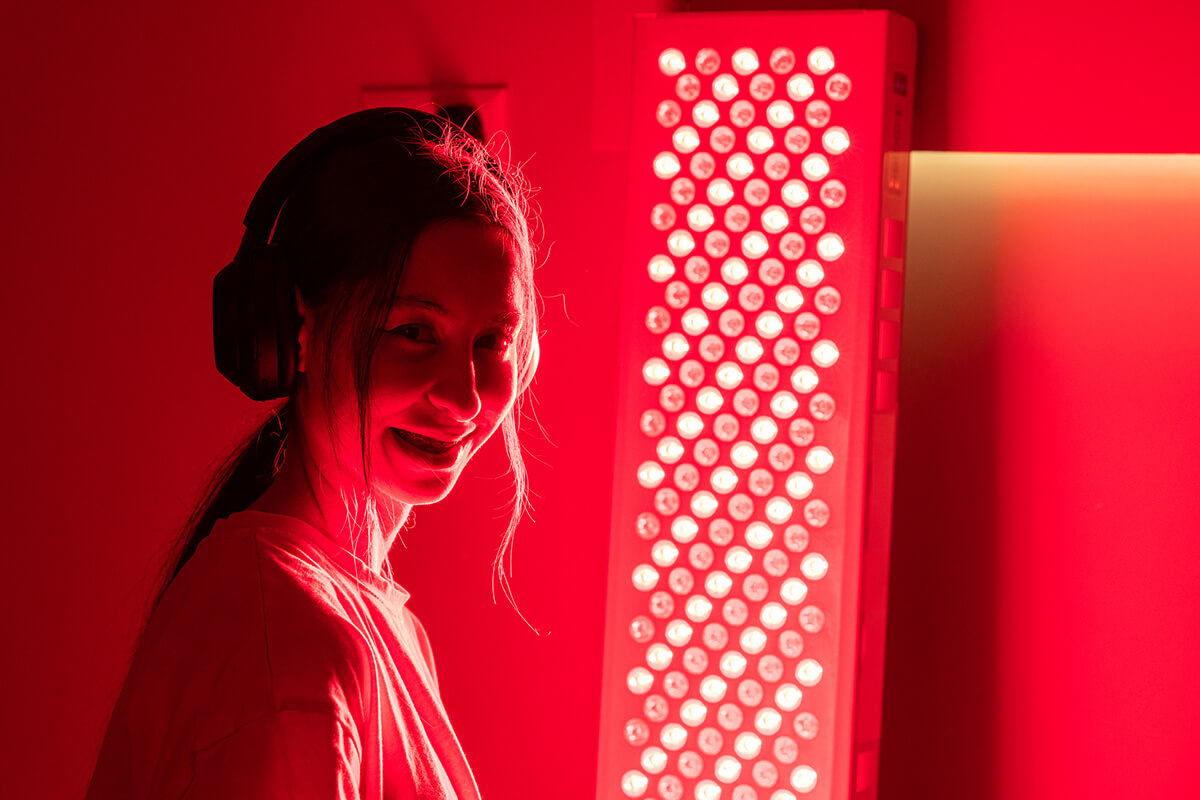
Red light therapy benefits your body by stimulating cellular repair, boosting collagen production, reducing inflammation, and relieving pain. It works by delivering specific wavelengths of red and near-infrared light (typically 630 to 850 nanometers) that penetrate the skin and are absorbed by the mitochondria in your cells. This increases the production of adenosine triphosphate (ATP), which is the energy your cells need to heal, regenerate, and function at their best. A 2014 randomized controlled trial published in Photomedicine and Laser Surgery, involving 136 participants, showed significant improvements in skin roughness, fine lines, and intradermal collagen density after 30 sessions of red light treatment. In this article, we cover the full range of research-backed benefits, how long it takes to see results, how often to use it, safety guidelines, and what the Mayo Clinic says about this therapy.
What Are the Benefits of Red Light Therapy?
The benefits of red light therapy span skin health, pain management, inflammation reduction, wound healing, mood support, and cellular repair. Unlike many treatments that address symptoms on the surface, red light therapy works at the cellular level by boosting mitochondrial energy production. This makes it effective for a wide range of conditions because nearly every cell in your body contains mitochondria.
NASA originally began experimenting with red light in the 1990s to grow plants in space and later discovered that it accelerated wound healing in astronauts. Since then, hundreds of studies have explored its effects on human health. According to the Cleveland Clinic, red light therapy stimulates collagen production, increases fibroblast activity, improves blood circulation, and reduces inflammation in cells. The FDA has cleared certain red light devices for temporary relief of minor muscle and joint pain, arthritis, and muscle spasms.
Stanford Medicine notes that hundreds of clinical studies have documented the impact of red light in clinical settings, including blinded trials showing how red light increases collagen production in human participants. The therapy is non-invasive, painless, produces no UV damage, and requires zero recovery time. We offer infrared sauna sessions combined with red light therapy, which delivers heat-based relaxation and light-based cellular repair in one treatment.
Does Red Light Therapy Help With Collagen Production?
Yes, red light therapy does help with collagen production. This is one of its most well-documented benefits. Collagen is the structural protein that gives skin its firmness, elasticity, and smooth texture. As you age, collagen production naturally slows down, leading to wrinkles, sagging, and thinner skin.
The landmark Wunsch and Matuschka study (2014, 136 participants) measured a 31% increase in intradermal collagen density using ultrasonography after 30 sessions of red and near-infrared light treatment. A separate study by Lee and colleagues documented wrinkle depth reductions of up to 36% and a 19% increase in skin elasticity in a split-face, double-blind trial. Another systematic review published in the Journal of the American Academy of Dermatology confirmed that LED red and infrared light increases the expression of collagen, elastin, and hyaluronic acid in skin cells.
These results happen because red light activates fibroblasts, the cells responsible for making collagen. It also reduces the enzymes (matrix metalloproteinases) that break collagen down, so you get more production and less degradation at the same time. For people focused on skin rejuvenation, this dual action is what makes red light therapy so effective.
Does Red Light Therapy Help With Pain and Inflammation?
Yes, red light therapy does help with pain and inflammation. The near-infrared wavelengths (750 to 850 nm) penetrate deeper into muscle, joint, and connective tissue, where they reduce inflammatory markers and stimulate healing at the cellular level.
A study on degenerative osteoarthritis in seniors showed pain reduction of more than 50% in those receiving low-power light therapy. Multiple randomized trials in knee osteoarthritis, low back pain, fibromyalgia, and carpal tunnel syndrome have shown statistically significant reductions in pain scores compared to placebo. Research from NASA's partnership with the Medical College of Wisconsin led to the development of FDA-cleared devices specifically for the temporary relief of minor muscle and joint pain.
Red light reduces inflammation by lowering pro-inflammatory cytokines like IL-6 and prostaglandin E2 while improving circulation and oxygen delivery to damaged tissues. People dealing with chronic pain and inflammation often find that red light therapy provides relief without the side effects of long-term medication use.
What Does Mayo Clinic Say About Red Light Therapy?
The Mayo Clinic says that red light therapy, also called photobiomodulation or low-level light therapy, may support skin health, wound healing, pain management, and inflammation reduction. The Mayo Clinic's Department of Dermatology recognizes that the increase in cellular energy (ATP) from red light exposure can help tissues repair faster and reduce oxidative stress.
However, Mayo Clinic experts also emphasize that more research is needed and that not all devices deliver the wavelength precision or intensity used in clinical studies. They recommend using FDA-registered, lab-tested devices that match research standards, typically delivering wavelengths in the 630 to 850 nm range. The Mayo Clinic's overall stance is balanced: optimism based on growing evidence combined with appropriate scientific caution.
This aligns with what we see in the broader medical community. Stanford Medicine, the Cleveland Clinic, and Harvard Medical School have all acknowledged the scientific basis behind photobiomodulation while noting that the field is still evolving. The therapy is not considered a miracle cure, but the evidence for specific applications, particularly skin health, pain, and inflammation, is strong and growing.
How Does Red Light Therapy Work?
Red light therapy works by delivering specific wavelengths of light that penetrate the skin and are absorbed by the mitochondria inside your cells. Mitochondria are the energy factories of every cell. When they absorb red and near-infrared light, a protein called cytochrome c oxidase is activated, which increases the production of ATP, your cells' primary energy source.
With more ATP available, cells can repair damage faster, produce more collagen and elastin, fight inflammation more effectively, and regenerate more efficiently. The process also generates low levels of reactive oxygen species, which act as signaling molecules that activate genes involved in cell growth, repair, and protection. Red light (620 to 750 nm) primarily affects the skin's surface layers, making it most effective for skin health, acne, and wound healing. Near-infrared light (750 to 1200 nm) penetrates deeper into muscle, joint, and bone tissue, making it more effective for pain relief and deep tissue recovery.
Combining red light with other therapies amplifies the benefits. BEMER therapy improves microcirculation, which helps deliver the increased ATP and nutrients to tissues that need them most. When circulation is strong, the cells get more out of every red light session.
Can Red Light Therapy Lower Cortisol?
Yes, red light therapy can lower cortisol. Cortisol is the body's primary stress hormone, and chronic elevation leads to anxiety, poor sleep, weight gain, and weakened immune function. Research has shown that red light exposure activates the parasympathetic nervous system, which shifts your body from fight-or-flight mode into a state of calm.
A study published in the Journal of Clinical Endocrinology and Metabolism confirmed that heat and light exposure reduced cortisol levels in participants. Red light also promotes the release of serotonin and endorphins, both of which counteract the effects of high cortisol. Serotonin stabilizes mood and promotes a sense of well-being, while endorphins act as natural painkillers and mood elevators.
People dealing with chronic stress often benefit from regular red light sessions as part of a broader stress-management routine. The cortisol-lowering effects are strongest when sessions are done consistently two to four times per week.
Where to Put Red Light for Anxiety?
For anxiety, red light is best applied to the forehead, temples, and the back of the neck. These areas are close to the brain regions involved in mood regulation and stress response. Research on transcranial photobiomodulation has shown that near-infrared light delivered to the forehead can improve cerebral blood flow and increase activity in the prefrontal cortex, which plays a key role in emotional regulation.
Full-body red light panels are also effective for anxiety because they promote systemic cortisol reduction and endorphin release. The relaxation benefits are not limited to where you point the light. When your whole body receives the treatment, the hormonal and neurochemical shifts reduce overall stress levels. Pairing red light with massage therapy can create an even deeper state of calm by combining the cellular benefits of light with the physical release of muscle tension.
How Often Should I Use Red Light Therapy?
You should use red light therapy three to five times per week for the best results. Most clinical studies that demonstrated significant benefits used protocols of two to five sessions per week over periods of four to twelve weeks. Consistency matters more than session length. A regular schedule of shorter sessions produces better results than occasional long sessions.
The global sauna survey published in Complementary Therapies in Medicine found that users who engaged in heat and light-based therapies five to fifteen times per month reported the highest levels of well-being. We recommend incorporating infrared light therapy into a regular weekly schedule for the best cumulative results. For skin health specifically, the Wunsch and Matuschka study used twice-weekly sessions over 30 total treatments to achieve measurable collagen increases. For pain and inflammation, some studies show improvements within just one to two weeks of daily sessions.
Is 10 Minutes of Red Light Therapy Enough?
Yes, 10 minutes of red light therapy is enough for certain benefits, particularly for surface-level skin concerns and mild pain. However, the ideal session length depends on the device's power output and the condition you are treating. Higher-powered clinical-grade devices can deliver a therapeutic dose in 10 minutes, while lower-powered devices may need 15 to 20 minutes.
For skin rejuvenation and collagen production, 10 to 15 minutes per area is a common clinical protocol. For deeper conditions like joint pain or muscle recovery, 15 to 20 minutes may be more effective. If you are new to red light therapy, starting with 10-minute sessions and gradually increasing is the safest approach.
Is 20 Minutes of Red Light Therapy Too Much?
No, 20 minutes of red light therapy is not too much for most people and most devices. Many clinical studies use session lengths of 15 to 30 minutes with good results and no adverse effects. The key factor is the device's power density. With clinical-grade devices that deliver higher irradiance, 10 to 15 minutes is often sufficient. With lower-powered home devices, 20 minutes may be necessary to achieve the same dose.
Red light therapy follows a principle called biphasic dose response, which means there is an optimal range where benefits are greatest. Going far beyond that range, such as sessions lasting 45 minutes or more with high-powered devices, could theoretically reduce effectiveness. For most applications, 10 to 20 minutes hits the sweet spot.
How Long Does It Take to See Results From Red Light Therapy?
It takes four to twelve weeks to see visible results from red light therapy for most skin and anti-aging goals. Collagen remodeling is a gradual biological process. The Wunsch and Matuschka study measured significant collagen density increases after 30 sessions done twice weekly, which works out to about 15 weeks.
For pain relief, results can appear much sooner. Some studies show improvements in pain scores within one to two weeks of daily or near-daily sessions. For acne, a systematic review found a 52% reduction in acne lesions after twice-daily treatments over an eight-week period. For mood and stress-related benefits, many people report feeling calmer and sleeping better within the first week or two of regular use.
The improvements continue to build over time with consistent use. Results that appear at eight weeks are typically better at twelve weeks, and even better at six months. This is why red light therapy sessions work best as part of an ongoing wellness routine rather than a one-time treatment.
How to Tell If Red Light Therapy Is Working?
You can tell if red light therapy is working by tracking specific changes over time. For skin, look for smoother texture, reduced fine lines, more even skin tone, and a healthier glow. These changes are gradual, so taking photos every two to four weeks under the same lighting conditions is the most reliable way to track progress.
For pain and inflammation, notice whether your pain levels have decreased, your range of motion has improved, or you are using less pain medication. For stress and mood, pay attention to how you feel after sessions, whether your sleep quality has improved, and whether your overall sense of calm has increased. Most people notice the stress-relief and sleep benefits first, within the first one to two weeks, while skin changes take longer to become visible.
What Not to Do After Red Light Therapy?
After red light therapy, do not apply harsh chemical products, retinoids, or strong exfoliants to the treated area for at least a few hours. Your skin is more receptive after a session, and aggressive products can cause irritation. Do not spend extended time in direct sunlight immediately after a session without sunscreen, especially if you treated your face. While red light itself does not cause UV damage, the increased cellular activity can make your skin slightly more sensitive.
Do not skip hydration. Drink water after your session to support the cellular processes that the light therapy just activated. If you combined red light with an infrared sauna session, hydration is even more important because you lost fluids through sweating.
Do not expect overnight results and abandon the routine too soon. Red light therapy works through gradual biological processes like collagen remodeling and cellular repair. Stopping after a few sessions because you have not seen dramatic changes means missing out on the compounding benefits that build over weeks and months. Here in Bedford Hills, we encourage our members to commit to a consistent schedule for at least eight to twelve weeks before evaluating results.
Where Should You Not Put Red Light Therapy?
You should not put red light therapy directly over the thyroid gland for extended periods without medical guidance, as light exposure may stimulate thyroid activity. You should also avoid directing red light at known cancerous tumors or areas where cancer has been recently treated, since the therapy stimulates cell growth and could theoretically promote the growth of malignant cells.
Do not shine red light directly into your eyes without appropriate protective eyewear. While red light is not harmful like UV light, the brightness can cause discomfort and potentially affect the retina over time with repeated unprotected exposure. Most professional devices come with eye protection for this reason.
Pregnant women should avoid applying red light therapy to the abdomen. People taking photosensitizing medications should consult their doctor before starting treatment. For everyone else, red light therapy is considered safe, painless, and non-invasive when used correctly.
Can You Get Vitamin D From Infrared Light?
No, you cannot get vitamin D from infrared light. Vitamin D production in the skin requires ultraviolet B (UVB) radiation, which has wavelengths between 290 and 315 nanometers. Red light therapy operates at wavelengths of 630 to 850 nanometers, and infrared light extends beyond 850 nanometers. These are completely different parts of the light spectrum and do not trigger vitamin D synthesis.
However, red and infrared light do offer many other benefits that UVB cannot provide. UVB light from the sun or tanning beds causes DNA damage, increases the risk of skin cancer, and accelerates skin aging. Red and infrared light, by contrast, do not cause UV damage, do not burn the skin, and actually help repair sun-damaged skin by boosting collagen and reducing inflammation. If you need more vitamin D, safe sun exposure, diet, and supplementation are the recommended approaches. PEMF therapy is another treatment that supports cellular health and recovery without any UV exposure.
Red Light Therapy Benefits at a Glance
Benefit CategoryWhat Red Light DoesKey Research FindingCollagen and SkinStimulates fibroblasts, increases collagen and elastin31% collagen density increase; wrinkle reduction up to 36% (Wunsch & Matuschka 2014, Lee et al. 2007)Pain ReliefReduces inflammatory markers, improves circulation50%+ pain reduction in osteoarthritis (low-power light therapy study in seniors)InflammationLowers IL-6 and prostaglandin E2Significant decrease in pro-inflammatory cytokines (Ngoc et al. 2023 meta-analysis)AcneReduces inflammation, promotes healing52% reduction in acne lesions over 8 weeks (Ngoc et al. 2023 systematic review)Wound HealingAccelerates tissue repair, increases blood flowNASA research: red light accelerated wound healing in astronauts (1990s)Muscle RecoveryReduces DOMS, improves range of motionImproved recovery from 24 to 96 hours after exercise (photobiomodulation studies)Cortisol and StressActivates parasympathetic nervous systemMeasurable cortisol reduction after light and heat exposure (JCEM study)Mood and SleepIncreases serotonin and melatonin productionImproved mood, deeper sleep reported in multiple observational studies
Sources: Photomedicine and Laser Surgery (Wunsch & Matuschka, 2014), Lee et al. (2007), Ngoc et al. (2023), NASA Spinoff Research, Cleveland Clinic, Stanford Medicine, Journal of the American Academy of Dermatology, Journal of Clinical Endocrinology and Metabolism
The range of benefits in this table shows why red light therapy has gained so much interest from researchers and practitioners. It is not a single-purpose treatment. It supports the body's natural healing processes across multiple systems, from skin to joints to mood. Over 90% of participants in clinical trials reported improvements in skin texture, according to research compiled by multiple review teams.
Frequently Asked Questions
Is Red Light Therapy Safe?
Yes, red light therapy is safe for most people. It is non-invasive, painless, and does not produce UV radiation. The Cleveland Clinic notes that side effects are minimal and rare. Some people may experience temporary redness or warmth in the treated area, but these effects typically subside quickly. People who are pregnant, have epilepsy, take photosensitizing medications, or have active cancer should consult a doctor before starting treatment.
Does Red Light Therapy Help With Hair Growth?
Yes, red light therapy does help with hair growth, particularly for people with androgenic alopecia (pattern hair loss). Studies published by Stanford Medicine and the Cleveland Clinic confirm that red light stimulates blood vessel dilation in the scalp, increasing nutrient delivery to hair follicles. Multiple FDA-cleared devices are now available specifically for hair regrowth using red light wavelengths.
Does Red Light Therapy Help With Sleep?
Yes, red light therapy does help with sleep. Red light exposure increases melatonin production, which is your body's primary sleep hormone. Unlike blue light from screens, which suppresses melatonin and disrupts sleep, red light supports your natural circadian rhythm. People dealing with sleep disorders often report better sleep quality within one to two weeks of adding red light therapy to their evening routine.
Can Red Light Therapy Help With Acne?
Yes, red light therapy can help with acne. It reduces the inflammation that drives breakouts and promotes faster healing of existing lesions. A systematic review and meta-analysis found a 52% reduction in acne lesions after eight weeks of twice-daily treatment. Red light also stimulates collagen production, which helps minimize acne scarring over time.
Does Red Light Therapy Work for Wound Healing?
Yes, red light therapy does work for wound healing. NASA's research in the 1990s was among the first to demonstrate this, and subsequent studies have confirmed that red light accelerates tissue repair by increasing cellular energy production and blood flow. The therapy has been used to treat surgical wounds, chronic ulcers, and oral mucositis in chemotherapy patients. A person's overall health, nutrition, and circulation also affect wound healing speed, which is why combining light therapy with circulation-boosting treatments like massage can improve outcomes.
Does Red Light Therapy Improve Circulation?
Yes, red light therapy does improve circulation. The light causes vasodilation, which is the widening of blood vessels. This increases blood flow to the treated area, delivering more oxygen and nutrients while removing waste products. Improved circulation is actually one of the primary mechanisms behind many of red light therapy's benefits, from pain relief to skin rejuvenation to faster recovery after exercise.
Wrapping It Up
Red light therapy is backed by decades of research, from NASA's early experiments to modern clinical trials at institutions like Stanford and the Mayo Clinic. It works at the cellular level by boosting mitochondrial energy production, which helps your body heal faster, produce more collagen, fight inflammation, and manage stress. The 136-participant Wunsch and Matuschka study, the osteoarthritis pain studies, and the acne meta-analysis all point to real, measurable results when sessions are done consistently.
Three to five sessions per week, lasting 10 to 20 minutes each, is the protocol most supported by the research. Results for pain and mood often appear within one to two weeks, while skin improvements take four to twelve weeks of consistent use. Combined with infrared sauna heat, the therapy becomes even more powerful because you get the benefits of both deep tissue heating and light-based cellular repair in one session.
If you are ready to experience these benefits for yourself here in Westchester County, Quantum Healing & Wellness offers infrared sauna combined with red light therapy as part of our holistic approach to health.
Contact us to schedule a consultation and see how light therapy fits into your wellness plan.
Read our recent Blogs
Quantum Healing and Wellness PMA in Westchester NY is commited to wellness conent for you









.avif)
.png)

.png)