


.avif)



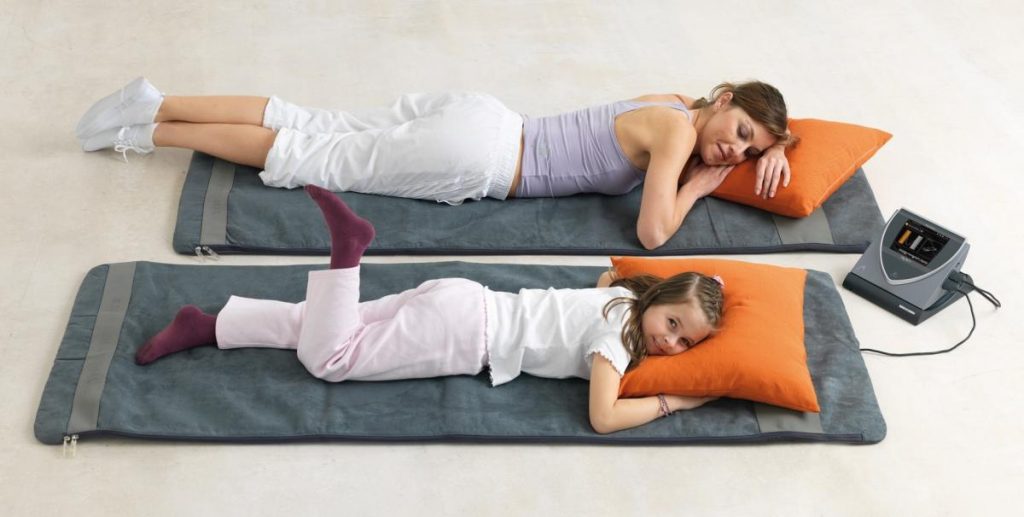
BEMER therapy uses a low-intensity pulsed electromagnetic field (PEMF) to temporarily boost local blood flow and microcirculation in healthy muscles. The main reported benefits are improved circulation, enhanced recovery, better sleep and relaxation, increased performance and energy, and pain relief. Sessions run 8 minutes and the standard protocol is twice daily, using an FDA Class II cleared device.
Below we walk each benefit against the published trials, explain what the signal actually does inside a blood vessel, compare BEMER with red light therapy and general PEMF, and say plainly where the evidence is strong and where it is not.
What Are the Benefits of BEMER Therapy?
The benefits of BEMER therapy are improved circulation, enhanced recovery, better sleep and relaxation, increased performance and energy, and relief from tension-related musculoskeletal pain. Improved circulation is the foundational one, since every other item on that list follows from better blood flow through the smallest vessels.
The smallest vessels are where the actual exchange happens. Microvessels stimulated by the BEMER signal carry more oxygen into muscle tissue and carry carbon dioxide and metabolic waste back out, which is the mechanism behind faster recovery, steadier energy, and reduced soreness after exertion.
Exertion recovery is also the area with the most consistent trial support, and the evidence across benefits is uneven enough to be worth setting out plainly. The table below grades each one against published research, drawing on work in Evidence-Based Complementary and Alternative Medicine, the Journal of Osteopathic Medicine, and the multiple sclerosis fatigue literature.
BenefitWhat the Signal DoesWhat the Research ShowsImproved circulationStimulates microvessel pumping to raise local blood flowThe core cleared claim; walking distance rose 57.4% in arterial diseaseEnhanced recoveryClears metabolic waste and delivers oxygen to worked tissueFatigue scores improved significantly in two randomized trialsBetter sleep and relaxationSupports stress reduction and a shift toward restReported by users; indirect trial support through fatigue measuresPerformance and energySupports muscle conditioning, endurance, and daily energyMixed; one runner pilot found no VO2Peak changePain reliefImproves flow through tense, poorly perfused tissueShort-term gains in low back pain; measured gains in neck pain
Everything in that table traces back to one process happening inside the walls of your smallest blood vessels.
How Does BEMER Therapy Work?
BEMER therapy works by sending a patented low-intensity pulsed electromagnetic signal into the body that stimulates the muscular walls of microvessels, improving the rhythmic pumping action known as vasomotion. Vasomotion is the slow contraction and relaxation of the tiny muscles wrapped around arterioles and capillaries, and it is the part of circulation almost nobody explains.
Explaining it matters, because vasomotion is not driven by your heartbeat. Your heart pushes blood through the large arteries, and once blood reaches the microvessel network, distribution depends on those vessels squeezing and releasing in their own rhythm. That rhythm determines which tissues get blood and how much, and it slows with age, inactivity, injury, and stress.
Stressed or sluggish vasomotion leaves capillary beds under-perfused even when the heart is working normally. The BEMER signal targets that specific rhythm rather than the heartbeat, which is the technical reason the company positions it apart from generic pulsed electromagnetic field devices. Our BEMER therapy service uses the standard 8-minute session on an FDA Class II cleared device.
The cleared claim is worth reading carefully, because the official language says the device temporarily improves local blood flow in healthy muscle tissue. Temporarily is the operative word. A single session produces a window of improved flow rather than a permanent change, which is why the protocol calls for twice-daily use rather than an occasional visit.
Occasional use produces occasional windows, and the first of those windows is the circulation itself.
Does BEMER Therapy Improve Circulation?
BEMER therapy improves local circulation by stimulating the smallest blood vessels to enhance oxygen delivery and carbon dioxide removal, and this is the specific effect the device is cleared to claim. Cleared claims are narrow by design, and this one covers healthy muscle tissue rather than the whole cardiovascular system.
The cardiovascular system as a whole depends heavily on that narrow slice. Microvessels account for roughly three-quarters of the circulatory network by the figure most practitioners cite, and they are where nutrients cross into cells and waste crosses back out. Larger arteries move blood; microvessels are where blood does its job.
Blood doing its job shows up in measurable outcomes when circulation is genuinely impaired. A study published in Orvosi Hetilap examining lower limb obliterative arterial disease found that BEMER physical vascular therapy increased pain-free and maximum walking distance by 57.4 percent, rising to 81.9 and 84.0 percent when combined with rheological therapy.
Rheological therapy in that study was a separate intervention, so the combined figures reflect both together rather than BEMER alone. A different route to the same target is microcirculation therapy, which works through the palm of the hand and suits guests who prefer a seated treatment.
Seated or lying down, better perfusion is what makes the next benefit possible.
Does BEMER Therapy Help With Recovery?
BEMER therapy supports recovery by helping clear metabolic waste from worked tissue, which reduces downtime and eases muscle soreness after physical exertion. Physical exertion leaves behind byproducts that the circulatory and lymphatic systems have to carry away, and the speed of that clearance is what people experience as recovery.
Recovery speed is measurable through fatigue scales, and the strongest data here comes from multiple sclerosis research. A randomized, double-blind, placebo-controlled trial by Piatkowski, Kern and Ziemssen followed 37 relapsing-remitting patients using BEMER for 8 minutes twice daily across 12 weeks, and found Modified Fatigue Impact Scale scores of 26.84 in the treatment group against 36.67 in the placebo group, with a p-value of 0.024.
A p-value at that level indicates a real difference rather than chance. Fatigue Severity Scale scores told the same story, coming in at 3.5 versus 4.7 with a p-value of 0.016. Breaking the fatigue score into components, physical fatigue improved significantly at p = 0.018 and cognitive fatigue at p = 0.041, while the psychological component did not shift.
One finding from that trial deserves as much attention as the positive ones: six weeks after treatment stopped, the two groups no longer differed on either fatigue measure. Consistency is what sustains the effect, which fits the temporary framing in the official claim language.
People carrying persistent tightness rather than acute soreness often pair sessions with our work on muscle tension, since the two address different layers of the same complaint.
Does BEMER Therapy Help You Sleep and Relax?
BEMER therapy promotes stress reduction and helps users transition into deeper, higher-quality rest, according to the manufacturer's stated benefits, though this is the benefit with the least direct trial evidence behind it. Direct trial evidence for sleep specifically has not been published in the way it has for fatigue and pain.
Fatigue and pain data do speak to it indirectly. The MS trial's significant improvement in physical and cognitive fatigue points at better rest, since fatigue scores generally track sleep quality closely. The Gyulai musculoskeletal study, published in Evidence-Based Complementary and Alternative Medicine, also found significant improvement in Fatigue Scale scores among low back pain patients.
Fatigue Scale improvements of that kind describe how people feel across a day rather than what happens overnight, so the sleep claim rests on inference plus a large volume of user reports. We say that plainly rather than dress it up.
Dressing nothing up, the eight quiet minutes of a session are themselves relaxing, and guests who come to us for sleep support generally combine several approaches rather than relying on one.
Some of those guests also spend longer stretches in our Energy Enhancement System, which offers a different kind of extended rest in the same visit.
Does BEMER Therapy Improve Performance and Energy?
BEMER supports muscle conditioning, physical fitness, endurance, and daily energy levels according to the manufacturer, and the independent performance research is genuinely mixed. Mixed findings are worth stating clearly rather than skipping, because the performance claim is the one most heavily promoted and least consistently supported.
The least supportive result comes from a pilot study of 14 male cross-country runners who used BEMER before and after each of six training sessions at altitude, 12 uses in total. Researchers found no significant changes in absolute or relative VO2Peak, ventilation, or maximum respiration rate in either the treatment or control group.
Neither group changing on those measures tells us BEMER did not improve peak aerobic capacity in trained endurance athletes across that timeframe. It does not tell us much about everyday energy in people who are not competitive runners, which is a different outcome measured on different scales.
Different scales produce different answers, and the fatigue and vitality findings across the clinical trials are consistently more favorable than the athletic performance data. Our honest read is that BEMER looks more promising for restoring ordinary energy in people who feel depleted than for adding a competitive edge to athletes who are already well trained.
Does BEMER Therapy Help With Pain?
BEMER therapy may help relieve tension-induced lower back pain and general musculoskeletal discomfort, and two randomized trials have measured that effect directly. Direct measurement is rare in this category, which makes both studies worth walking through.
Walking through them shows a consistent pattern: real short-term gains, with the strongest results where circulation was most restricted. Poorly perfused tissue holds inflammatory fluid and irritates nerve endings, so raising local flow addresses a genuine contributor to the discomfort rather than masking it.
Guests managing ongoing pain and inflammation typically use BEMER as one piece of a broader plan alongside their physician's care.
Does BEMER Therapy Help Chronic Low Back Pain?
BEMER therapy reduced pain and fatigue in the short term for people with chronic low back pain in a randomized double-blind pilot study. That pilot, published by Gyulai and colleagues in Evidence-Based Complementary and Alternative Medicine, enrolled 50 chronic low back pain patients and 50 knee osteoarthritis patients across four randomized groups.
Four groups received a standardized three-week physiotherapy package, then either BEMER or placebo on top of it. Low back pain patients showed significant improvement in resting visual analog scale pain scores and in Fatigue Scale scores between the first and second visits, while Oswestry disability scores and quality of life scores did not change.
Scores that did not change are as informative as the ones that did. The knee osteoarthritis group showed no significant short-term improvement, and then at the later measurement showed significant gains in Fatigue Scale scores and in the vitality component of the quality of life measure. Different tissues appear to respond on different timelines.
Does BEMER Therapy Help Neck Pain and Daily Function?
Study arms including BEMER produced improvements in neck disability, pain, and overall well-being scores in adults with nonspecific neck pain. Nonspecific neck pain was the target of a 2024 trial published in the Journal of Osteopathic Medicine, which measured the Neck Disability Index, a visual analog pain scale, and the SF-12 well-being questionnaire.
The SF-12 result was the most striking part: the BEMER group achieved the most substantial improvement in mental and physical well-being of any arm in the study. Pain scores on the visual analog scale appeared to improve in an additive way when BEMER was combined with manual treatment, though that particular comparison did not reach statistical significance.
Statistical significance is the bar that matters, and the authors were direct that a larger study would be needed. Guests who prefer a targeted approach to pain sometimes use the Biomodulator instead, an FDA-cleared microcurrent device that works through the peripheral nervous system.
What Conditions Can BEMER Help With?
BEMER is used alongside medical care for circulation-related complaints, persistent fatigue, musculoskeletal pain, and general recovery, and it is not intended to diagnose, treat, cure, or prevent any disease. That last clause comes from BEMER's own labeling, and we repeat it because it sets the honest frame for everything below.
Below is what people most commonly use BEMER for, based on the published research and on what guests actually come in asking about:
- Chronic low back pain, where short-term reductions in pain and fatigue have been measured in a randomized trial.
- Nonspecific neck pain and the daily function limits that come with it.
- Persistent fatigue, including the fatigue studied in multiple sclerosis research.
- Knee osteoarthritis, where improvements showed up on a longer timeline than in back pain.
- Circulation complaints in the legs, where walking distance has been measured as an outcome.
- Post-exertion soreness and slow recovery between training sessions.
- General low energy and the sense of running below your normal baseline.
- Complex regional pain syndrome, which a randomized double-blind pilot of 30 patients examined in Physiotherapy Theory and Practice.
Every item on that list is a use rather than a treatment, and the distinction is not a technicality. It is also why people frequently ask how BEMER compares with the other devices they have heard about.
Is BEMER the Same as Red Light Therapy?
BEMER is not the same as red light therapy, because BEMER uses a pulsed electromagnetic field that passes through tissue while red light therapy uses visible and near-infrared light absorbed at and just below the skin surface. Skin-surface absorption is the defining limit of light-based treatment, and it is the clearest line between the two.
The line matters for what each one reaches. Light penetrates a few millimeters and works primarily on skin, superficial tissue, and cellular energy production in those layers. A magnetic field passes through the body without being absorbed, which is why red light therapy and BEMER are complementary rather than interchangeable.
Interchangeability is also the question people ask about BEMER and generic PEMF, and the answer there is more nuanced. BEMER is a PEMF device, so the category is the same. What differs is the signal: BEMER uses a patented waveform aimed specifically at vasomotion, at a fixed 8-minute protocol, while general PEMF devices vary widely in frequency, intensity, and session length.
Wide variation is exactly why research on general PEMF is hard to pool, and it is one reason our PEMF healing mat and our BEMER service sit alongside each other rather than substituting for one another. The mat layers several modalities across a longer session; BEMER runs one targeted signal for eight minutes.
Eight minutes is short enough that the schedule deserves its own explanation.
How Many Times a Day Can You Use BEMER?
The standard BEMER protocol is 8 minutes twice a day, once in the morning and once in the evening. Morning and evening spacing exists because the improvement in local blood flow is temporary, so two sessions cover more of the day than one longer session would.
One longer session is not how the device is designed to be used. The MS fatigue trial that produced the strongest published results used exactly this protocol, 8 minutes twice daily across 12 weeks, and the three-year open-label follow-up by the same research group reported similar sustained effects.
Sustained effects depend on sticking with the rhythm, which is easier than most wellness routines because of how short each session is. Here is what one looks like:
- Lie down on the mat fully clothed. Nothing is applied to the skin and nothing needs to be removed beyond shoes and metal objects in your pockets.
- The intensity level is set. Lower settings suit first sessions, and the level is adjusted as you get a sense of how you respond.
- The 8-minute cycle runs. Most people feel very little. Some notice mild warmth or a faint tingling as circulation responds.
- The device cycles down on its own. There is no need to time anything yourself.
- Sit up slowly before standing. Standing quickly after lying still is the usual cause of the brief lightheadedness a few people report.
- Repeat in the evening. Consistency across weeks matters far more than intensity in any single session.
We schedule BEMER sessions at our Bedford Hills center around whatever rhythm a guest can realistically keep, since a protocol nobody follows produces nothing.
Can You Use BEMER Too Much?
You cannot overdose on BEMER in any toxic sense, and using it far beyond the recommended protocol does not add benefit. Added benefit is the thing extra sessions fail to deliver, because the 8-minute cycle is built around how long the vasomotion response takes rather than around a dose that scales with time.
Time beyond that window is simply time spent lying on a mat. The published protocols that produced measurable results all used the standard 8 minutes twice daily, including the 12-week MS trial and its three-year follow-up, so there is no research base supporting longer or more frequent use.
More frequent use occasionally leaves people feeling tired or slightly headachy, which tends to resolve by shortening back to the standard schedule and lowering the intensity setting. Anyone finding sessions consistently draining should say so rather than pushing through.
Are There Any Negative Side Effects of BEMER?
BEMER was reported as well tolerated in the randomized trials that tracked it, with no significant negative side effects recorded. The Piatkowski MS trial states this directly, and the Gyulai musculoskeletal study reported no bad side effects among participants.
Participants in both studies used the device across weeks rather than once, which makes those tolerability findings more meaningful than a single-session report would be. The reactions people do occasionally mention are mild and short: temporary tiredness, a light headache, faint warmth or tingling during the session, or a moment of unsteadiness on standing up.
Standing up slowly and drinking water handles most of it. Nothing is ingested, nothing is applied to skin, and no tissue is manipulated, so the pathways that produce injury in other treatments are not present here.
Does BEMER Therapy Really Work?
BEMER works within a specific and fairly narrow scope, supported by several randomized trials, and it does not do everything its most enthusiastic promoters claim. Enthusiastic promotion is a real feature of this product's landscape, and it is worth separating from the research.
The research says this. Fatigue improved significantly against placebo in a double-blind MS trial. Short-term pain and fatigue improved in a randomized low back pain pilot. Neck disability and well-being scores improved in a 2024 osteopathic medicine trial. Walking distance rose substantially in arterial disease. Those are real findings with real numbers behind them.
Behind those numbers sit real limits too. Several of the studies are pilots with small samples. The MS benefit disappeared six weeks after treatment stopped. The knee osteoarthritis group saw no short-term change at all. A runner pilot found no aerobic capacity improvement. BEMER's own labeling states the device is not intended to diagnose, treat, cure, or prevent any disease.
One more thing belongs in an honest assessment. BEMER devices are sold through independent distributors who earn commission, so many glowing testimonials online come from people with a financial interest in your decision. That does not invalidate the technology, and it is a reason to weigh the published trials more heavily than the enthusiasm. We offer BEMER as a session-based service and have no stake in selling anyone a device.
Who Should Talk to a Provider Before Trying BEMER?
Anyone who is pregnant, uses an implanted electronic device such as a pacemaker, takes blood-thinning medication, has had an organ transplant, or is undergoing chemotherapy or radiation should talk to their provider before trying BEMER. Providers are the right people to ask because they know the specifics that general guidance cannot cover.
General guidance across electromagnetic therapies treats implanted electronics as the clearest concern, since those devices read and respond to electrical signals that an external field can disrupt. Pregnancy sits on the list because of limited data rather than documented harm. Organ transplant recipients on immunosuppressant medication are commonly advised against it as a precaution.
Precaution also applies to anyone with undiagnosed symptoms, who is better served by getting those evaluated first. People managing cardiovascular health with medication should have their prescriber aware of anything they add that affects circulation.
At our Bedford Hills location we ask about implants, medications, and current treatment during intake for exactly these reasons, and Dr. Adams offers a short consultation for anyone who wants to review their situation before booking.
Frequently Asked Questions
What Does BEMER Stand For?
BEMER stands for Bio-Electro-Magnetic-Energy-Regulation. The name describes what the device is built to do, which is regulate the body's own electromagnetic and circulatory activity rather than override it. The same name refers to both the technology and the company that developed it.
Is BEMER FDA Approved?
BEMER is an FDA Class II cleared medical device, which is not the same as FDA approved. Clearance means the device was reviewed and found substantially equivalent to an existing legally marketed device for its stated use, which here is temporarily improving local blood flow in healthy muscle tissue. Approval is a higher bar reserved for higher-risk devices.
What Does a BEMER Session Feel Like?
A BEMER session feels like very little for most people. You lie on a mat fully clothed for 8 minutes while the signal runs, and some people notice mild warmth or a faint tingling as circulation responds. Feeling nothing at all is common and does not mean the session had no effect.
How Long Until You Notice a Difference?
Most people need several weeks of consistent twice-daily use before noticing a clear difference. The randomized trials measured their primary outcomes at 12 weeks in multiple sclerosis and at three weeks in low back pain, so the timeline varies with what you are tracking. Some people report feeling more rested within the first week.
Is BEMER the Same as PEMF?
BEMER is a type of PEMF device rather than a separate category. What sets it apart is a patented signal aimed at vasomotion in the microvessels and a fixed 8-minute protocol, while general PEMF devices vary widely in frequency, intensity, and session length. That variation is a major reason general PEMF research is difficult to compare across studies.
Can BEMER Be Used Alongside Other Treatments?
BEMER can be used alongside other treatments, and the randomized low back pain study specifically tested it as an addition to a standard physiotherapy package rather than as a replacement for one. No substance is ingested, so there are no drug interactions in the usual sense. Anyone in active medical treatment should still tell their care team.
The Takeaway
BEMER uses a low-intensity pulsed electromagnetic signal to improve vasomotion in the smallest blood vessels, and better flow through those vessels is what drives every benefit on the list: circulation, recovery, rest, energy, and pain relief. The published trials support fatigue reduction, short-term low back pain relief, neck function gains, and improved walking distance in circulation-impaired legs. They do not support aerobic performance gains in trained athletes, and the effects fade when sessions stop.
Two things follow from that. Consistency matters more than intensity, because the official claim is temporary improvement and the trial that showed the strongest results used 8 minutes twice daily for 12 weeks. And BEMER belongs beside your medical care rather than in place of it, since the device is not intended to diagnose, treat, cure, or prevent any disease.
If you are curious whether it fits what you are dealing with, we would rather set expectations honestly upfront than have you find out later. Our team at Quantum Healing & Wellness talks this through with every new guest, and you can reach out with questions before booking anything.
Read our recent Blogs
Quantum Healing and Wellness PMA in Westchester NY is commited to wellness conent for you







.avif)
.png)

.png)