


.avif)



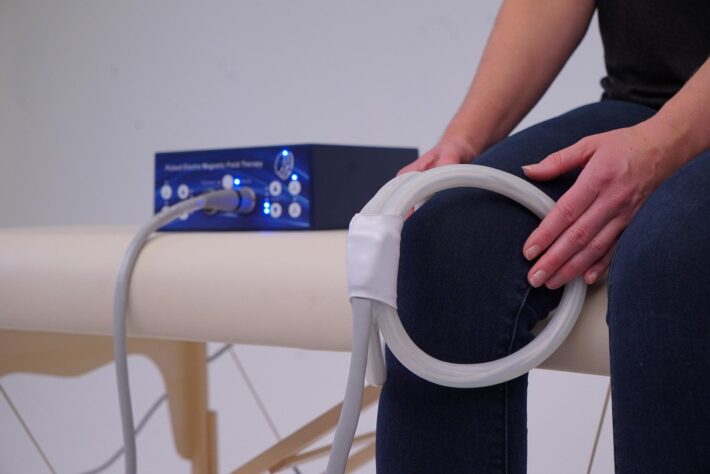
Pulsed electromagnetic field (PEMF) therapy uses low-frequency electromagnetic waves to help manage pain, reduce swelling, and support the body's natural healing process. The main reported benefits are pain relief, osteoarthritis support, bone healing, reduced inflammation, and improved circulation. Evidence is strongest for nonunion fracture healing and knee osteoarthritis, and it is promising but still developing for sleep, fatigue, and blood flow.
Below we grade each benefit against the actual research, explain the cellular mechanism behind all of them, and cover what a session feels like, how long it runs, how often to book, and when results tend to show up.
What Are the Benefits of PEMF Therapy?
The benefits of PEMF therapy are pain relief, improved joint function in osteoarthritis, faster healing of slow-knitting bone fractures, reduced localized inflammation and swelling, and better microcirculation and oxygen delivery to tissues. Reported secondary benefits include better sleep, less fatigue, and reduced muscle soreness after exertion.
Better sleep and reduced fatigue sit on thinner evidence than the pain and bone findings do, and that difference matters more than most articles admit. The Therapeutic Research Center, whose clinical database is licensed to WebMD, rates PEMF as possibly effective for four specific things: chronic low back pain, certain bone fractures, osteoarthritis, and pain after surgery. For most other uses, the same database says there is not enough reliable information to draw a conclusion.
Drawing conclusions from mixed research is exactly where readers get lost, so the table below grades each benefit by what the published trials and meta-analyses actually found, drawing on work from Cleveland Clinic, the Journal of Rehabilitation Medicine, Physical Therapy, and Blood Pressure.
BenefitWhat the Research FoundStrength of EvidenceBone healingSpecific devices carry FDA clearance for nonunion fracturesStrongestPain reliefPooled effect on pain of SMD 1.06 across 15 placebo-controlled trialsModerateOsteoarthritis supportPhysical function improved significantly; pain findings split by trialModerate, contestedCirculationPlasma nitric oxide rose significantly after 12 weeks of treatmentPromisingReduced inflammationSwelling and post-surgical pain fell in several controlled trialsPromisingSleep quality70% of one insomnia trial's active group reported substantial reliefEarly, single-trialFatigue and recoveryFatigue scores and walking distance improved in a randomized pilotEarly, pilot-stage
Every benefit in that table traces back to the same underlying process, which is worth a closer look before examining any single one of them.
How Does PEMF Therapy Work in the Body?
PEMF therapy works by sending pulses of low-frequency electromagnetic energy through tissue, where the shifting field influences the movement of charged particles across cell membranes and triggers a chain of circulatory and repair responses. Cell membranes carry their own small electrical charge, and the movement of calcium and other ions across those membranes governs how a cell signals, repairs, and produces energy.
Ion movement across the membrane sets off the step most directly tied to what people feel. Calcium signaling stimulates the release of nitric oxide, a molecule that relaxes the smooth muscle lining small blood vessels. Nitric oxide production widens those vessels, which raises local blood flow. Higher local blood flow carries more oxygen and nutrients into damaged tissue and carries waste products and inflammatory fluid out of it.
That circulatory chain is the reason a single mechanism produces such a scattered-looking benefit list. Faster fluid clearance reads as less swelling. Better oxygen delivery reads as faster healing. Reduced inflammatory pressure on nerve endings reads as less pain. One process, several visible outcomes.
Device settings are the part almost nobody explains, and they matter enormously. A 2026 meta-analysis in Medicina found that PEMF results in knee osteoarthritis shift with both frequency and amplitude, with higher frequency producing faster pain relief and higher amplitude building physical function over time. Frequency and amplitude vary widely between the devices used in published studies, which is a large part of why two trials on the same condition can reach different conclusions.
Different conclusions across trials also reflect how differently the energy gets delivered from one device format to another.
What Do PEMF Mats Do for Your Body?
PEMF mats deliver low-frequency electromagnetic pulses across your whole body at once while you lie down, which suits general recovery, sleep support, and widespread aches better than a targeted device does. Cleveland Clinic describes the mat format as something close to a yoga mat crossed with an electric blanket, and the portable format as roughly the size and shape of a small heating pad.
A small heating pad style applicator concentrates the field on one joint or one injury site, which is the format used in most fracture and post-surgical research. Whole-body mats spread a lower-intensity field across a much larger area, which is why they show up more often in sleep, fatigue, and general recovery settings than in fracture trials.
Our PEMF healing mat layers seven modalities into a single platform, combining pulsed electromagnetic fields with infrared heat, red light, and crystal therapy in one session. Layering modalities is a practical choice rather than a research protocol, since heat and light work on circulation through separate pathways and stack comfortably with a magnetic field.
Some guests prefer to keep those pathways separate and book red light therapy on its own instead. Either approach works, and we set the mat up in a quiet room at our Bedford Hills center so the session doubles as genuine rest.
Rest aside, the benefit people most often come in asking about is pain.
Does PEMF Therapy Help With Pain?
PEMF therapy does appear to help with pain, and pain relief carries the largest body of evidence of any benefit outside bone healing. A 2020 meta-analysis published in Physical Therapy pooled 15 sham-controlled or placebo-controlled studies covering 985 patients and found a significant beneficial effect on pain, with a standardized mean difference of 1.06 and a 95 percent confidence interval running from 0.61 to 1.51.
That confidence interval sits comfortably away from zero, which is a meaningful result. The same authors were careful to note that overall evidence quality was low or very low, and that only two of the fifteen studies were judged to be at low risk of bias. Both facts belong in the same breath, since the effect looks real and the studies behind it are small.
Small studies are why results vary by body region, and the three regions below account for most of what people ask about.
Does PEMF Therapy Help Chronic Lower Back Pain?
PEMF therapy seems to help reduce chronic low back pain, though it is less clear whether it helps sudden or acute back pain. That distinction comes from the Therapeutic Research Center's clinical assessment, which separates the long-standing version of the problem from the recent one.
Long-standing back pain involves persistent low-grade inflammation and reduced local circulation, which is the exact territory the nitric oxide pathway operates in. Acute back pain more often involves mechanical strain that resolves on its own timeline regardless of what else is applied. The mechanism explains the split in the findings rather than contradicting them.
Does PEMF Therapy Help Knee Osteoarthritis?
PEMF therapy improves physical function in knee osteoarthritis fairly consistently, while its effect on knee pain itself splits across trials. Researchers at West China Hospital, Sichuan University, published a meta-analysis in the Journal of Rehabilitation Medicine finding a significant improvement in physical function, with a weighted mean difference of -5.28, alongside no significant advantage on the WOMAC pain score or the total WOMAC score.
WOMAC scores measure pain, stiffness, and daily activity separately, and separating them is what makes the pattern visible. A 2026 analysis in Medicina found stiffness and daily activity both improved significantly at the one-month mark while objective strength measures did not. A broader 2024 systematic review covering 17 trials and 1,197 osteoarthritis patients reported a 60 percent decrease in visual analog scale pain scores and a 42 percent improvement in WOMAC scores across multiple joints.
Multiple joints, multiple devices, and multiple protocols produce that spread of results, which is the honest summary: people frequently move better, and whether they hurt less depends heavily on the device and the joint.
Does PEMF Therapy Help Muscle Soreness and Recovery?
PEMF therapy may help muscle soreness and recovery by improving blood flow through worked tissue, though the research here is thinner than the joint research. Worked tissue accumulates metabolic byproducts and low-grade swelling, and both clear faster when local circulation rises.
Circulation-driven recovery is why active adults tend to use PEMF the day after hard training rather than immediately before it. A randomized fibromyalgia pilot study offers the closest controlled data, recording a visual analog scale pain change of -48 in the PEMF group against -16.82 in controls, a difference in difference of -31.18 with a p-value below 0.01.
Guests dealing with persistent tightness rather than injury often pair mat sessions with our work on muscle tension, since the two approaches address different layers of the same problem.
Others prefer targeted microcurrent work, and the Biomodulator is an FDA-cleared device that treats pain through the peripheral nervous system rather than through the magnetic field pathway.
Whichever route people take, the shared thread underneath all three regions is inflammation.
Does PEMF Therapy Reduce Inflammation and Swelling?
PEMF therapy may decrease localized swelling and modulate the body's inflammatory response at a cellular level, according to Cleveland Clinic. Localized swelling happens when injured tissue leaks fluid into the surrounding space faster than the lymphatic and venous systems can carry it away.
Carrying fluid away is a circulation problem before it is anything else, which is why the nitric oxide pathway shows up here again. Several controlled trials have measured this directly in post-surgical settings, including double-blind studies in breast surgery patients where PEMF exposure reduced both interleukin-1 beta levels and reported pain compared with sham treatment.
Interleukin-1 beta is one of the signaling proteins that drives the inflammatory cascade, so a measurable drop in it is a more concrete finding than a patient-reported score. A double-blind trial in chronic rhinosinusitis published in 2024 found significant reductions in both fatigue and headache scores, and the authors attributed the result to increased nitric oxide synthesis producing arteriolar vasodilation in inflamed tissue.
Inflamed tissue improving alongside better vessel dilation is the clearest signal we have that circulation is doing the heavy lifting, and many of our guests come to us for pain and inflammation support for exactly that reason.
Does PEMF Therapy Improve Circulation?
PEMF therapy is thought to support microcirculation and oxygen delivery to tissues, and one of the better-designed studies measured that effect directly in the bloodstream. Researchers at Mayo Clinic ran a 12-week double-blind randomized study published in Blood Pressure, assigning 23 subjects to PEMF therapy and 21 to sham treatment, with each active session running 16 minutes three times daily.
Three daily sessions over twelve weeks produced a significant rise in plasma nitric oxide in the PEMF group, with a p-value of .04, while the sham group showed no such change. Peak systolic blood pressure during exercise dropped significantly in the PEMF group as well, and the effect was most pronounced in participants who already had resting hypertension.
Resting blood pressure itself did not differ between the groups, which is worth stating plainly rather than glossing over. The finding is about vascular responsiveness and nitric oxide availability, not about lowering blood pressure numbers at rest.
Vascular responsiveness is the same target that BEMER works on, an FDA Class II device that uses an 8-minute pulsed electromagnetic field session to stimulate muscles and enhance blood flow for better tissue health.
Blood flow at the smallest vessel level is measured differently again by microcirculation therapy, which works through the palm of the hand rather than through a field applied to the torso.
Guests focused specifically on cardiovascular health generally combine these approaches with their physician's care rather than substituting for it.
Better delivery of oxygen and nutrients into tissue is also the foundation of the benefit with the firmest evidence behind it.
Does PEMF Therapy Help Bones Heal?
PEMF therapy helps bones heal, and this is the one application where specific devices have been cleared by the U.S. Food and Drug Administration. Cleveland Clinic notes that clearance applies to nonunion fractures, meaning breaks that have failed to knit on their own within the expected timeframe.
Nonunion fractures stall for identifiable reasons, most often poor blood supply to the break site or insufficient mechanical signaling to the bone-building cells. Bone-building cells called osteoblasts respond to electrical signals in their environment, which is the biological basis for applying an electromagnetic field to a stalled break.
A stalled break treated this way has decades of orthopedic use behind it, and PEMF bone growth stimulation predates most of the wellness applications by many years. A 2020 meta-analysis in Bioelectromagnetics examining PEMF and bone healing across randomized controlled trials reinforced that this is the best-supported use of the technology.
Best-supported does not mean most commonly sought, and the reason most people walk through our door is closer to sleep than to fractures.
Does PEMF Therapy Help You Sleep?
PEMF therapy may help you sleep, and the strongest data on this comes from a four-week double-blind placebo-controlled trial of 101 patients with insomnia published in Advances in Therapy. Patients were sorted into three groups by problem type: trouble falling asleep, interrupted sleep, and nightmares.
Sorting by problem type produced a clear result across all three. In the active treatment group, 70 percent reported substantial or complete relief of their complaints, 24 percent reported clear improvement, and 6 percent noted only slight improvement. The placebo group also improved significantly, which is important context, but the difference between the two groups was highly significant.
Significant placebo improvement in a sleep trial is normal and does not erase the result. A separate randomized controlled pilot in people with post-viral fatigue found improvements on the Insomnia Severity Index alongside better fatigue inventory scores and greater distance covered in the 6-minute walk test, with no dropouts at all in the intervention group.
Many people also feel drowsy during the session itself, which is a comfort effect from lying still under gentle warmth rather than a sedative action, and it is one reason guests booking sleep support often schedule late in the day.
Scheduling around a benefit only makes sense if the benefit is real, which brings up the question readers ask most bluntly.
Does PEMF Therapy Actually Work?
PEMF therapy does work for some conditions and remains unproven for many others, and the honest answer depends entirely on which benefit is being asked about. Cleveland Clinic states plainly that researchers are still studying it, that some people do feel better after using it, and that there is not definite proof it works across the board.
Definite proof is hard to reach here for three specific reasons, and naming them is more useful than repeating the caveat. First, most symptoms PEMF targets are subjective, and there is no perfect instrument for measuring how much stiffness a knee feels. Second, published studies use wildly different frequencies and field strengths, so pooling them compares treatments that are not really the same treatment. Third, the trials tend to be small.
Small subjective trials are also where placebo effects show up most strongly, and Cleveland Clinic raises this directly, pointing to a study where knee osteoarthritis patients felt their knees worked better even though measured symptoms were largely unchanged. Feeling that a knee works better is not nothing, and it is also not the same as a measured change.
Measured changes do exist in the places where the research is tightest. A multi-center randomized trial published in Pain and Therapy found PEMF reduced joint and soft tissue pain by 36 percent compared with 10 percent for standard care, and an earlier trial of 33 knee osteoarthritis patients recorded a 62 percent WOMAC reduction and a 43 percent pain decrease after two weeks. Our position is that PEMF earns a place as a complement to medical care, never as a substitute for it.
What Does PEMF Therapy Feel Like?
PEMF therapy usually feels like very little, with most people noticing a faint pulsing sensation, mild warmth, or nothing at all. Nothing at all is the most common report, and it surprises first-time guests who expect to feel the field working.
The field working is not something the nervous system is built to detect. Low-frequency electromagnetic pulses pass through skin and tissue without heat, without pressure, and without any skin contact required, so there is no direct sensory signal to register. Sensations people do describe tend to come from the setting rather than the field, meaning the warmth of the mat and the stillness of the room.
Stillness in a dim room for half an hour is enough on its own to make most people drowsy, which is why so many guests report feeling relaxed or sleepy afterward. Occasional mild dizziness or fatigue can occur, and Cleveland Clinic lists these as the main side effects to watch for.
Watching for them takes almost no effort during a session that is this uneventful, and knowing how long it runs helps people plan around it.
How Long Is a PEMF Session?
A PEMF session commonly runs 20 to 45 minutes, though published protocols range from as little as 5 minutes to as long as 4 hours depending on the device and the condition being treated. The Therapeutic Research Center gives that full range, and the wide spread reflects how differently a targeted fracture device and a whole-body mat are used.
Whole-body mat sessions sit in the middle of that range. A targeted device on a healing bone may be worn for hours daily, while the 12-week circulation study at Mayo Clinic used 16-minute sessions three times a day.
Here is what a mat session looks like start to finish:
- A short intake conversation. We ask about current medications, implanted devices, and what you are hoping to address, which determines both settings and session length.
- You lie down fully clothed. Nothing is applied to the skin and nothing needs to be removed beyond shoes and anything metal in your pockets.
- The device is set to a frequency and intensity. Lower settings suit first sessions and general recovery, while higher settings are used for established pain complaints.
- The session runs quietly. Most people close their eyes. Some fall asleep, and that is fine.
- The device cycles down and you sit up slowly. Standing quickly after lying still is the usual cause of the brief lightheadedness a few people report.
- Drink water and note how you feel. Improved circulation raises fluid turnover, and tracking your response from session one makes the next question much easier to answer.
Booking a first PEMF therapy appointment on the shorter end of the range is what we generally suggest, since it lets us see how you respond before extending anything.
How Often Can You Do PEMF Therapy?
You can do PEMF therapy daily, and several published protocols use multiple sessions per day, though two to four sessions a week is the more common pattern for general wellness use. Multiple daily sessions appear in the research mainly where a specific tissue target is involved, such as the Mayo Clinic circulation protocol of three 16-minute sessions each day across 12 weeks.
Twelve weeks of consistent exposure is a useful reference point because it shows that sustained daily use was well tolerated in a controlled setting. Overdoing PEMF therapy is difficult in the sense that no toxic threshold has been established, and the practical limit is comfort rather than safety. People who feel drained or headachy after longer sessions do better with shorter ones spaced further apart.
Spacing sessions further apart also tends to be what works for people using the mat for recovery rather than for a specific complaint. Guests who book regular healing mat sessions with us usually settle into a weekly or twice-weekly rhythm and adjust from there.
Adjusting from there works best once you know roughly when to expect anything to change.
How Long Does It Take for PEMF Therapy to Work?
PEMF therapy typically takes two to six weeks of consistent sessions before meaningful changes appear, though some people notice relaxation or reduced stiffness after the first session. First-session relaxation is a real effect and a poor predictor, since it mostly reflects lying still rather than the field itself.
The field itself works on a slower clock. The knee osteoarthritis trial that recorded a 62 percent WOMAC reduction measured that result at the two-week mark. The Medicina meta-analysis found stiffness and daily activity improvements reaching significance specifically at one month rather than earlier. The nitric oxide and blood pressure findings came out of a 12-week protocol.
A 12-week horizon is the outer bound for the effects that have been measured, and two to six weeks covers most of what people report subjectively. Bone healing runs on its own timeline entirely, governed by the fracture rather than by the device.
Timelines are only useful alongside a way to tell whether anything is actually shifting.
How Do You Know If PEMF Therapy Is Working?
You know PEMF therapy is working by tracking specific functional measures over three to four weeks rather than by how any single session feels. Single sessions are too noisy to read anything from, and they are also where placebo response is strongest.
Placebo response fades against a written record, which is why we suggest writing things down from the first appointment. These are the measures worth tracking:
- Morning stiffness, measured in how many minutes it takes to loosen up after getting out of bed.
- Pain scored from zero to ten at the same time each day, rather than only on bad days.
- A concrete function test, such as how many stairs you climb before the joint complains.
- Sleep latency, meaning how long it takes to fall asleep, and how many times you wake overnight.
- Over-the-counter pain reliever use per week, which often falls before the pain score does.
- Swelling around a specific joint, measured with a tape at the same landmark each week.
- Daily energy at a consistent hour, since fatigue often shifts before pain does.
Four weeks of that record tells you far more than any session-by-session impression, and it also tells you when to stop if nothing is moving.
What Are the Long-Term Effects of PEMF Therapy?
The long-term effects of PEMF therapy appear to be favorable for most people, with no major safety concerns reported in studies where it was used under medical supervision. Medical supervision is the qualifier the Therapeutic Research Center attaches to its assessment, and it is the honest framing since most trials run weeks or months rather than years.
Years-long data is genuinely limited, and anyone claiming otherwise is overstating the record. What exists is reassuring within its own scope: the 12-week Mayo Clinic protocol reported no safety problems, the post-viral fatigue pilot had zero dropouts in the intervention group, and the therapy involves no substance entering the body and no tissue manipulation.
No substance and no manipulation means there are no drug interactions to screen for and nothing to aggravate mechanically. People who use PEMF over long periods generally do so as maintenance, pairing it with movement, sleep habits, and other supportive care rather than relying on it alone.
Longer-term guests here often rotate mat sessions with time in our Energy Enhancement System, treating the two as complementary parts of the same routine.
Routine use suits most people, and a specific group should have a conversation before starting.
Who Should Talk to Their Provider Before Trying PEMF Therapy?
Anyone who is pregnant, uses an implanted electronic medical device such as a pacemaker or insulin pump, takes medication through a skin patch, or has a seizure disorder should talk to their provider before trying PEMF therapy. Cleveland Clinic lists all four, and the guidance is consistent across the major clinical sources.
Consistency across sources matters more here than anywhere else in this article. Implanted electronic devices are the clearest case, since an external electromagnetic field can interfere with how they operate. Transdermal patches deliver medication through the skin at a rate that improved local circulation may change. Pregnancy is a precaution based on insufficient data rather than on any documented harm, and clinical guidance is to avoid use.
Avoiding use in those situations is straightforward. Anyone with active cancer in the area being treated, and anyone currently in a course of medical treatment for any condition, benefits from having their care team aware of what they are adding.
Our Bedford Hills practitioners ask about implanted devices and current medications at intake for exactly these reasons, and Dr. Adams offers a short consultation for anyone who wants to talk through their situation first.
Frequently Asked Questions
What Are the Potential Side Effects of Using a PEMF Mat?
The potential side effects of using a PEMF mat are mild and uncommon, most often temporary dizziness or fatigue shortly after a session. Cleveland Clinic and the Therapeutic Research Center both describe the therapy as non-invasive and generally well tolerated under medical supervision. Sitting up slowly at the end of a session prevents most of the reported lightheadedness, since it comes from standing quickly after lying still.
Is It Okay to Sleep on a PEMF Mat?
It is okay to fall asleep during a PEMF mat session, and many people do. Published protocols vary from 5 minutes to 4 hours, so extended exposure is well within the ranges used in research. Overnight use is a different matter and depends entirely on the specific device and its manufacturer guidance, so that is a question for whoever supplied the equipment.
Do Electromagnetic Frequencies Heal?
Electromagnetic frequencies do not heal tissue directly, and they appear to support the body's own repair processes by influencing cellular signaling and local blood flow. The clearest evidence sits with nonunion fractures, where FDA-cleared devices are used to stimulate bone that has stopped knitting. For most other conditions, research points to circulation and inflammation effects rather than direct healing.
Can PEMF Therapy Be Used Alongside Other Treatments?
PEMF therapy can be used alongside other treatments, and it is classified as a complementary therapy specifically because it works as an addition to conventional care. No substance is ingested and no tissue is manipulated, so there are no drug interactions to consider. Anyone in active treatment should still tell their care team what they are adding.
What Should You Do After a PEMF Session?
After a PEMF session, drink water, stand up slowly, and keep the next hour undemanding. Increased circulation raises fluid turnover, which is why hydration is the standard suggestion. Noting how you feel in a simple log matters more than any single aftercare step, because the useful signal shows up across weeks rather than within one afternoon.
How Many PEMF Sessions Do You Need?
Most people need somewhere between six and twelve sessions before judging whether PEMF therapy is helping them. Published results cluster at the two-week, one-month, and twelve-week marks depending on the outcome measured, so a short series spread across three to four weeks is a reasonable trial. Bone healing follows the fracture's own timeline rather than a session count.
Putting It All Together
PEMF therapy sends low-frequency electromagnetic pulses through tissue, and the downstream effects on nitric oxide, circulation, and inflammation explain most of what people report. The evidence is firmest for nonunion fracture healing, solid for pain and physical function in osteoarthritis, promising for circulation and swelling, and still early for sleep and fatigue. Sessions are quiet and uneventful, most people feel little or nothing during them, and results build across weeks rather than arriving in a single afternoon.
The one thing worth holding onto is the framing. This is a complementary therapy, which means it belongs alongside your doctor's care rather than in place of it, and anyone with an implanted electronic device, a seizure disorder, a medication patch, or a pregnancy should have that conversation before starting.
If you are curious whether PEMF fits what you are dealing with, we are happy to talk it through and set expectations honestly before you book anything. Our team at Quantum Healing & Wellness does this with every new guest, and you can reach out with questions any time.
Read our recent Blogs
Quantum Healing and Wellness PMA in Westchester NY is commited to wellness conent for you









.avif)
.png)

.png)