


.avif)



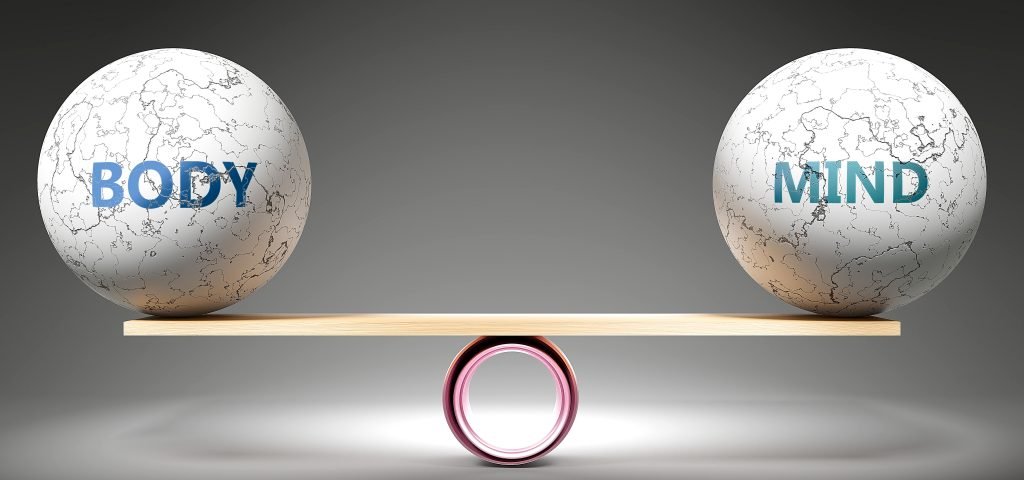
The mind and body connection is the two-way communication pathway in which your thoughts, emotions, and mental states directly change your physical health, and your physical state directly changes how you think and feel. It runs on three channels: nerve signals, hormones, and immune messengers. In 2023, researchers found that part of this connection is built into the physical structure of the brain itself, which moved it from a wellness idea to a mapped anatomical fact. Below we cover what it is, how each direction works, what it means when you stop feeling it, and what rebuilds it.
What Is the Mind and Body Connection?
The mind and body connection is the bidirectional relationship between your mental state and your physical state, in which each one constantly shapes the other through nerves, hormones, and immune signaling. Bidirectional is the word that matters most, because most people only think about one direction. A worried mind produces a tight stomach, and that is the familiar half. A tight stomach also produces a worried mind, and that is the half almost nobody considers.
Nobody considering it has real consequences. The American Psychological Association found that at least two thirds of Americans say their stress produces physical symptoms, most commonly nervous feelings, fatigue, and headaches. Those people are experiencing the connection every day without naming it, which usually means they treat the headache and leave the cause alone. People who come to us about mental wellness almost always arrive with a physical complaint attached.
The table below lays out both directions with the signal each one travels on, drawing on findings published in Nature, Frontiers in Psychiatry, JAMA Internal Medicine, Frontiers in Psychology, and survey data from the National Center for Health Statistics.
DirectionEveryday ExampleWhat Carries the SignalWhat the Research ShowsMind to bodyA stressful email raises your heart rateSympathetic nerves, adrenalineResponse begins within seconds of the thoughtMind to bodyMonths of worry leave you catching every coldCortisol through the HPA axisStudied under the field of psychoneuroimmunologyMind to bodyExpecting relief produces real reliefBrain's own pain and reward chemistryDocumented as the placebo effect in controlled trialsBody to mindA walk lifts your moodEndorphins, circulation, daylightOutdoor time dropped cortisol 21.3% per hourBody to mindSlowing your breathing calms your thinkingVagus nerve, parasympathetic signalingSlow breathing is FDA cleared for relaxationBody to mindA bad night's sleep shortens your temperHormonal reset, brain waste clearanceSleep loss raises next-day stress reactivityBody to mindAn upset stomach changes your outlookVagus nerve, enteric nervous system80 to 90% of vagus fibers run body to brainBoth at onceMeditation changes mood and blood pressure togetherShared brain networksMindfulness improved anxiety at an effect size of 0.38Both at onceBodywork lowers tension and lifts moodTouch receptors, hormonal shiftCortisol falls while serotonin and dopamine riseBoth at oncePlanning an action and preparing the body for itA dedicated brain networkIdentified in Nature in 2023
That last row describes the newest and strongest piece of evidence in the whole subject, and it is worth looking at closely.
Is the Mind-Body Connection Real?
Yes, the mind-body connection is real, and since 2023 we have known it is built into the physical architecture of the brain rather than existing only as a figure of speech. Physical architecture is the part that changed. Researchers at Washington University School of Medicine, publishing in Nature in April 2023, set out to re-verify the standard map of the brain's movement areas using modern imaging.
Modern imaging showed them something the old map could not explain. Interspersed among the regions that control the foot, the hand, and the mouth were three regions that had nothing to do with movement at all. Those regions connected instead to networks handling thinking, planning, mental arousal, pain, and the control of involuntary functions including blood pressure and heart rate.
Heart rate and blood pressure are not things you decide, which is exactly what makes the wiring significant. The team named the network the Somato-Cognitive Action Network, shortened to SCAN, with "somato" meaning body and "cognitive" meaning mind. They mapped it by scanning seven adults for hours each, then confirmed it against three large public datasets covering roughly 50,000 people, including the Human Connectome Project and the UK Biobank.
Fifty thousand brains is a serious validation set, and the finding overturned a map of the motor cortex that had stood for about 90 years. Earlier research had already shown these regions connect to internal organs, including the adrenal medulla, the gland that releases adrenaline. In plain terms, the part of your brain that plans what to do is wired directly into the parts that run your heartbeat and your stress chemistry.
What Is a Word for the Mind-Body Connection?
The most common words for the mind-body connection are psychosomatic, mind-body medicine, psychoneuroimmunology, interoception, and embodiment, and each names a different part of the subject. Each naming a different part is useful, because people often reach for the wrong one.
Here is what each term actually covers. Psychosomatic describes physical symptoms produced or worsened by mental and emotional states, and it means real symptoms rather than imaginary ones, which is where most people get the word wrong. Mind-body medicine describes the clinical approach that treats both together. Psychoneuroimmunology is the research field studying how the nervous system, the endocrine system, and the immune system interact. Interoception is your sense of your own internal state, meaning your ability to feel your heartbeat, your hunger, or your tension. Embodiment describes the experience of being present in your body rather than observing it from a distance.
Interoception is the one worth remembering, because it comes back later as the mechanism behind feeling connected or disconnected. First, the two directions themselves, starting with the familiar one.
How Does the Mind Affect the Body?
The mind affects the body through the stress response, hormone release, immune signaling, and changes to sleep, digestion, muscle tension, and pain perception. The stress response is the clearest example and the fastest, which is why every explanation of this subject starts there.
Starting there makes sense because the sequence is so easy to observe. A thought your brain reads as threatening triggers a nerve signal that releases adrenaline within seconds, raising heart rate, quickening breathing, and tightening the muscles across your shoulders and jaw. Cortisol follows through the hypothalamic-pituitary-adrenal axis over the next several minutes, keeping the body mobilized for as long as the brain believes the threat is present.
Believing a threat is present for months rather than minutes is where the damage happens. Sustained cortisol affects immune function, blood pressure, blood sugar, digestion, and sleep architecture, which is why a difficult year so often shows up as a physical problem rather than an emotional one. The research field studying this is psychoneuroimmunology, which examines how nervous, endocrine, and immune systems talk to each other, and its central finding is that mental states measurably change immune response. We cover the practical side of this in more depth under stress management, since stress is the mind-body connection most people meet first.
What Is an Example of a Mind-Body Connection?
The clearest everyday example is blushing: a social thought produces an involuntary change in blood flow to your face within seconds, and no amount of deciding not to blush will stop it. Deciding not to is exactly what makes it a good example, since it shows the pathway running without your permission.
These are the ones most people recognize once they are named:
- Butterflies before a presentation: anticipation changes gut motility through nerve signals
- A tension headache after a hard week: sustained muscle contraction in the scalp and neck
- Getting sick the week a stressful project ends: cortisol dropping after suppressing immune activity for weeks
- Your mouth going dry before you speak: the stress response shutting down digestion, including saliva
- Feeling physically lighter after a difficult conversation ends: the body releasing a bracing pattern it has been holding
- Pain feeling worse when you are tired or anxious: the brain amplifying the same incoming signal
- A gut feeling you cannot explain: your brain reading physical signals faster than you can consciously process them
- Crying producing a sense of relief: a physical act shifting an emotional state rather than the reverse
That last one runs backward from what people expect, which raises a fair question about how far this goes in either direction.
How Powerful Is the Mind-Body Connection?
The mind-body connection is powerful enough that expectation alone can produce measurable physical change, which researchers document as the placebo and nocebo effects, and it is not powerful enough to replace medical treatment. Both halves of that sentence are true and both matter.
The placebo effect is the strongest evidence in the subject, because it appears in controlled trials designed specifically to rule out wishful thinking. People given an inert treatment they believe will help often show real improvements in pain, nausea, and sleep, and the effect is traced to the brain's own pain and reward chemistry rather than to imagination. The nocebo effect works in reverse, with negative expectation producing real side effects.
Real side effects from expectation alone tells you the pathway is genuine. It does not tell you the pathway is unlimited. A positive outlook does not cure cancer, a calm mind does not set a broken bone, and nobody should delay medical care because they believe they can think their way through a condition. We say this plainly because the opposite message circulates widely in wellness spaces and it does real harm. The honest position is that mental state meaningfully influences physical health and sits alongside medical care rather than replacing it.
Alongside medical care is also where the second direction belongs, and it is the one that gets far less attention than it deserves.
How Does the Body Affect the Mind?
The body affects the mind through movement, breathing, posture, sleep, inflammation, and signals traveling up from the gut, and this direction carries more traffic than most people assume. More traffic is measurable rather than figurative: between 80 and 90 percent of the fibers in the vagus nerve, the main nerve linking your organs to your brain, run upward from body to brain rather than downward.
Running upward means your brain spends most of its time listening to your body rather than instructing it. That reframes a lot of ordinary experience. A tight chest is both a result of anxiety and an input your brain reads as evidence that something is wrong, which produces more anxiety. The loop runs in both directions at once, which is why physical interventions change mental states so reliably.
Changing mental states through the body is the basis of nearly every practice in this field. Slow breathing activates the vagus nerve and lowers heart rate, which is why device-guided slow breathing is cleared by the Food and Drug Administration for relaxation and recognized by the American Heart Association as an adjunctive approach for blood pressure. Movement releases endorphins and clears stress chemistry. Outdoor time produced a 21.3 percent per hour drop in cortisol in research published in Frontiers in Psychology. Sleep resets the hormonal system that governs all of it, which is why a run of bad nights shortens your temper before it does anything else, and why building better sleep habits changes mood faster than most people expect.
How Does Your Gut Affect Your Mood?
Your gut affects your mood by sending a constant stream of signals up the vagus nerve to the brain, and it runs on a nervous system of its own containing roughly 100 to 500 million neurons. One hundred to 500 million neurons embedded in the wall of your digestive tract is why researchers nicknamed the enteric nervous system the second brain.
The second brain produces its own chemistry too. Between 90 and 95 percent of the body's serotonin is made in the gut rather than in the brain, by specialized cells lining the intestinal wall. That figure gets quoted constantly in wellness content, and it is usually quoted wrong, so here is the correction: gut-produced serotonin does not cross the blood-brain barrier and does not directly lift your mood. It does local work on digestion and motility.
Local work still reaches your brain, just by a longer route. The gut influences mental state through three indirect channels: nerve signals traveling the vagus, immune messengers, and metabolic byproducts produced by gut bacteria. Those channels are the real mechanism behind a gut feeling, and they are also why digestive symptoms and mood symptoms so often arrive together. Sorting out what is going into the system is a regular part of nutritional counseling, and it tends to change more than digestion.
Why Do I Feel Like My Mind Is Not Connected to My Body?
You feel like your mind is not connected to your body when interoception, your sense of your own internal state, has become dulled, usually by prolonged stress, chronic tension, or long stretches of living in your head. Interoception is the technical name for the thing people are describing when they say they feel disconnected, and naming it helps, because a dulled sense can be retrained.
Retraining it starts with knowing why it dulls. Three causes account for most cases. Prolonged stress keeps the body in an alert state so constant that it stops registering as a signal and starts registering as normal. Chronic muscular holding floods the system with so much background noise that subtler sensations get lost underneath it. And work that lives entirely in thought, which is most modern work, gives you no reason to check in with your body for hours at a time.
Hours at a time adds up. Many people only notice how much they are holding when someone presses on their shoulders, which is the moment the background noise becomes audible. Persistent muscle tension is both a cause and a symptom of this, and it is one of the most common things people bring to us without connecting it to anything mental.
One distinction is worth making here. Feeling generally out of touch with your body is common and responds well to practice. Feeling detached from yourself in a way that is persistent, frightening, or makes the world seem unreal is different, and it deserves a conversation with a doctor or licensed therapist rather than a breathing exercise.
How Do You Fix the Mind-Body Connection?
You strengthen the mind-body connection by practicing attention to physical sensation on purpose, starting with breath and movement and building toward stillness, for a few minutes daily rather than an hour occasionally. A few minutes daily is the part that decides whether this works, because interoception improves through repetition the same way any sense sharpens with use.
Here is the progression we give people, ordered from the easiest entry point to the deepest:
- Start with breath. Breathe at about six breaths per minute, four counts in and six counts out, for three minutes. Breath is the only automatic function you can take over consciously, which makes it the natural doorway.
- Add a daily check-in. Once a day, stop and name three physical sensations without changing them. Jaw, shoulders, and stomach are the usual three.
- Move with attention. Walk, stretch, or do yoga while paying attention to how it feels rather than listening to something.
- Learn a body scan. Move your attention slowly from head to toe, noting what you find at each stop. Ten minutes is enough.
- Bring in hands-on work. Touch from another person reaches tension that attention alone will not release.
- Add stillness. Sit without a task for ten minutes. This is the hardest step and the one that compounds the most.
Step six is where most people get stuck, because an overactive mind resists stillness hardest at exactly the moment it needs it most. Guided audio removes that obstacle, and BrainTap sessions pair guided meditation with light and sound patterns that guide brain activity toward slower, calmer states without requiring you to produce the calm yourself.
What Are Some Examples of Mind-Body Activities?
The main mind-body activities are meditation, yoga, tai chi, qigong, breathwork, body scan practice, progressive muscle relaxation, massage, and acupuncture. Massage and acupuncture belong on that list for the same reason the others do: all nine work on mental state by working through the body.
Americans have taken these up in large numbers over the past twenty years. National Health Interview Survey data analyzed by the National Center for Complementary and Integrative Health shows that adult meditation use rose from 7.5 percent in 2002 to 17.3 percent in 2022, which makes meditation the most used complementary health approach in the country. Yoga reached 15.8 percent of adults, massage therapy 10.9 percent, and guided imagery or progressive muscle relaxation 6.4 percent.
What people use them for is telling. Among adults who practiced yoga in 2022, the Centers for Disease Control and Prevention found that 80 percent did so to restore overall health, 57.4 percent meditated as part of the practice, and 28.8 percent used it to treat or manage pain. A single practice serving mental wellbeing, general health, and physical pain at once is the mind-body connection stated as a usage statistic.
Hands-on work sits in the same category and reaches what self-directed practice cannot. Regular massage therapy releases holding patterns people have stopped noticing, and research on massage shows cortisol falling while serotonin and dopamine rise.
Energy-based work follows the same principle through a different door. Reiki and similar sessions are built around moving the body out of its alert state and holding it there long enough for the nervous system to register the change, which tends to suit people who find stillness hardest to reach on their own.
How Do You Feel More Connected to Your Body?
You feel more connected to your body by practicing interoception directly, and the body scan is the most effective single exercise for it. The body scan works by giving your attention a route to follow, which removes the vagueness that makes "pay attention to your body" such useless advice.
Useless advice is most of what people get offered here, so here is the actual method. Lie down or sit comfortably. Start at the crown of your head and move your attention slowly downward, pausing at your face, jaw, throat, shoulders, arms, hands, chest, stomach, hips, legs, and feet. At each stop, notice temperature, tension, weight, or the absence of any sensation at all. Notice without fixing.
Noticing without fixing is the discipline. The goal is not relaxation, though relaxation usually follows. The goal is restoring the signal, and ten minutes a day produces noticeable change within a few weeks for most people.
Can the Mind and Body Be Separated?
No, the mind and body cannot be separated, though Western thinking treated them as separate for roughly 350 years and medicine is still working its way out of that assumption. That assumption has a specific origin, which is worth knowing because it explains why this subject still gets treated as alternative rather than basic.
The origin is René Descartes, the seventeenth-century French philosopher who proposed that mind and body are two distinct substances interacting at a single point in the brain. His position, known as dualism, shaped Western medicine for centuries by making it reasonable to treat the body as a machine and leave the mind to someone else. Ancient traditions never made that split. Traditional Chinese medicine, Indian Ayurvedic medicine, and the Greek physicians all treated mental and physical health as one subject.
One subject is where the evidence now sits. Psychoneuroimmunology demonstrated that mental states change immune function. The 2023 Nature findings showed the wiring in the brain itself. The practical consequence is that treating a physical symptom while ignoring sustained mental strain, or the reverse, means working on half a system and wondering why results stall.
Working on half a system raises an obvious question about which half gives way first.
What Gives Out First, Your Mind or Your Body?
Your body usually gives the first signal, and your mind usually overrides it, which is why most people notice the problem only when the body escalates to something they cannot ignore. Overriding is the key behavior and it is almost automatic in people with demanding work or caregiving responsibilities.
Automatic overriding looks ordinary from the inside. The early signals are quiet: shallower breathing, a tighter jaw, shorter sleep, a stomach that is slightly off, less appetite for things you normally enjoy. Each is easy to dismiss individually. The mind dismisses them because dismissing them is how you get through a demanding period, and that works until the body raises its volume to a level that stops the day.
Stopping the day is the escalation nobody wants, and it is avoidable. The practical move is to treat early physical signals as information rather than inconvenience, which is also the single most useful habit the mind-body connection teaches. Acting at that stage usually means adjusting load and recovery rather than anything dramatic, and the methods we cover for how to reduce stress naturally apply directly.
What Are the Signs of a Weak Mind-Body Connection?
The signs of a weak mind-body connection are unexplained physical symptoms, difficulty naming what you are feeling, chronic tension you only notice when touched, poor sleep, and a sense of operating on autopilot. Operating on autopilot is the one people recognize immediately, and it usually appears before any of the physical signs do.
The physical signs cluster predictably: persistent headaches, digestive trouble, muscle tension through the neck and shoulders, fatigue that sleep does not resolve, and appetite moving in either direction. The emotional and mental signs cluster too: difficulty concentrating, trouble making decisions, irritability that seems out of proportion, and a flatness where interest used to be.
Out of proportion is a useful phrase to watch for in yourself. Reactions that feel larger than their trigger usually mean the system was already loaded before the trigger arrived. This is also where cognitive function and physical symptoms stop looking like separate problems and start looking like one pattern.
Any of these can have causes unrelated to stress or disconnection, which is why persistent physical symptoms deserve a proper medical evaluation rather than being filed under mind-body by default. Ruling things out is part of taking the connection seriously, not a departure from it.
How Long Does It Take to Strengthen the Mind-Body Connection?
Most people notice a change within two to four weeks of daily practice, with the first shift usually being awareness rather than relief. Awareness arriving first catches people off guard, because the early effect of paying attention to your body is often discovering how much tension was there all along.
All along is the right way to think about it. The tension was not created by the practice; it was revealed by it. That discovery feels like going backward and is actually the first measurable result. Relief follows once the body starts releasing what it has been holding, usually in the second or third week.
Weeks matter more than intensity here. Ten minutes daily outperforms an hour on Sunday, because interoception sharpens through frequency the same way any skill does. Sessions at our Bedford Hills center are built around that logic, giving people a regular, protected block where the nervous system has nothing to manage.
Members across Westchester County who stay with it describe the same arc: first they notice, then they release, then they start catching the early signals in daily life rather than weeks later. Time in the EESystem, on the PEMF mats, or in the salt room supports that process by working on the body while the mind is given nothing to do.
For anyone whose starting point involves persistent low mood, difficulty concentrating, or a sense of detachment that does not shift, pairing this work with proper mental health support from a licensed professional makes the difference.
Frequently Asked Questions
Is It True That the Mind and Body Are Connected?
Yes, it is true that the mind and body are connected, and the evidence is anatomical rather than philosophical. Research published in Nature in 2023 identified a brain network linking the areas that handle planning and thinking directly to those controlling blood pressure and heart rate. Separate fields including psychoneuroimmunology have documented how mental states change immune function.
What Are Some Signs of Emotional Health?
Signs of emotional health include being able to name what you are feeling, recovering from setbacks within a reasonable period, maintaining steady relationships, sleeping well most nights, and feeling physical sensations clearly rather than vaguely. The physical ones belong on that list because emotional health and bodily awareness track together closely. Emotional health is not the absence of difficult feelings, it is the capacity to feel them and return to baseline.
What Is Psychosomatic Illness?
Psychosomatic illness means physical symptoms that are caused or worsened by mental and emotional factors, and the symptoms are entirely real rather than imagined. People most often take the word to mean someone is making it up, which is wrong. A tension headache produced by three weeks of worry involves genuine muscle contraction and genuine pain.
Can You Think Yourself Well?
No, you cannot think yourself well, though mental state does measurably influence physical outcomes through the placebo effect, immune function, and stress chemistry. The honest framing is that mindset is a real factor working alongside medical care, not a substitute for it. Delaying treatment for a diagnosed condition in favor of mindset work causes real harm.
Can Improving Physical Health Improve Mental Health?
Yes, improving physical health improves mental health, and this direction often produces faster results than working on mental state directly. Exercise, sleep, daylight, and nutrition all change brain chemistry and stress hormone levels. Outdoor time alone produced a 21.3 percent per hour drop in cortisol in research published in Frontiers in Psychology.
Does Breathing Really Change Your Mental State?
Yes, breathing really changes your mental state, because breath is the one automatic function you can control consciously, which gives you direct access to the nervous system. Slowing to about six breaths per minute with a longer exhale activates the vagus nerve and shifts the body toward recovery. Device-guided slow breathing in that range is cleared by the Food and Drug Administration for relaxation.
Does Sleep Affect the Mind-Body Connection?
Yes, sleep affects the mind-body connection more than almost any other daily factor, because the hormonal system governing stress chemistry resets overnight. Short sleep raises next-day stress reactivity, dulls emotional regulation, and makes physical sensations harder to read accurately. Seven hours is the minimum for adults.
The Bottom Line
The mind and body connection is a two-way pathway carried by nerves, hormones, and immune signals, and since 2023 we have known part of it is wired into the structure of the brain itself. The direction most people know is thoughts producing physical effects. The direction worth learning is the reverse, where breath, movement, sleep, and gut signals shape how you think and feel, carrying most of the traffic between the two.
Strengthening the connection comes down to practicing attention to physical sensation on purpose, for a few minutes most days, starting with breath and building toward stillness. Expect awareness before relief and give it two to four weeks. If physical symptoms persist, get them properly evaluated, and if low mood or detachment persists, talk to a licensed professional, because taking this connection seriously means taking both halves seriously. For the ongoing work of keeping mind and body in conversation, that is what we do with members at Quantum Healing & Wellness.
We are always glad to talk through where to start, so get in touch whenever you are ready, or call us at (914) 218-3428.
Read our recent Blogs
Quantum Healing and Wellness PMA in Westchester NY is commited to wellness conent for you








.avif)
.png)

.png)