


.avif)



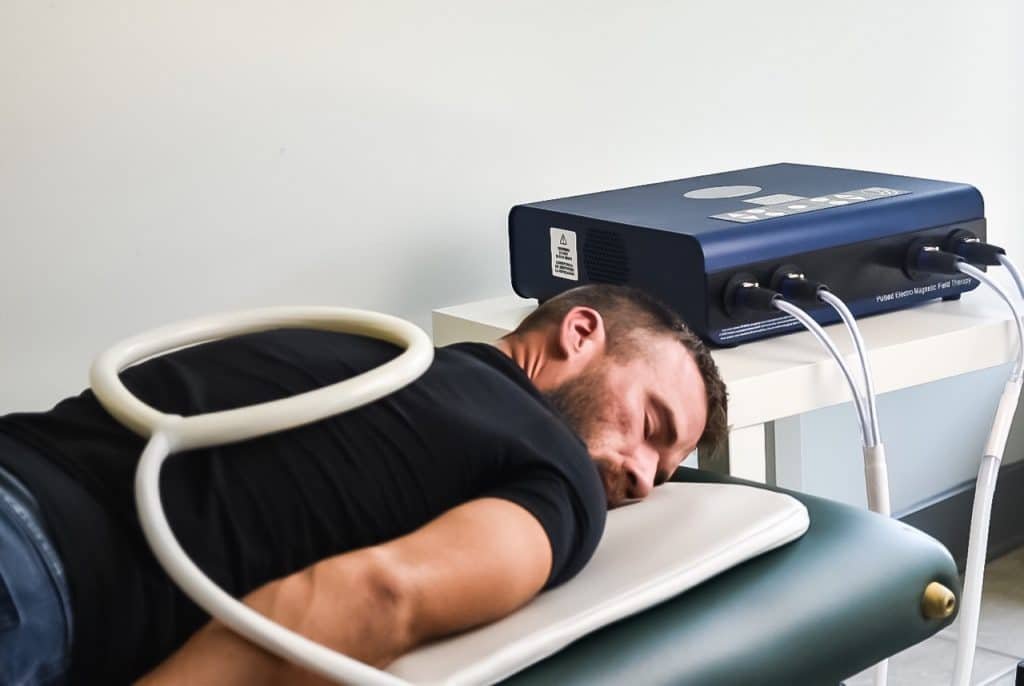
Pulsed electromagnetic field (PEMF) therapy is generally safe, and some people experience mild, temporary reactions. The four most common are short-term fatigue or drowsiness, mild headache or lightheadedness, slight warmth or tingling or muscle twitching in the treated area, and momentary dizziness or minor blood pressure shifts. These effects usually happen as the body adjusts and fade quickly, and shortening session times or lowering the device intensity reduces them.
Below we explain what causes each reaction, how long they typically last, how to make them milder, whether the therapy can do actual harm, and which specific groups should talk to a provider before starting.
What Are the Side Effects of PEMF Therapy?
The side effects of PEMF therapy are short-term fatigue or drowsiness, mild headaches or lightheadedness, slight warmth or tingling or muscle twitching at the treated area, and momentary dizziness or minor blood pressure shifts. Most people feel none of these at all. Cleveland Clinic describes the reported side effects as mild and temporary dizziness or fatigue, and the Therapeutic Research Center, whose clinical database is licensed to WebMD, describes the therapy as generally well tolerated when used under medical supervision.
Medical supervision is a meaningful qualifier, and the published record backs the tolerability claim. A 2025 systematic review in PLOS One examining PEMF trials found adverse events such as petechiae, small subcutaneous hematomas, and mild skin redness appearing in both the treatment groups and the control groups, all resolving within 24 hours, with no severe events recorded.
No severe events across a body of controlled trials is a strong signal, and the same review notes that adverse event reporting has been inconsistent across studies, so precise incidence numbers are not available. The table below groups what people actually report.
ReactionWhat It Feels LikeHow Long It LastsWhat Reduces ItFatigue or drowsinessHeaviness, a strong pull toward sleep, feeling worn out2 to 24 hoursShorter session, rest, an early nightHeadache or lightheadednessDull pressure behind the eyes or temples, a floaty feelingA few hoursWater before and after, lower intensityWarmth, tingling, twitchingMild heat, pins and needles, small involuntary muscle flickersDuring the session, fading within minutesLower intensity settingDizziness or blood pressure shiftsBrief unsteadiness, usually on standing upSeconds to a few minutesSitting up slowly, eating beforehand
Guests who report anything from this list to us usually do so after a first PEMF healing mat session rather than a later one, and there is a clear physiological reason for that pattern.
Why Do PEMF Side Effects Happen?
PEMF side effects happen because the electromagnetic pulses raise nitric oxide production, nitric oxide widens small blood vessels, and widened vessels shift blood volume and fluid distribution across the body. Nitric oxide is the molecule that relaxes the smooth muscle lining arterioles, and its release is one of the better-documented physiological responses to pulsed electromagnetic fields.
Documented responses of that kind produce measurable results. A 12-week double-blind randomized study published in Blood Pressure by researchers at Mayo Clinic assigned 23 subjects to PEMF and 21 to sham treatment, and found a significant rise in plasma nitric oxide in the active group with a p-value of .04, while the sham group showed no change.
A change in circulating nitric oxide is not a side effect in itself, and it is the upstream cause of nearly everything people report. Vessel dilation drops peripheral resistance slightly, which is where the lightheadedness comes from. Redistributed blood volume is why standing up quickly feels different. Increased fluid turnover is why hydration matters so much. Direct stimulation of tissue is what produces the local warmth and tingling.
One explanation you will see repeated on wellness sites is that these symptoms are the body detoxing. That framing has no physiological basis, and we do not use it. Nothing is being flushed out of the body during a PEMF session, and describing a circulatory response as a detox reaction only makes it harder for someone to tell an ordinary effect from a symptom that deserves attention.
Attention to each reaction individually makes the pattern much easier to read, and the five below account for essentially all of it. Guests who combine the mat with red light therapy in the same visit sometimes notice these effects slightly more, since heat and light influence circulation through their own pathways.
Why Does PEMF Therapy Make You Tired?
PEMF therapy makes you tired because lying still for 20 to 45 minutes while circulation increases and blood pressure eases moves the nervous system into a rest state. A rest state raises sleep pressure the same way a warm bath or a long massage does, and it is the most common reaction people report.
Reported tiredness tends to be strongest after a first session and lighter after the third or fourth. Someone arriving with accumulated sleep debt feels it most, because the drop in alertness makes existing fatigue visible rather than creating new fatigue. Sessions late in the day suit people prone to this, since the drowsiness lands at a useful hour.
Can PEMF Therapy Cause Headaches or Lightheadedness?
PEMF therapy can cause a mild headache or lightheadedness, usually within the first few hours after a session, and both are among the most commonly reported reactions. Commonly reported does not mean frequent, and most people finish a session with neither.
Neither reaction points to anything going wrong. Vessel dilation changes pressure distribution in the head slightly, which is the same mechanism behind the mild headache some people get after a hot bath or a sauna. Increased fluid turnover compounds it when someone arrives already under-hydrated, which is why water before the session matters more than water afterward.
Water beforehand plus a lower intensity setting resolves this for nearly everyone who experiences it repeatedly.
Is Tingling, Warmth, or Muscle Twitching Normal?
Tingling, warmth, and small muscle twitches in the treated area are normal during PEMF therapy and typically fade within minutes of the session ending. Fading within minutes distinguishes these from the other reactions, which show up afterward rather than during.
During the session, the pulsing field induces very small electrical currents in tissue, and muscle fibers sitting closest to the applicator sometimes respond with brief involuntary flickers. Brief flickers of that kind are a direct effect of the field rather than a downstream one, which is why lowering the intensity setting stops them immediately.
Immediate response to an intensity change is a useful diagnostic in itself. A sensation that scales with the dial is a field effect. A sensation that does not is worth mentioning to whoever is running your session.
Does PEMF Therapy Lower Blood Pressure?
PEMF therapy does not appear to lower resting blood pressure, though it does appear to affect how blood pressure behaves during exertion. Exertion is where the Mayo Clinic study found its clearest result: peak systolic blood pressure during exercise dropped significantly in the PEMF group with a p-value of .04, while the sham group showed no such change.
No such change appeared in resting measurements either. Systolic, diastolic, and mean arterial pressure at rest showed no significant difference between the PEMF and sham groups. The effects that did appear were most pronounced in participants who already had resting hypertension, meaning a systolic reading of 140 mmHg or above.
Readings in that range are worth mentioning at intake, since anyone managing blood pressure with medication should have their prescriber aware of what they are adding. People focused specifically on cardiovascular health generally treat this as an addition to their physician's plan rather than a substitute for any part of it.
Another approach to the same circulatory target is microcirculation therapy, which works through the palm of the hand and tends to produce fewer whole-body sensations.
Can PEMF Therapy Affect Your Sleep?
PEMF therapy can affect your sleep in the short term, most often by making the first night deeper than usual, and occasionally by making it more restless. Restless first nights are the less common of the two and usually settle by the second night.
The second night onward tends to track back toward a person's normal pattern. Sleep changes after a session are a mixed category, because better sleep is one of the reasons many people book in the first place, and a disrupted first night is a temporary adjustment rather than a lasting effect. Anyone coming to us for sleep support should expect the picture to look clearer after two or three weeks rather than after one night.
How Long Do PEMF Side Effects Last?
PEMF side effects generally last less than 24 hours, and many resolve within minutes to a few hours of the session ending. The 24-hour figure comes from the PLOS One systematic review, where every adverse event recorded across the included trials resolved inside a single day and none were classified as severe.
A single day is the outer edge for the reactions covered here. Tingling and warmth end with the session. Dizziness passes in seconds to minutes. Headache runs a few hours. Fatigue is the longest of the group and typically clears by the next morning.
The next morning is also when most people notice the reaction was milder than the previous time, because these effects lessen as sessions accumulate. Anything persisting past a couple of days, worsening rather than easing, or arriving with fever or severe pain has moved outside this range and belongs in front of a healthcare provider.
How Can You Reduce PEMF Side Effects?
You reduce PEMF side effects by shortening the session, lowering the device intensity, hydrating beforehand, and building up gradually rather than starting at a full-length treatment. Starting gradually is the single most effective step, and it is the one most often skipped by people eager to feel a result.
Feeling a result is not related to reaction intensity in any case. Here is the sequence we use with new guests at our Bedford Hills center:
- Book a shorter first session. Published protocols run anywhere from 5 minutes to 4 hours, so there is wide latitude to start at the gentle end and extend later.
- Start at a lower intensity. Warmth, tingling, and twitching scale directly with the setting, so a lower dial removes them without removing the session.
- Drink water 30 to 60 minutes beforehand. Arriving hydrated prevents more headaches than drinking water afterward does.
- Eat something light before you come. An empty stomach makes lightheadedness considerably more likely.
- Sit up slowly at the end and stay put for a few minutes. Standing quickly after lying still is the direct cause of most reported dizziness.
- Keep the next hour undemanding. Hard training or a long drive immediately afterward turns a mild reaction into an uncomfortable one.
- Log what you felt and tell us next time. Reaction patterns are individual, and a two-line note lets us adjust length and intensity precisely.
Adjusting precisely from session to session is the whole point of tracking, and it is why regular mat sessions tend to get more comfortable rather than less.
Can You Do PEMF Too Much?
You can do PEMF often enough to feel drained or headachy, and no toxic threshold or cumulative damage limit has been established for it. The practical ceiling is comfort rather than safety, which is a different kind of limit than the one people usually have in mind.
In mind for most people is something like a dose limit, and the research does not support one. The Mayo Clinic protocol ran 16-minute sessions three times daily for 12 consecutive weeks with no safety problems reported. Published session lengths range up to 4 hours. A randomized controlled pilot in post-viral fatigue recorded zero dropouts in the PEMF group and strong adherence throughout.
Strong adherence across those studies suggests the therapy is tolerable at volumes far above what most wellness guests use. How long you can lie on a mat in one sitting is governed by the device manufacturer's guidance and by how you feel, and someone who consistently feels wiped out afterward should shorten sessions and space them further apart before doing anything else.
Doing anything else includes stopping entirely, which is rarely necessary. Two to four PEMF therapy sessions a week suits most people, and reactions almost always taper after the first two.
Can PEMF Therapy Cause Damage?
PEMF therapy has not been shown to cause tissue damage, and no severe adverse events were recorded in the controlled trials that tracked them. Tracking adverse events is exactly what the PLOS One review examined, and the events it found were minor skin-level effects that appeared in placebo groups at similar rates.
Similar rates in placebo groups is a detail worth sitting with, because it means several reported effects were not caused by the field at all. A separate meta-analysis published in BMJ Open in 2018 assessed both efficacy and safety across 12 randomized sham-controlled osteoarthritis trials, covering knee, cervical, and hand joints, and found no safety signal that would argue against use.
Arguments against use come from a different direction entirely. The field itself is low-intensity and non-invasive, nothing is ingested, nothing is applied to skin, and no tissue is manipulated, so the pathways that produce injury in other treatments simply are not present. People managing pain and inflammation often find this the most reassuring part of the picture.
The reassuring part has a limit, and the limit is where the genuine risks live.
What Are the Potential Dangers of PEMF Therapy?
The potential dangers of PEMF therapy come almost entirely from device interaction and from skipped screening, not from the electromagnetic field acting on healthy tissue. Healthy tissue tolerates the field well, and the meaningful risk sits with what else is in or on the body.
What else is in the body matters because an external magnetic field can interfere with implanted electronics. Cleveland Clinic also flags medication delivered through a skin patch, since changes in local circulation may alter the rate at which that medication is absorbed. Epilepsy and active seizure disorders appear on every major contraindication list.
Every major list also names pregnancy, and the reason there is absence of data rather than evidence of harm. The Therapeutic Research Center states that there is not enough reliable information to know whether PEMF is safe during pregnancy or breastfeeding, and advises avoiding it.
Avoiding it on those grounds is straightforward precaution. A second, quieter danger is treating any wellness therapy as a reason to delay a medical evaluation, which is a risk that belongs to the person rather than to the device.
Does PEMF Therapy Affect the Heart?
PEMF therapy does not appear to affect a healthy heart directly, and it can interfere with cardiac devices such as pacemakers and implantable defibrillators. Interference with cardiac devices is the reason pacemakers head every contraindication list published on this topic.
Every list treats them the same way for a simple reason: these devices read and respond to electrical signals, and an external pulsing magnetic field can disrupt that reading. Anyone with a pacemaker, defibrillator, or other implanted electronic device should coordinate with their cardiology team before considering any electromagnetic therapy, and most centers decline to treat without that clearance.
Clearance aside, the cardiovascular findings in healthy and metabolically stressed adults have been favorable rather than concerning. The Mayo Clinic study found improved nitric oxide availability and a lower peak systolic pressure during exercise, with the strongest effects in participants who already had hypertension.
Participants with existing hypertension responding most strongly is precisely why medication interaction is worth raising at intake. A related option for people already using pulsed fields is BEMER, an FDA Class II device that uses an 8-minute session to stimulate muscles and enhance blood flow, and the same screening questions apply to it.
Who Should Not Do PEMF Therapy?
You should avoid PEMF therapy if you are pregnant, use an implanted medical device such as a pacemaker or insulin pump, take medication delivered through a skin patch, or have epilepsy or an active seizure disorder. Cleveland Clinic lists all four, and the guidance is consistent across the major clinical sources on this topic.
Consistent guidance extends a little further in some settings. The fuller screening list used across the field includes:
- Pregnancy or breastfeeding, on the basis of insufficient data rather than documented harm.
- Pacemakers, implantable defibrillators, insulin pumps, deep brain stimulators, cochlear implants, and intrathecal pumps.
- Medication delivered through a transdermal patch.
- Epilepsy or an active seizure disorder.
- Magnetic or ferromagnetic implants, and any implant labeled unsafe for MRI.
- Active bleeding, a diagnosed bleeding disorder, or ongoing use of blood-thinning medication without prescriber input.
- Organ transplant recipients taking immunosuppressant medication.
- Undiagnosed symptoms that have not yet been evaluated by a physician.
Anyone on that list is not out of options here. Guests we screen out of the mat often move to the Biomodulator, an FDA-cleared microcurrent device that treats pain through the peripheral nervous system.
Others do well with time in our Energy Enhancement System or with hands-on modalities, and we work out the alternative during intake rather than turning anyone away at the door.
Intake at our Bedford Hills location includes direct questions about implants and current medications for exactly these reasons, and Dr. Adams offers a short consultation for anyone who wants to review their situation before booking.
Is PEMF Therapy Safe During Pregnancy?
PEMF therapy is not recommended during pregnancy, because there is not enough reliable information to establish whether it is safe. Establishing safety would require studies that have not been done, and the Therapeutic Research Center advises avoiding use in pregnancy and breastfeeding on that basis.
That basis is precaution rather than evidence of harm, which is a distinction worth stating plainly. No documented fetal harm from PEMF exists in the literature. The guidance stands anyway, because absence of data is not the same as evidence of safety.
Can You Use PEMF Therapy With a Pacemaker or Implant?
You should not use PEMF therapy with a pacemaker or other implanted electronic device without clearance from the specialist who manages that device. Device specialists are the right people to ask, since they know the specific model's shielding and its tolerance for external fields.
External fields are the concern with electronic implants specifically. Non-electronic hardware such as a titanium plate or a joint replacement is a separate question and generally lower risk, though anything magnetic or ferromagnetic, or anything labeled unsafe for MRI, needs the same conversation.
Can PEMF Therapy Trigger a Seizure?
PEMF therapy is avoided in people with epilepsy or an active seizure disorder as a precaution, and documented seizures caused by body-applied PEMF are not established in the literature. The literature that does describe seizure risk from magnetic stimulation concerns transcranial magnetic stimulation, a different therapy that targets the brain directly at far higher intensities.
Higher intensities and a brain target are what separate the two, and conflating them overstates the risk of body-applied PEMF considerably. The precaution remains standard practice regardless, and anyone with a seizure history should have this conversation with their neurologist first.
Is PEMF Therapy Safe?
PEMF therapy is safe for most people when contraindications are screened for properly, with reported side effects limited to mild and short-lived reactions. Proper screening is the condition attached to that answer, and it is the reason this article puts the verdict at the end rather than the beginning.
At the beginning, a safety claim is just an assertion. With the record in view, it is a conclusion: no severe adverse events in the trials that tracked them, all recorded events resolving within 24 hours, several appearing at similar rates in placebo groups, and a 12-week daily protocol completed without safety problems.
Safety problems that do exist trace to device interaction and skipped screening rather than to the therapy itself. It is also worth saying that the evidence base has real limits. A 2020 meta-analysis in Physical Therapy rated overall study quality as low or very low, with only 2 of 15 trials at low risk of bias, and there is still no standardized protocol for duration, frequency, or intensity across the field.
When Should You Contact a Healthcare Provider?
Contact a healthcare provider if a reaction is severe, lasts more than a couple of days, worsens instead of easing, or involves chest pain, fainting, a severe headache, or new neurological symptoms. New neurological symptoms include vision changes, weakness on one side, or persistent confusion, and none of these belong to the ordinary reaction range described here.
The ordinary range is narrow and short: brief warmth or tingling during a session, mild tiredness or a dull headache for a few hours afterward, a moment of unsteadiness on standing. Anything sitting well outside that shape points somewhere other than the session and deserves a proper evaluation.
Proper evaluation is also the right response to anything that simply feels wrong to you, whatever a chart says is typical. Anyone with an implanted device who notices unusual symptoms or a device alert should contact their device team the same day.
Frequently Asked Questions
Can PEMF Therapy Cause a Detox Reaction?
PEMF therapy does not cause a detox reaction, despite how often that explanation appears online. Nothing is being flushed from the body during a session, and the fatigue or headache some people feel afterward comes from vessel dilation and fluid redistribution instead. People interested in genuine detox support are better served by approaches built around the liver, kidneys, and lymphatic system.
Is PEMF Safe With Metal Implants?
PEMF is generally lower risk with non-magnetic hardware such as titanium plates, screws, or joint replacements, and it should be avoided with magnetic or ferromagnetic implants. Any implant labeled unsafe for MRI falls into the avoid category. The surgeon who placed the hardware can confirm which material it is, and that answer settles the question.
Can PEMF Be Used With Blood Thinners?
PEMF should be discussed with your prescriber before use if you take blood-thinning medication or have a diagnosed bleeding disorder. Because the therapy influences local circulation, providers commonly treat active bleeding as a reason to hold off. This is a conversation rather than an automatic no for most people on anticoagulants.
What Should You Do After a PEMF Session?
After a PEMF session, sit up slowly, drink water, and keep the following hour light. Circulation and fluid turnover both rise during a session, which makes hydration the most useful single step. Noting what you felt takes thirty seconds and gives whoever runs your next session something concrete to adjust.
Do PEMF Side Effects Go Away With Repeated Sessions?
PEMF side effects usually do fade with repeated sessions, and most people notice a clear difference by the third or fourth appointment. Reactions are strongest at the start because the circulatory shift is largest when the body has not encountered it before. Reactions that stay strong session after session usually mean the intensity or duration needs lowering.
Is PEMF Safe to Combine With Other Therapies?
PEMF is generally safe to combine with other therapies, and it is used as a complementary approach alongside conventional care rather than in place of it. No substance is ingested, so there are no drug interactions in the usual sense. Stacking several circulation-focused treatments in one visit can make reactions slightly stronger, which is worth spacing out at first.
The Bottom Line
PEMF therapy is generally safe, and the reactions some people feel are mild, short, and explainable. Fatigue, mild headache, local warmth or tingling, and brief dizziness cover nearly all of them, they trace back to increased nitric oxide and wider blood vessels rather than to any detox process, and they almost always clear within a day. Shorter sessions, lower intensity, water beforehand, and standing up slowly handle the rest.
What genuinely matters is the screening. The real risks attach to implanted electronic devices, medication patches, seizure disorders, and pregnancy, not to the field itself, so an honest intake conversation does more for safety than anything else on this page. Anything severe, worsening, or lasting more than a couple of days deserves a medical opinion rather than a wellness explanation.
If you are weighing whether PEMF fits your situation, we would rather talk it through first than have you guess. Our team at Quantum Healing & Wellness reviews implants, medications, and history with every new guest, and you can reach out with questions before booking anything.
Read our recent Blogs
Quantum Healing and Wellness PMA in Westchester NY is commited to wellness conent for you







.avif)
.png)

.png)