


.avif)



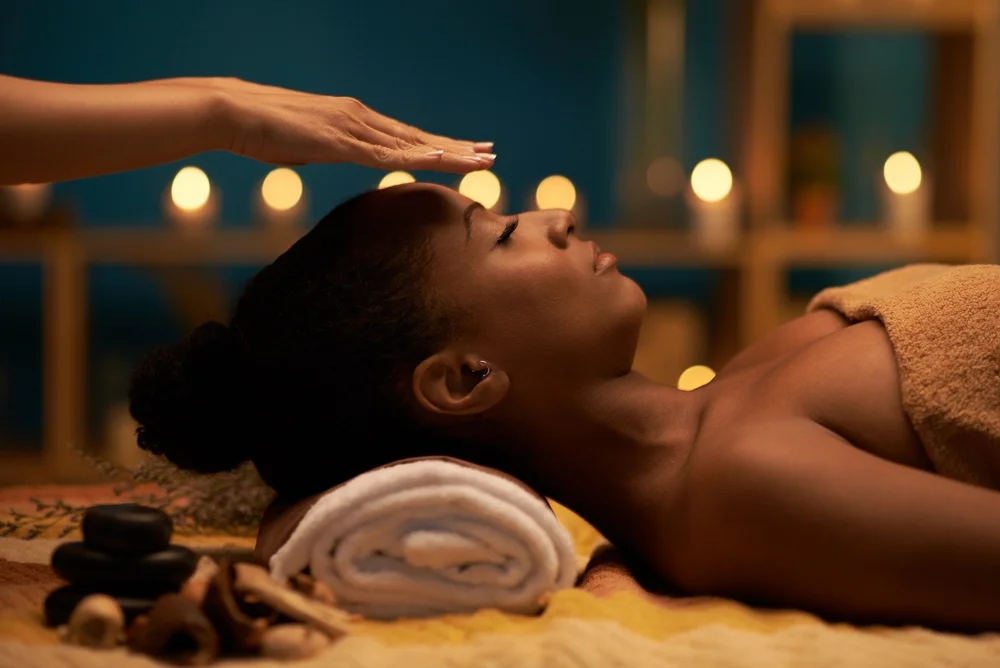
During a Reiki session, you lie fully clothed on a comfortable treatment table while a trained practitioner places their hands lightly on or just above specific areas of your body. The practitioner holds each position for 3-5 minutes, moving from the head down through the torso to the feet. A large-scale qualitative study by Dyer et al., analyzing 1,284 Reiki sessions across 99 practitioners in the United States, found that 68% of recipients reported deep relaxation and calm, 53% experienced body sensations like warmth or tingling, and 29% noticed emotional responses during the session. Reiki requires no active effort from the recipient, no disrobing, and no physical manipulation. Below, we walk through exactly what happens before, during, and after a Reiki session so you know what to expect from your first appointment.
What Does Reiki Feel Like?
Reiki feels like a progressive wave of deep relaxation that builds gradually as the practitioner moves through the hand positions, often accompanied by sensations of warmth, gentle tingling, or pleasant heaviness in the body. The experience is subjective and varies from person to person, but the Dyer et al. study provides the most detailed breakdown of what recipients actually report. Across 1,284 documented sessions, the eight most common themes were deep relaxation and calm (68%), body sensations and somatic experiences (53%), emotions (29%), spiritual or symbolic significance (18%), changes in symptoms (17%), changes in perception (11%), sleep and drowsiness (10%), and changes to breathing (4%).
The warmth people feel under the practitioner's hands is one of the most frequently described sensations. Some people describe the warmth as radiating outward from the practitioner's palms into the surrounding tissue. Others feel coolness, gentle pulsing, or a tingling similar to mild static electricity. A 2026 study published in the Journal of Integrative and Complementary Medicine by Cama i Gibernau, Ali, and Dyer found that experiencing these body sensations was significantly associated with greater pain relief, while experiencing positive emotions during Reiki was significantly associated with higher overall well-being and reduced anxiety. The sensations correlate with measurable health outcomes, confirming that what recipients feel during a session reflects real physiological change.
Some people feel very little during their first session. This is completely normal. The University of Minnesota's Earl E. Bakken Center for Spirituality and Healing notes that Reiki is cumulative, and people who do not notice much the first time usually have progressively deeper experiences with continued sessions. The body's capacity to receive and respond to Reiki develops over time, much like the body's response to exercise deepens with repeated practice.
What Happens to Your Body During Reiki?
During Reiki, the body shifts from sympathetic nervous system dominance (fight-or-flight) to parasympathetic dominance (rest-and-digest), producing measurable changes in heart rate, blood pressure, muscle tension, and cortisol levels. A 2011 study by Díaz-Rodríguez et al. published in Biological Research for Nursing demonstrated that a single Reiki session significantly increased heart rate variability in healthcare professionals with burnout. Heart rate variability is a direct indicator of parasympathetic nervous system activity; higher variability means the nervous system has shifted into recovery mode.
The same study found that body temperature increased after Reiki treatment, reflecting improved peripheral blood flow from parasympathetic activation. Blood pressure and heart rate decrease during the session as the vagus nerve, the primary communication pathway for the parasympathetic system, receives calming input from the practitioner's gentle hand placement. According to a 2024 study in the European Journal of Cardiovascular Nursing, stress management through Reiki activates the parasympathetic system, increases immunoglobulin A levels, and decreases cortisol, the body's primary stress hormone.
These physiological changes explain why so many people fall asleep during Reiki. The body enters the same state it needs for natural sleep onset: slowed heart rate, deepened breathing, relaxed muscles, and reduced cortisol. A 2025 study published in Frontiers in Psychology involving 1,724 participants found significant reductions in self-reported stress and pain after sessions as brief as 10 minutes, confirming that the parasympathetic shift begins quickly once the session starts.
Why Is Reiki So Powerful?
Reiki is so powerful because it activates the body's natural healing response without requiring conscious effort, concentration, or physical exertion from the person receiving it. Meditation requires sustained attention. Breathwork requires controlled respiration. Massage therapy requires physical manipulation of tissue. Reiki achieves nervous system recalibration through passive reception, which makes it effective for people who are too exhausted, anxious, or physically tense to engage in active relaxation methods.
The 2017 McManus review in the Journal of Evidence-Based Complementary and Alternative Medicine analyzed 13 placebo-controlled studies and found that 8 demonstrated Reiki outperformed placebo. The strongest evidence pointed to Reiki's ability to activate the parasympathetic nervous system, measured through reduced heart rate, lower blood pressure, and increased heart rate variability. More than 800 hospitals in the United States, roughly 15% of all hospitals, now offer Reiki as a complementary therapy, according to data cited in a 2025 SAGE Journals study. That level of institutional adoption reflects the growing body of evidence supporting Reiki's clinical value.
Does Reiki Move Energy?
Reiki practitioners describe their role as channeling universal life force energy to the recipient, directing it to areas where the body's energy flow has become blocked or stagnant. The word "Reiki" itself comes from two Japanese words: "Rei," meaning universal life, and "Ki," meaning energy. Developed by Dr. Mikao Usui in 1922, the practice operates on the principle that life force energy flows through all living things, and disruptions in that flow contribute to physical and emotional symptoms.
From a physiological perspective, the mechanism behind Reiki likely involves the activation of sensory receptors in the skin that communicate through the vagus nerve to the autonomic nervous system. Gentle touch or near-touch sends calming signals through this pathway, triggering the parasympathetic response that produces the relaxation, warmth, and symptom relief that recipients report. Whether you interpret this as "energy movement" or as "nervous system recalibration," the clinical outcomes are consistent: reduced pain, lower anxiety, improved well-being, and deeper relaxation across multiple independent studies.
How Should I Prepare for My First Reiki Session?
Preparing for your first Reiki session involves wearing comfortable clothing, eating lightly beforehand, arriving a few minutes early, and approaching the experience with an open mind rather than specific expectations. There is no special ritual or preparation required. Reiki sessions are designed to be accessible and simple, which is part of what makes the modality approachable for first-time recipients.
Wear loose, comfortable clothing that you can relax in while lying down. Avoid heavy meals within 1-2 hours before your appointment, as a full stomach can create discomfort when lying flat. Light hydration is helpful; drink water before and after your session. Limit caffeine on the day of your appointment, as stimulants can interfere with the body's ability to shift into parasympathetic mode. Turn off your phone or set it to silent so external notifications do not interrupt the session.
Mentally, the best preparation is releasing attachment to a specific outcome. Some people feel dramatic sensations in their first session; others feel subtle shifts that deepen over subsequent visits. Both responses are normal and productive. The Dyer et al. study found that 10% of recipients reported sleep and drowsiness during their session, meaning it is entirely normal to drift off. There is no wrong way to experience Reiki. Your body takes what it needs from each session.
What Happens During Each Phase of a Reiki Session?
A Reiki session follows a structured sequence that moves energy through the body systematically, beginning with a brief intake conversation and progressing through specific hand positions from head to feet. At our practice, sessions typically last 50-60 minutes. The practitioner guides the process entirely; the recipient simply lies still and receives.
- Intake and settling (0-5 minutes): The practitioner asks about your current physical and emotional state, any areas of tension or concern, and whether you have sensitivities to touch in any area. You then remove your shoes, lie on the treatment table fully clothed, and settle in with pillows and blankets for comfort.
- Head and crown positions (5-15 minutes): The practitioner places hands gently on or above the crown of the head, temples, and back of the skull. This phase calms mental activity and begins the transition from beta brainwaves (waking alertness) toward slower alpha and theta patterns associated with deep relaxation.
- Throat and shoulders (15-20 minutes): Hands move to the throat area and shoulders, addressing tension that accumulates from stress, screen time, and postural strain. Many people carry significant tension in the upper trapezius muscles without realizing it until the energy reaches that area.
- Heart center and upper torso (20-30 minutes): The practitioner places hands over the heart center and upper chest. This position supports emotional processing and deepens breathing. The Emotion Code, another modality we offer, specifically targets emotional blockages that often surface during this phase of Reiki.
- Solar plexus and abdomen (30-40 minutes): Hands move to the solar plexus (upper abdomen) and lower abdomen. This phase calms the vagus nerve's abdominal branches and addresses digestive tension, gut-brain connection stress, and stored emotional holding in the core of the body.
- Hips, knees, and feet (40-50 minutes): The practitioner works down through the hips, knees, and feet, grounding the energy and completing the full-body circuit. Many people report a sensation of heaviness or pleasant warmth settling through the lower body during this phase.
- Integration and closing (50-55 minutes): The practitioner holds the feet or hovers above the body, allowing the energy to settle and integrate. The session ends gently; you are given a few minutes alone to return fully to waking awareness before sitting up.
Is Reiki Like Hypnosis?
Reiki produces a state that resembles hypnosis in its depth of relaxation but differs in that the recipient remains passively aware rather than following guided suggestions. Researchers at the University of Minnesota describe the Reiki experience as a "threshold state of consciousness" where the recipient is simultaneously aware of their surroundings and deeply indrawn. This liminal state feels similar to the moments just before falling asleep, where thoughts slow and the body softens but consciousness has not fully disappeared.
BrainTap, a guided meditation technology we offer, uses light and sound frequencies to produce a similar brainwave shift, and many clients pair BrainTap with Reiki for a layered approach to deep relaxation. The key difference between Reiki and hypnosis is that Reiki does not involve verbal guidance, suggestion, or cognitive engagement. The nervous system responds to the practitioner's hand placement without the thinking mind needing to participate at all.
How Long Does a Reiki Session Last?
A Reiki session lasts between 50 and 90 minutes for a full-body treatment, with 60 minutes being the most common duration in private practice settings. Hospital and hospice sessions are often shorter, typically 15-20 minutes, adapted for patients who may not tolerate a full session. According to the International Center for Reiki Training, sessions cost $25-$100 depending on location and practitioner experience. Our sessions at Quantum Healing and Wellness run approximately 50 minutes, which provides sufficient time for a complete head-to-toe treatment with intake and integration.
The Guo et al. 2024 meta-analysis found that both short-term interventions of 3 sessions or fewer and medium-term courses of 6-8 sessions produced significant anxiety reductions, suggesting that session length matters less than consistency. A single well-conducted session produces measurable results; repeated sessions compound those results over time.
What Should I Expect After a Reiki Session?
After a Reiki session, most people feel deeply relaxed, mentally clear, and physically lighter, with improved sleep quality that often extends into the same evening and the following 2-5 days. The Prasad et al. 2025 study found that among 91 patients with mental health diagnoses, ratings of pain, fatigue, anxiety, stress, sadness, and agitation were all significantly lower after a single session, while ratings of happiness, energy levels, relaxation, and calmness were significantly higher.
Some people feel a mild tiredness in the hours following their session. This is the body's natural healing response, similar to the gentle fatigue that follows a deep massage. The fatigue typically resolves within a day and is followed by increased energy and clarity. Drinking water after your session supports the body's processing. Avoiding intense exercise, alcohol, caffeine, and heavy meals for 2-3 hours allows the parasympathetic shift to continue without disruption.
How Fast Does Reiki Work?
Reiki works immediately at the nervous system level, with measurable physiological changes occurring within the first 10-15 minutes of a session, though the full benefits often deepen over multiple treatments. The Díaz-Rodríguez et al. study documented changes in heart rate variability and body temperature within a single session. The McCutcheon and Habiya 2025 study showed significant stress and pain reductions after sessions lasting just 10 minutes.
Subjective benefits like stress reduction, mood improvement, and better sleep are commonly reported after the very first session. Deeper, more sustained changes, like reduced baseline anxiety, fewer tension headaches, and improved emotional regulation, typically emerge after 3-5 sessions. Salt room sessions create a calming sensory environment that complements Reiki's parasympathetic effects, and many clients schedule both on the same day for a layered relaxation experience.
How to Tell If Reiki Is Working
You can tell Reiki is working by tracking changes in your physical tension, sleep quality, emotional reactivity, and overall sense of well-being in the days and weeks following your sessions. The 2024 Guo et al. meta-analysis found that Reiki significantly reduced anxiety across 824 participants, with 70% reporting measurable improvement. The Liu et al. 2025 systematic review confirmed significant quality-of-life enhancement across 661 participants. These outcomes manifest as observable changes in daily life that you can track.
- Deeper, more restful sleep and easier time falling asleep
- Reduced muscle tension in the shoulders, jaw, neck, and lower back
- Greater mental clarity and improved ability to focus
- Lower emotional reactivity to daily stressors
- Increased energy without relying on caffeine or stimulants
- A general sense of feeling calmer, lighter, or more centered
- Fewer physical symptoms of stress, such as headaches, digestive upset, or chest tightness
- Improved mood and greater patience in relationships
Can Reiki Change Your Life?
Yes, Reiki can change your life by resetting the nervous system's baseline from chronic stress to a calmer, more balanced state, which affects sleep, relationships, decision-making, and physical health over time. The Dyer et al. 2019 large-scale effectiveness trial across 1,575 sessions documented improvements in mood, nausea reduction, easier breathing, and overall well-being. These improvements compound with regular sessions. Clients who commit to a course of 6-8 sessions often describe feeling fundamentally different in how they respond to stress, how they sleep, and how they interact with the people around them.
The APA's 2024 survey found that 43% of American adults feel more anxious than the previous year, and 53% say stress has the biggest impact on their mental and physical health. Reiki addresses that stress at the autonomic nervous system level, which is the layer that governs everything from heart rate to digestion to immune function. When the nervous system recalibrates, the downstream effects touch every area of life.
Is Reiki Safe?
Reiki is safe for people of all ages and health conditions because it is noninvasive, requires no physical manipulation, and has no known harmful side effects. The National Center for Complementary and Integrative Health (NCCIH) confirms that Reiki has not been shown to have any harmful effects. The 2024 systematic review cited by Healthline found that across five studies in cancer patients, no side effects were reported in any study. Access Bars, another gentle energy modality we offer, shares this same safety profile and works well alongside Reiki for clients seeking multi-layered nervous system support.
Reiki is a complementary therapy, meaning it works alongside conventional medical care rather than replacing it. It does not replace medications, surgeries, or other prescribed treatments. For people with diagnosed conditions like cancer, chronic pain, or anxiety disorders, Reiki provides supportive care that may improve comfort and quality of life while the primary treatment addresses the underlying condition.
ModalityPrimary MechanismPhysical ContactActive ParticipationTypical DurationKnown Side EffectsReikiParasympathetic activation via energy channelingLight touch or no touchNone (passive)50-90 minMild temporary fatigueMassageDirect tissue manipulationModerate to firm pressureMinimal60-90 minSoreness, bruising (rare)AcupunctureNeedle stimulation of meridian pointsNeedle insertionNone (passive)30-60 minMinor bleeding, bruisingMeditationAttention regulation and stress reductionNoneHigh (concentration required)10-45 minNoneInfrared SaunaDeep tissue heating via infrared lightNone (radiant heat)None (passive)20-45 minDehydration, overheating
Sources: McManus 2017 (Journal of Evidence-Based Integrative Medicine); NCCIH; WebMD clinical guidelines; International Center for Reiki Training session data.
For clients interested in combining modalities, infrared sauna sessions paired with Reiki create a deeply calming experience that addresses both the autonomic nervous system and physical tension simultaneously. Many of our clients in the Westchester County area schedule both treatments on the same visit.
Frequently Asked Questions
What Not to Do After Reiki?
After Reiki, avoid intense exercise, caffeine, alcohol, heavy meals, and prolonged screen time for at least 2-3 hours. The body is in a deep state of parasympathetic activation, and introducing stimulants or demanding activity too quickly disrupts the relaxation the session produced. Drink water, rest quietly, and allow the nervous system to continue processing. If your session is in the evening, going to bed within 1-2 hours produces the strongest sleep improvement.
How Many Reiki Sessions Do I Need?
Most practitioners recommend 3-5 sessions spaced 1-2 weeks apart to experience lasting benefits. Many people notice improvement after a single session, but sustained changes in stress levels, sleep quality, and emotional regulation develop over a course of treatments. For chronic conditions or deep emotional processing, 6-8 sessions may be appropriate. The traditional recommendation, established by Reiki founder Dr. Mikao Usui, is a series of four sessions to evaluate the body's response before deciding on a longer-term plan.
Can Reiki Be Done Without Touching?
Yes, Reiki can be performed entirely without physical contact. The practitioner hovers their hands a few inches above the body instead of placing them directly on it. The session follows the same hand position sequence and produces the same parasympathetic activation. No-touch Reiki is common in hospital settings, for recipients with open wounds or burns, for people with touch sensitivity, or simply for personal comfort preference. Let your practitioner know before the session begins.
Is Reiki Covered by Insurance?
Reiki is generally not covered by traditional health insurance plans. Some Health Savings Accounts (HSAs) and Flexible Spending Accounts (FSAs) may cover Reiki sessions, depending on the plan. Check with your insurance provider or benefits administrator for specific details. The International Center for Reiki Training reports that sessions typically cost $25-$100 depending on location and practitioner experience.
Can Children Receive Reiki?
Yes, children of all ages can safely receive Reiki. Sessions for children are typically shorter, lasting 15-30 minutes, and are adapted to the child's comfort level and attention span. Reiki can help children with anxiety, sleep difficulties, and emotional regulation. The practitioner uses the same gentle hand placement technique, and parents are welcome to remain in the room during the session.
Wrapping It Up
A Reiki session is one of the simplest and most accessible forms of complementary therapy available. You stay fully clothed, lie comfortably on a treatment table, and receive gentle hand placement that activates your body's own relaxation response. Research across more than 140 published studies and thousands of documented sessions shows that Reiki produces measurable improvements in relaxation, anxiety, pain, and overall well-being, with no harmful side effects. Whether you are dealing with chronic stress, recovering from illness, or simply looking for a way to give your nervous system a reset, Reiki provides a safe, evidence-supported path to feeling better.
At Quantum Healing and Wellness in Bedford Hills, NY, our certified practitioners, including Reiki Master Kerry McSpedon, create a warm, supportive environment for your healing experience. If you are ready to discover what a Reiki session feels like for yourself, we welcome you to reach out and book your first appointment.
This information is for educational purposes only and is not intended to replace or substitute the advice of a physician or other healthcare professional. It is not our intention to prescribe or make specific health claims for any of our services. Any attempt to diagnose and treat illness should come under the direction and supervision of your healthcare practitioner.
Read our recent Blogs
Quantum Healing and Wellness PMA in Westchester NY is commited to wellness conent for you







.avif)
.png)

.png)