


.avif)



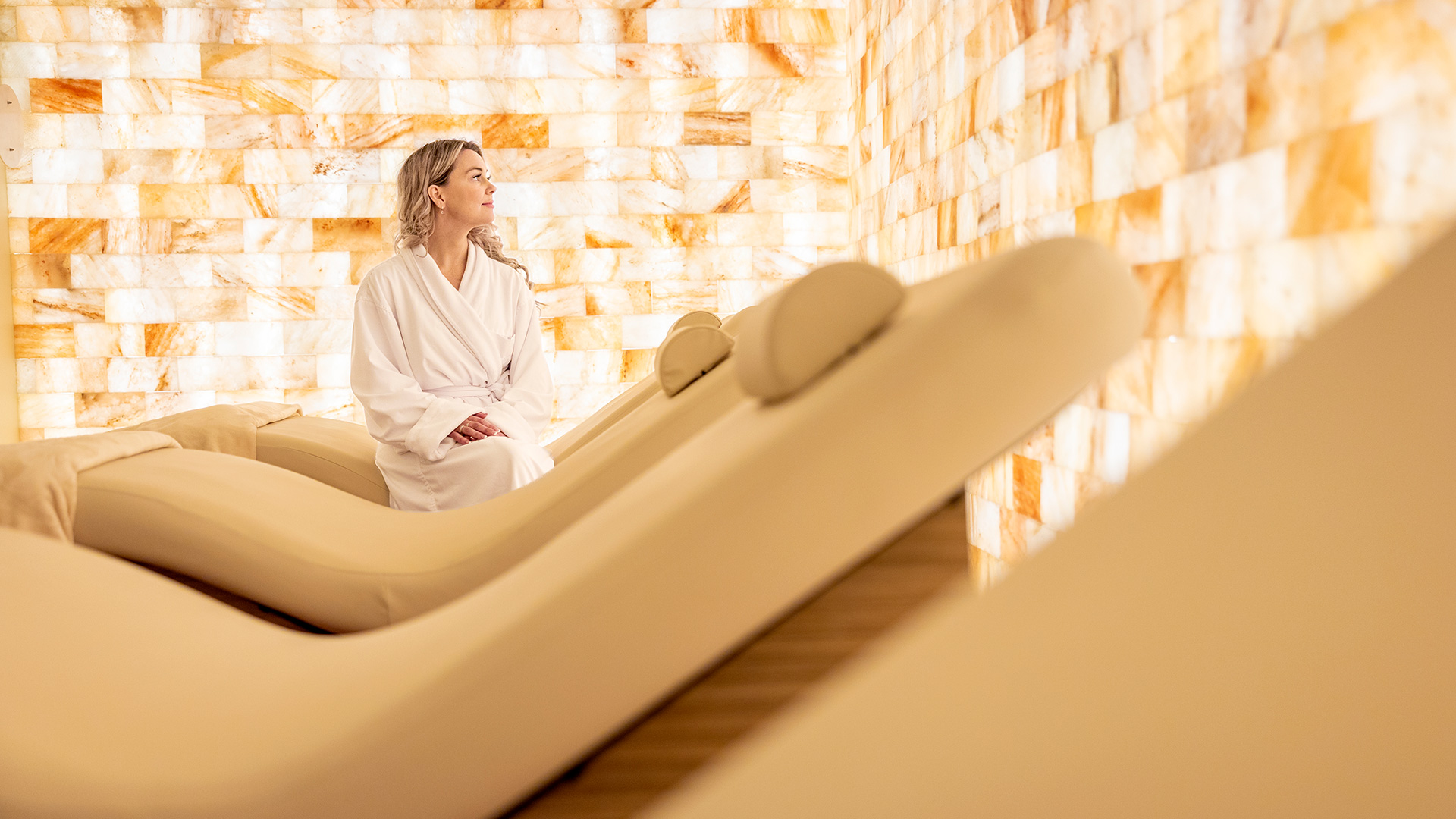
A salt room session is a calm, quiet experience where you sit or recline in a room lined with salt while tiny salt particles fill the air around you. A machine called a halogenerator grinds pharmaceutical-grade salt into a fine dust and pushes it into the room. You breathe in these microscopic particles for about 20 to 45 minutes. The particles can help open your airways, calm inflammation, and settle on your skin to support healing. According to Precedence Research, the global salt therapy market reached $7.87 billion in 2024 and is expected to grow to $19.05 billion by 2034, showing just how many people are turning to this natural therapy. In this article, we walk through exactly what happens before, during, and after a salt room session so you know what to expect from your very first visit.
What Happens During a Salt Therapy Session?
What happens during a salt therapy session is simple and relaxing from start to finish. You check in, remove your shoes, and walk into a room where the walls and floor are covered in salt. The lights are dim. Soft background sounds may play. You settle into a comfortable reclining chair, and the halogenerator starts working quietly in the background.
The air fills with a fine salt mist that you cannot see, but you may notice a faint salty taste on your lips. The room stays cool and dry. Most people close their eyes and rest. Some meditate. Others simply sit still and breathe deeply. A 2022 systematic review published on ResearchGate that examined 13 separate studies found that salt therapy improved forced expiratory volume, forced vital capacity, and peak expiratory flow in patients with chronic respiratory conditions.
The session lasts anywhere from 20 to 45 minutes depending on the facility. We offer 30-minute sessions, which is generally considered the ideal length for getting full benefits without feeling rushed.
Once the session ends, you step out feeling lighter. Many people say their sinuses start to drain within an hour. Others notice deeper breathing right away. A slight salt residue may appear on dark clothing, but it brushes off easily.
What Does a Salt Room Feel Like?
A salt room feels like stepping into a quiet, cool cave. The air is dry and clean. The temperature stays slightly below normal room temperature, which adds to the calming effect. The salt on the walls gives the room a soft glow, and the overall feeling is peaceful and still.
Within the first few minutes, you may notice a light tickle in the back of your throat. That is the salt particles doing their job. It passes quickly. Your breathing may slow down naturally. Your body starts to relax the same way it does near the ocean. That is because salt rooms generate negative ions, the same type of ions found near waterfalls and shorelines. Research published in the Journal of Alternative and Complementary Medicine found that negative ion exposure is linked to lower stress levels and improved mood.
People who deal with respiratory issues often feel the biggest difference. The air feels easier to pull in. There is no stuffiness, no humidity, and nothing artificial about the experience.
Can You Breathe Normally in a Salt Room?
Yes, you can breathe normally in a salt room. The salt particles in the air are so small that they do not interfere with your ability to take regular breaths. In fact, the dry salt aerosol is meant to be inhaled through normal breathing. You do not need to take exaggerated deep breaths for the session to work, though slower, deeper breathing can help the particles travel further into your lungs.
What Do You Wear in a Salt Therapy Room?
What you wear in a salt therapy room should be comfortable, loose, and light-colored. The salt particles settle gently on fabric, and darker colors may show a faint white residue after the session. It brushes off and does not damage clothing.
You remove your shoes before entering. Some facilities provide disposable booties, while others ask you to wear clean socks. Leave expensive jewelry at home. Salt is mildly corrosive over time, so simple accessories are a better choice. You do not need to bring a towel, water bottle, or any special supplies. Just bring yourself and a willingness to relax for half an hour.
We recommend arriving a few minutes early to settle in. People who deal with daily tension or stress find that giving themselves time to decompress before the session makes a noticeable difference in how deeply they relax.
How Salt Therapy Works Inside Your Body
A halogenerator grinds pure sodium chloride into particles between 1 and 5 micrometers in size. These particles are small enough to travel deep into your respiratory system when you inhale. Once there, they pull moisture from the airway lining, which thins out mucus and makes it easier for your body to clear it.
The salt also has natural antibacterial and anti-inflammatory properties. It helps kill bacteria and allergens sitting in your airways. According to the Global Wellness Institute, a 2014 study found that halotherapy triggered anti-inflammatory agents in patients with chronic bronchial conditions, lowering inflammation and stimulating phagocytosis, a process where immune cells destroy harmful particles.
On your skin, the salt particles absorb impurities and balance surface oils. They improve microcirculation and activate cell membrane function. A review published in Dermatology Therapies found that participants who underwent halotherapy sessions showed significant improvement in psoriasis severity scores.
Does Salt Room Therapy Really Work?
Yes, salt room therapy really works for many people, particularly those with respiratory and skin conditions. A 2017 pilot study from Israeli medical researchers found that halotherapy was associated with notable improvements in bronchial constriction in asthmatic children. A separate 2007 study showed that COPD patients had fewer symptoms and improved quality of life after multiple halotherapy sessions. The evidence base continues to grow, though researchers emphasize the need for larger clinical trials with standardized protocols.
From what we see with our own members, people who commit to regular sessions report clearer breathing, less congestion, and calmer skin. The effects tend to build over time. One session can bring immediate relief, but consistent visits create longer-lasting changes.
Salt Room Therapy and Respiratory Health
Respiratory conditions are the number one reason people seek out salt therapy. According to the Asthma and Allergy Foundation of America, over 28 million Americans currently live with asthma. That is about 1 in 12 people. On top of that, the CDC reports that chronic lower respiratory diseases are the fifth leading cause of death in the United States.
Salt particles help clear mucus from the airways, reduce swelling in the bronchial tubes, and kill bacteria that can trigger infections. For people with asthma, bronchitis, sinusitis, or COPD, these effects can bring real relief. The salt does not replace medication, but it works alongside it as a natural, drug-free support.
Salt therapy has roots that go back centuries. Halotherapy has existed since the 12th century, when people in Eastern Europe traveled to natural salt caves to improve their breathing. Modern salt rooms recreate that same environment using halogenerators and controlled air quality.
Does Salt Therapy Help With Allergies?
Yes, salt therapy helps with allergies by reducing inflammation in the nasal passages and clearing out allergens that get trapped in mucus. Data from the National Center for Health Statistics shows that 31.7% of U.S. adults had a diagnosed seasonal allergy, eczema, or food allergy in 2024. That is nearly one in three adults dealing with some form of allergic reaction. Salt therapy addresses allergy symptoms at the source by thinning mucus, widening airways, and neutralizing irritants.
Salt particles also reduce immunoglobulin E (IgE) levels in the blood, which directly lowers the allergic response. People with seasonal allergies and hay fever often see the fastest results. Many notice less sneezing and fewer itchy eyes within a few sessions. For residents in Bedford Hills and the surrounding Westchester County area, seasonal pollen can be especially intense, making regular sessions a practical addition to allergy management.
How Salt Rooms Help With Skin Conditions
Salt rooms help with skin conditions because the microscopic salt particles settle directly on exposed skin during a session. The salt absorbs excess oil, reduces redness, and fights bacteria that contribute to breakouts. For people with eczema, psoriasis, or dermatitis, these effects can bring genuine relief between flare-ups.
A study published in the Journal of Alternative and Complementary Medicine in 2006 found that halotherapy was effective in treating various skin diseases. The salt normalizes the skin's pH and stimulates repair and regeneration processes in the epidermis and dermis. Salt also improves blood flow to the skin, which supports faster healing and a healthier appearance.
According to the CDC, 7.7% of U.S. adults have eczema, and women are disproportionately affected at 9.5% compared to 5.7% of men. For people dealing with these conditions, salt therapy offers a non-invasive and drug-free option that complements existing treatment plans.
Does Salt Lower Cortisol?
Salt itself does not directly lower cortisol, but the salt room environment does. The negative ions produced by salt as it breaks down in the halogenerator have been studied for their calming effects on the nervous system. Five randomized placebo-controlled studies have assessed the impact of negative ions on cortisol and anxiety. The results showed that negative ion exposure improved stress markers and reduced the anxiety response.
Negative ions are believed to increase serotonin production in the brain. Serotonin is the chemical that regulates mood, sleep, and emotional balance. When serotonin levels rise, cortisol levels tend to fall. The quiet, screen-free environment of a salt room also activates the parasympathetic nervous system, your body's built-in "rest and digest" mode.
The Global Wellness Institute reports that the global wellness economy hit $6.8 trillion in 2024, with mental wellness being one of the fastest-growing segments at 12.4% annual growth. More people are recognizing the connection between relaxation, stress reduction, and long-term health. Salt therapy fits naturally into that shift.
How Salt Therapy Supports Better Sleep
Salt therapy supports better sleep by lowering cortisol, opening airways, and calming the nervous system. People who deal with sleep disorders often struggle because they cannot breathe deeply enough at night or because their minds stay too active. A salt room session addresses both problems at once.
Research published in the Journal of Alternative and Complementary Medicine suggests that regular halotherapy sessions can improve sleep quality by reducing stress hormones and promoting parasympathetic nervous system activation. Many people report sleeping more deeply on the night of a session compared to their usual patterns. Over time, consistent sessions may help reset irregular sleep cycles.
Who Should Not Do a Salt Room?
Who should not do a salt room includes people with certain medical conditions where inhaling salt particles could cause problems. Those who should talk to their doctor before trying halotherapy include people with severe respiratory conditions that require supplemental oxygen, individuals with active infections or open wounds, and anyone with serious cardiovascular conditions.
People with very low blood pressure should also check with their healthcare provider, since the deep relaxation during a session can lower blood pressure further. If you are currently running a fever or dealing with an acute illness, it is better to wait until you recover.
For most healthy adults and children, salt therapy is safe and well tolerated. It is a natural, drug-free therapy that does not interact with medications. However, it is always smart to discuss any new wellness practice with your doctor, especially if you have a chronic health condition.
How Often Should You Do Salt Therapy?
How often you should do salt therapy depends on what you are trying to address. For general wellness and stress relief, one session per week is a good starting point. For chronic respiratory conditions, allergies, or skin issues, two to three sessions per week for the first four to six weeks tends to deliver the strongest results.
After that initial phase, many people switch to a weekly maintenance schedule to keep the benefits going. Some people notice improvement after a single visit, but the effects build with consistency. Starting with a series of 5 to 10 sessions gives you the best chance to evaluate how your body responds.
Pairing salt therapy with other natural treatments can amplify the results. An infrared sauna session before your salt room visit can help open your pores and relax your muscles, making the salt particles more effective on your skin. A massage on the same day can deepen the overall relaxation.
How to Get the Most Out of Your First Salt Room Visit
Getting the most out of your first salt room visit comes down to a few simple steps. Arrive early so you are not rushing. Wear loose, light-colored clothing. Leave your phone in your bag or your car. The whole point is to disconnect for a short while and let your body reset.
Drink water before and after your session. Staying hydrated helps your body flush out the mucus and toxins that the salt loosens up. Avoid eating a large meal right before your visit, as lying back on a full stomach can feel uncomfortable.
During the session, breathe naturally. Close your eyes if that helps you relax. Do not try to force anything. The salt does its work whether you are meditating, napping, or just sitting quietly. People who support their overall immune health through regular detoxification and balanced nutrition tend to respond even faster to halotherapy.
Here in Westchester County, we are proud to offer the only White Himalayan Salt Room in the area, equipped with a professional halogenerator and zero-gravity chairs for maximum comfort.
Comparing Salt Therapy to Other Natural Wellness Treatments
The table below compares salt therapy to other common natural treatments so you can see how each one fits into a wellness routine.
TreatmentPrimary BenefitSession LengthDrug-FreeBest ForSalt Therapy (Halotherapy)Respiratory and skin health20-45 minutesYesAsthma, allergies, eczema, stressInfrared SaunaDetoxification and pain relief20-40 minutesYesMuscle pain, circulation, detoxSteam RoomSinus relief and relaxation15-20 minutesYesCongestion, muscle tensionMassage TherapyMuscle recovery and stress relief30-90 minutesYesTension, chronic pain, anxietyPEMF TherapyCellular regeneration and pain20-60 minutesYesInflammation, bone healing, sleep
Sources: Global Wellness Institute 2025 Wellness Economy Monitor, Precedence Research Salt Therapy Market Report 2025, Salt Therapy Association educational materials.
Salt therapy stands out because it targets both the respiratory system and the skin at the same time. Most other treatments focus on one system or the other. The ability to breathe in therapeutic particles while your skin also absorbs their benefits makes halotherapy one of the most efficient natural therapies available.
Frequently Asked Questions
How Long Should You Sit in a Salt Room?
You should sit in a salt room for 20 to 45 minutes per session, depending on the facility and your personal comfort level. Most standard sessions run 30 minutes, which research supports as an effective length for absorbing enough salt particles to see respiratory and skin benefits. Children's sessions are often shorter, ranging from 15 to 25 minutes.
Do You Shower After Salt Therapy?
No, you do not need to shower after salt therapy. The salt residue that settles on your skin and hair is minimal and continues to provide benefits even after you leave the room. Some people enjoy letting the salt sit on their skin for a few hours afterward. If you prefer, a light rinse is fine, but it is not required.
Is Salt Therapy Safe During Pregnancy?
Salt therapy is generally considered safe during pregnancy and may help with congestion and breathing issues that are common during the second and third trimesters. However, every pregnancy is different. It is always best to check with your obstetrician before starting any new therapy.
Can Children Use Salt Rooms?
Yes, children can use salt rooms. Salt therapy is safe for children and can be particularly helpful for kids with asthma, allergies, or frequent colds. According to the Global Wellness Institute, a 2017 Israeli study found that halotherapy improved bronchial function in children with asthma. Many salt rooms offer family-friendly sessions.
Is Halotherapy the Same as Salt Therapy?
Yes, halotherapy is the same as salt therapy. The word "halotherapy" comes from the Greek word "halos," which means salt. Both terms describe the practice of breathing in microscopic salt particles in a controlled environment for health benefits. Dry halotherapy uses a halogenerator in a salt room, while wet halotherapy involves saltwater solutions like saline nebulizers or salt scrubs.
How Long Does It Take for Salt Therapy to Work?
How long it takes for salt therapy to work varies by person and condition. Some people feel improvement after a single session, especially with sinus congestion or mild allergy symptoms. For chronic conditions like asthma, COPD, or eczema, most people notice meaningful results after 5 to 10 sessions spread over a few weeks. Consistency is the biggest factor in seeing lasting improvement.
The Bottom Line
A salt room session is one of the simplest, most relaxing things you can do for your breathing, your skin, and your overall sense of calm. The research is growing, the experience is gentle, and the benefits add up quickly when you stay consistent. Whether you are dealing with seasonal allergies, a stubborn skin condition, or just the daily weight of stress, spending 30 quiet minutes in a salt room can make a real difference in how you feel.
At Quantum Healing & Wellness, we are here to help you find the right combination of natural therapies for your body and your goals.
If you have questions or want to book your first session, feel free to reach out to us at (914) 218-3428.
Read our recent Blogs
Quantum Healing and Wellness PMA in Westchester NY is commited to wellness conent for you









.avif)
.png)

.png)