


A lymphatic detox and drainage cleanse supports normal lymph flow with gentle massage, movement, and hydration, but it does not remove toxins on its own.
A lymphatic detox and drainage cleanse is a short program of gentle massage, movement, hydration, and warmth that supports lymph flow. Massage sessions usually last 15 to 60 minutes, according to WebMD. The body already clears waste through the liver, kidneys, and lymph nodes, so evidence that a cleanse removes toxins is limited. Realistic goals are relaxation and healthy habits.
Key Takeaways
- A lymphatic cleanse means practices that encourage lymph flow, not a product that removes toxins.
- The liver, kidneys, and lymphatic system already filter waste and extra fluid every day.
- Manual lymphatic drainage (MLD) uses light pressure, and a session usually lasts 15 to 60 minutes.
- Walking, deep breathing, and hydration support lymph flow between sessions.
- People with heart or kidney problems, blood clots, or infection should talk to a doctor first.
What Is a Lymphatic Detox and Drainage Cleanse?
A lymphatic detox and drainage cleanse is a routine built to encourage lymph. Lymph is the clear fluid that carries waste, extra fluid, and immune cells. Programs combine light massage, movement, hydration, and sometimes heat. The goal is supporting normal lymph flow, not forcing toxins out.
Many people first meet the idea through a lymphatic detox program at a wellness center. Others see a lymphatic cleanse sold as drops, teas, or kits online. The two are very different, and the next section explains what the science says about both.
Can You Detox Your Lymphatic System?
No, a healthy lymphatic system does not need a detox because it filters fluid and waste continuously. The National Center for Complementary and Integrative Health (NCCIH) cites a 2015 review. That review found no compelling research supporting detox diets for eliminating toxins. Support for lymph flow is realistic, while a toxin flush is not.
Harvard Health describes the liver as the body's principal filter. Harvard Health adds that the kidneys move waste out through urine. Lymph vessels work alongside these organs, so a cleanse adds little for a healthy body.
A second NCCIH point matters for expectations. A 2017 review found that juicing and detox diets cause early weight loss from low calories. Weight returns once normal eating resumes. This pattern explains why lymphatic detox claims need careful reading.
What Does the Lymphatic System Do for Waste Removal?
The lymphatic system removes waste and extra fluid by collecting it from tissues and returning it toward the bloodstream. MedlinePlus says the lymphatic system clears away infection and keeps body fluids in balance. Lymph nodes filter this fluid before it rejoins the blood.
The system includes lymph (the fluid), lymph vessels, lymph nodes, the spleen, the thymus, and bone marrow. Cedars-Sinai compares it to a garbage disposal that filters waste and bacteria. Fluid that cannot drain builds up in tissue and causes swelling called lymphedema.
Lymphedema is a medical condition. The National Cancer Institute (NCI) states it cannot be cured but can be treated. Drainage support in that setting belongs to a trained lymphedema therapist, which leads to how lymph moves at all.
How Does Lymph Move Through the Body?
Lymph moves through the body without a central pump, so muscles and breathing do the work. The National Health Service (NHS) states that the lymphatic system has no central pump like the heart. Surrounding muscles squeeze the fluid along, which is why exercise matters.
A published review on lymph pumping lists skeletal muscle contractions and breathing movements among the outside forces that drive lymph. Each step or deep breath adds a little pressure. Light massage borrows the same idea by stretching skin in the direction of flow. Our guide to lymph flow massage covers how this works.
What Happens in a Lymphatic Detox Session?
A lymphatic detox session follows a set order, starting with a short talk and ending with water and rest. WebMD describes MLD as starting at the main lymph drains in the neck, groin, and armpits. The steps below show a typical flow.
- The practitioner asks about health history, medications, and any swelling.
- The practitioner opens the main drains with light strokes at the neck, armpits, and groin.
- Gentle, rhythmic strokes then stretch the skin along the direction of lymph flow.
- Some programs add infrared sauna time for warmth and relaxation.
- The session ends with water, rest, and guidance on walking and nutrition.
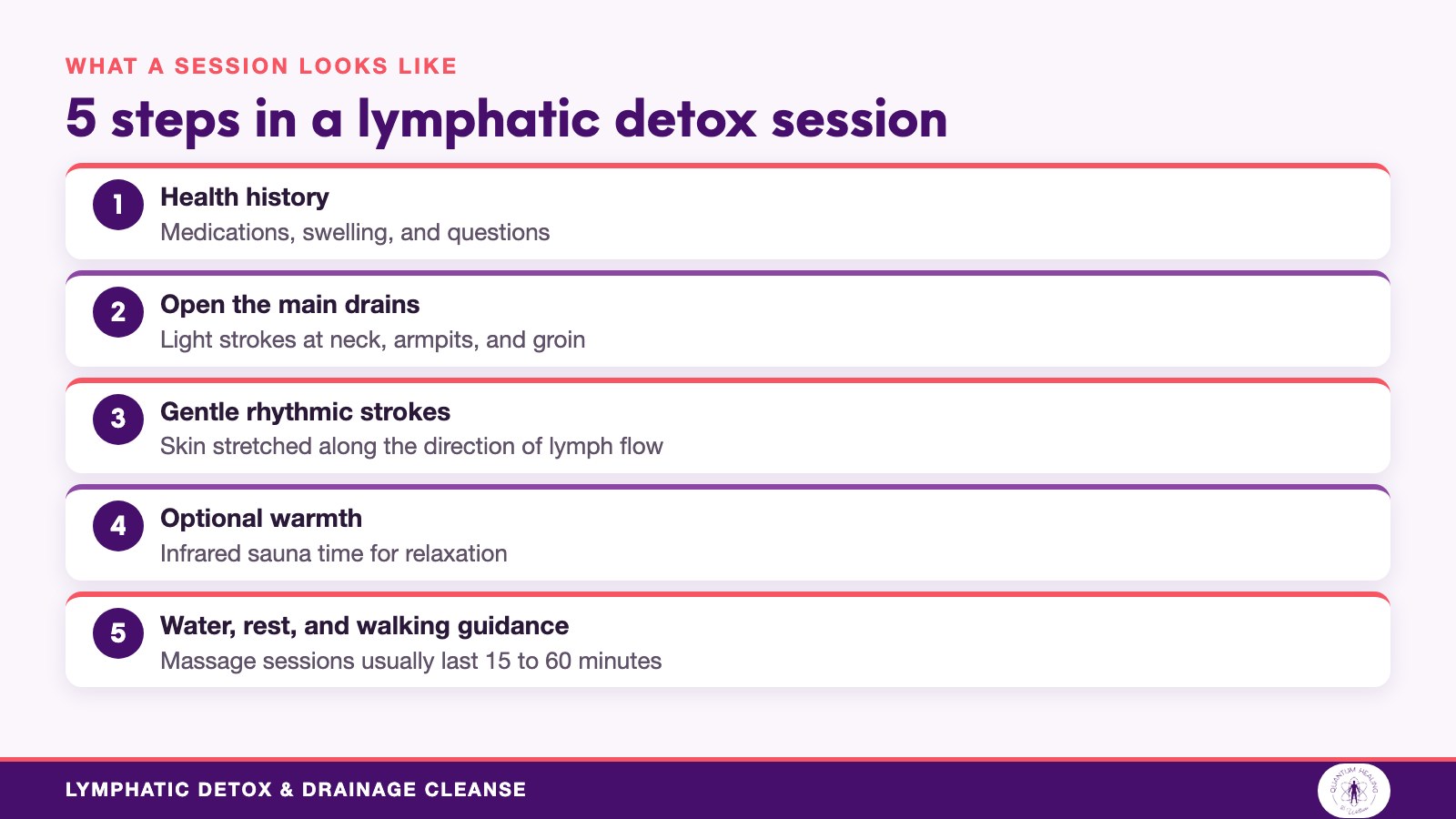
The graphic above shows these five steps in order. Each step stays gentle because lymph vessels lie just under the skin. Pressure that is too firm works against the goal, which brings up what the massage itself feels like.
What Does a Lymphatic Detox Massage Involve?
A lymphatic detox massage involves light, slow strokes that stretch the skin rather than press into muscle. WebMD lists stretching, compressing, gliding, and cupping motions in a set sequence. A session usually lasts 15 to 60 minutes.
WebMD names four common MLD styles: Vodder, Foldi, Casley-Smith, and Leduc. They work in a similar way, moving from the area nearest the torso outward. A therapist trained in lymph massage sets pace and pressure for the client.
Healthy people should expect relaxation. Cedars-Sinai states that with a healthy lymphatic system, MLD is unlikely to benefit beyond simple relaxation. Heat is the next piece many programs add.
How Often Should You Do a Lymphatic Cleanse?
No medical guideline sets how often a wellness lymphatic cleanse should happen. A practitioner usually suggests a pace based on comfort, schedule, and health history. For lymphedema, a certified therapist sets the schedule instead.
Daily habits such as walking and water cost nothing and can happen every day. Massage visits are a personal choice rather than a requirement. A person who feels dizzy, very tired, or unwell after a session should pause and call a healthcare provider.
Does Sweating in a Sauna Detox the Lymphatic System?
No, sweating in a sauna is not proven to detox the lymphatic system. Harvard Health states that toxins are not eliminated in perspiration. Sauna heat is used for warmth and relaxation in detox programs.
Programs that include red light sauna time pair heat with the massage and hydration steps. Warmth can make a session feel more relaxing. People with lymphedema, heart conditions, or pregnancy should ask a healthcare provider before using heat.
What Does a Lymphatic Drainage Cleanse Look Like Across a Program?
A lymphatic drainage cleanse across a program spreads several supportive habits over days or weeks rather than one big event. The table below sets out each part, what it involves, and what the evidence says. Evidence differs a lot by part.
| Part | What it involves | What the evidence says |
|---|---|---|
| Manual lymphatic drainage | Light strokes for 15 to 60 minutes | Useful for lymphedema care, relaxing for healthy people |
| Movement | Walking, swimming, deep breathing | Muscles and breathing move lymph |
| Hydration | Regular water through the day | Supports normal fluid balance |
| Infrared sauna | Heat session for relaxation | Toxin removal not proven |
| Nutrition guidance | Whole foods and balanced meals | Supports general health |
The table shows that movement and hydration carry the clearest support. Massage and heat add comfort. Hydration brings up the next common question about drinks.
What Drink Cleans the Lymphatic System?
No single drink cleans the lymphatic system, but plain water supports normal fluid circulation. NCCIH warns that drinking large amounts of water and herbal tea with no food for days can cause dangerous electrolyte imbalances. Regular water through the day is the safest drink choice.
Many practitioners ask clients to drink water after a session. Our guide on hydration after massage covers the reasons. Lemon water and herbal tea are fine as drinks, but they are not proven lymph cleansers.
How to Detox Your Lymphatic System Naturally
How to detox your lymphatic system naturally comes down to daily movement, deep breathing, and steady hydration. Cedars-Sinai lists walking, belly breathing, swimming, dry brushing, and light tapping above the collarbones. Even a 15- to 20-minute stroll helps move fluid, per Cedars-Sinai.
These habits copy what the lymphatic pump already uses. Adding natural detox habits such as sleep and balanced meals supports general health. None of them needs a product, and each leads to walking as a method.
What Is Lymphatic Walking?
Lymphatic walking is a relaxed walk with deep belly breathing and arm swings that uses muscle movement to push lymph along. It is a wellness term, not a medical protocol. Walking works because calf and arm muscles squeeze lymph vessels.
- Walk at an easy pace for 15 to 20 minutes.
- Breathe slowly into the belly on each inhale.
- Swing the arms gently to engage the shoulders and chest.
- Drink water afterward.
This routine matches the Cedars-Sinai 15- to 20-minute walking guidance. Walking costs nothing, which sets up the question about paid products.
Do Lymphatic Drops Work, and What About Teas?
No, lymphatic drops and teas have no proven ability to cleanse the lymphatic system. NCCIH reports that the FDA and the Federal Trade Commission have acted against several detox product sellers. The cases involved hidden ingredients or false disease claims. Lymphatic drainage drops are supplements, not medical treatments.
The sources reviewed here show no study backing label claims. Lymphatic drainage drops are herbal supplement blends sold for lymph support. A person on medication should check with a pharmacist or doctor first. A practitioner can help compare products with simple habits. Dr. Michelle Adams, our founder, holds a Doctor of Pharmacy degree.
How Do I Tell If My Lymphatic System Is Clogged?
Swelling is the main sign that lymph is not draining well. Cedars-Sinai lists tight rings, snugger clothes, heaviness, and pain as signs of fluid buildup. Persistent swelling in an arm or leg needs a doctor, not a cleanse.
Many people search because of puffiness, tiredness, or a heavy feeling. These signs have many causes, and a lymph congestion signs checklist cannot diagnose them. The NHS says lymphoedema should be identified and treated early because it can get worse without treatment.
Who Should Avoid Lymphatic Drainage?
People with heart problems, kidney failure, blood clots, or infection should avoid lymphatic drainage unless a doctor approves. The same applies to cancer near the massage area. WebMD lists these conditions as risks. Cedars-Sinai adds that cellulitis is also a reason to skip it.
Anyone with lymphedema should work with a certified lymphedema therapist. WebMD suggests a therapist with at least 135 hours of lymphedema training. Pregnancy and implanted devices also call for a conversation with a healthcare provider first.
What Does the Research Say About Lymphatic Drainage Massage?
Research on MLD is mixed. A 2020 meta-analysis pooled 17 randomized controlled trials (RCTs) with 1,911 patients after breast cancer surgery. Its authors found no significant lymphedema reduction in 8 pooled RCTs with 338 patients. The evidence for MLD alone is weaker than many wellness pages suggest.
A 2013 meta-analysis of 10 RCTs with 566 patients reached a similar view. A Cochrane review from 2004 included only 3 trials with 150 adults. MLD sits inside a larger plan with compression and exercise, which the NCI calls complete decongestive therapy.
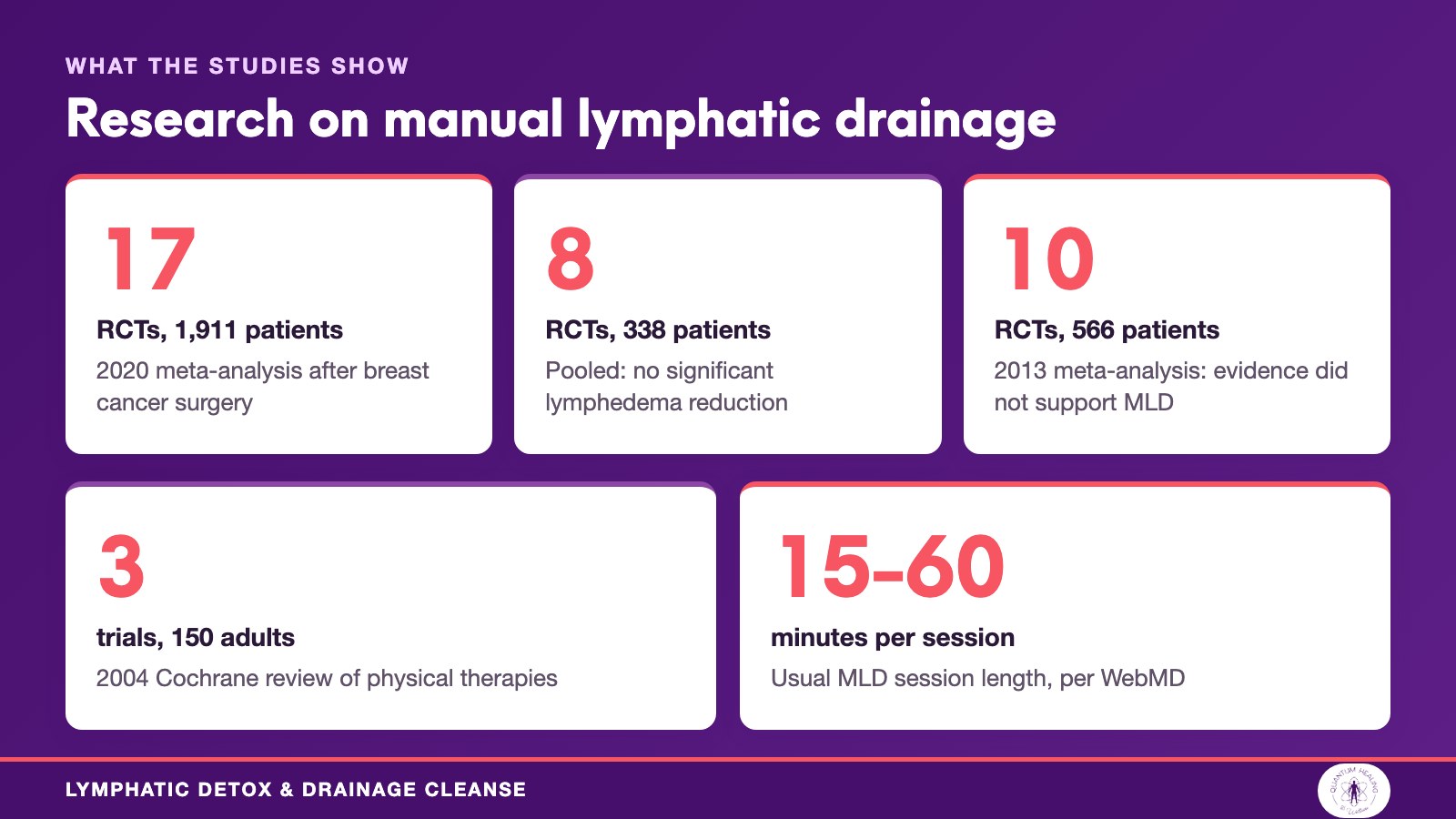
The graphic above summarizes these study sizes and the session length. Honest expectations matter more than hype.
What Does Detox Hype Get Wrong About Lymph?
Detox hype gets wrong the idea that lymph is a toxic sludge that needs flushing. Lymph is a normal fluid that carries immune cells and waste. A cleanse is better described as a relaxing, supportive routine.
General cues such as tiredness or puffiness appear in lists of detox signs. Those lists describe symptoms with many causes, so they do not prove lymph is stuck. Persistent symptoms deserve a medical check.
The graphic below sets common claims beside what sources state.

Realistic goals include relaxation, a lighter feeling from movement, and a routine that builds healthy habits.
What Else Should You Know About Lymphatic Detox?
Can Healthy People Benefit From a Lymphatic Cleanse?
Healthy people can enjoy the relaxation. Cedars-Sinai states that a healthy system is unlikely to benefit beyond that. A session may feel calming, and gentle walking has wider health value.
Are There Side Effects After a Session?
Some people report headache, nausea, or fatigue, according to WebMD. Water and rest usually help. Our page on detox side effects explains what to watch for.
Does a Lymphatic Cleanse Help With Weight Loss?
No, there is no evidence that lymphatic drainage slims the body. Cedars-Sinai states there is no evidence it helps people slim down. Any trimming effect is temporary fluid movement.
Can Food Choices Support a Lymphatic Cleanse?
Balanced meals support general health during a program. Personal advice from nutrition guidance fits individual health needs better than a general cleanse diet. NCCIH notes that severely restricted diets may miss needed nutrients.
Can You Do a Lymphatic Cleanse at Home?
Yes, at-home options include walking, belly breathing, and light self-massage. Cedars-Sinai advises talking to a doctor before self-MLD when lymph problems are possible. Skip oils and lotions during self-massage.
Frequently Asked Questions
Is Lymphatic Drainage Real?
Yes, MLD is a real technique used in lymphedema care. The NCI describes it as gentle massage that helps move lymph fluid. Claims about toxin removal and slimming are not supported.
How Do You Know If a Lymphatic Cleanse Is Working?
For swelling, WebMD says signs include less heaviness, easier movement, and clothes that fit better. For general wellness, people may notice relaxation. No test confirms toxin removal.
How Long Does a Lymphatic Drainage Session Take?
WebMD states that a massage usually lasts 15 to 60 minutes. A full program with heat and guidance may take longer.
Does Lymphatic Drainage Help With Inflammation?
Evidence is limited. WebMD notes limited evidence for fibromyalgia symptoms and says more research is needed. Anyone with joint pain or swelling should see a doctor.
Can I Do Lymphatic Drainage on Myself?
Yes, Cedars-Sinai describes a light C-shaped motion on areas that are not swollen. Anyone with possible lymph problems should ask a doctor first.
How Does Quantum Healing & Wellness Support a Lymphatic Detox?
Quantum Healing & Wellness supports a lymphatic detox through a detox program that combines infrared sauna, lymphatic drainage massage, and nutrition guidance. We are a private membership association (PMA) in Bedford Hills. Our approach is educational and supportive, not a medical treatment.
Our founder, Dr. Michelle Adams, is a Doctor of Pharmacy with 27 years in the pharmaceutical industry. A detox consult reviews health history and sets safe expectations. Members with lymphedema, heart, or kidney conditions bring a doctor's guidance.
Each program is paced to the member, and nothing is rushed. Members can start with detox sessions that focus on relaxation, movement, and hydration. Each visit includes plain guidance on water, walking, and rest between appointments. Call (914) 218-3428 to ask a question about the program.
The Quantum Healing center welcomes members who want a calm, realistic approach to a lymphatic detox and drainage cleanse. Our team shares what research supports and what it does not, so each member can decide with a doctor's input.
Read our recent Blogs
Quantum Healing and Wellness PMA in Westchester NY is commited to wellness conent for you