


.avif)



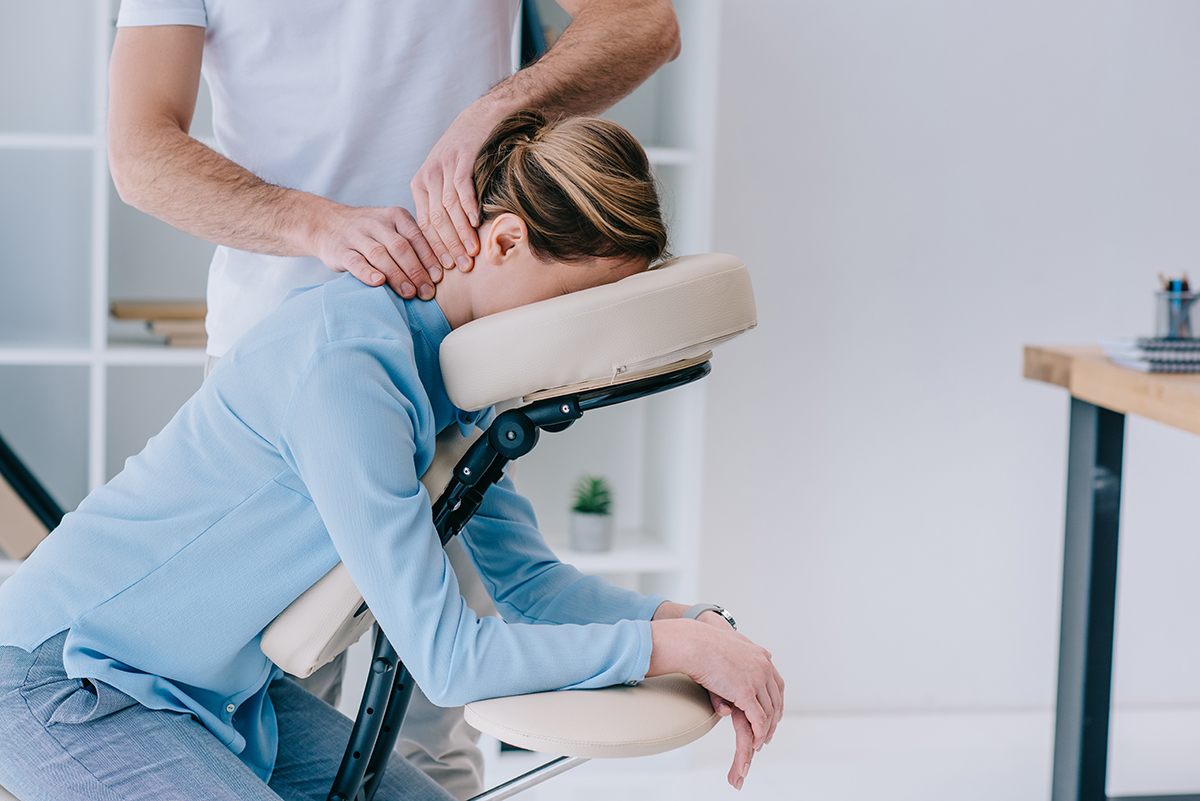
Massage relieves neck pain by releasing the tight bands inside the muscles that hold your head up, restoring blood flow to those muscles, and returning normal motion to the cervical spine. Deep tissue, trigger point therapy, and myofascial release work best for most neck pain, because they reach the specific muscles carrying the load. Below we cover which muscles cause the problem, how often treatment needs to happen to actually change it, what you can do at home between sessions, and which symptoms mean you should get a medical evaluation first.
What Type of Massage Is Good for Neck Pain?
The types of massage that are good for neck pain are deep tissue massage, trigger point therapy, myofascial release, craniosacral therapy, and Swedish massage. Each of these reaches a different tissue layer and solves a different part of the problem. Deep tissue massage applies slow, sustained pressure into the deeper muscle bellies. Trigger point therapy holds direct pressure on a single tender knot until the muscle fiber lets go. Myofascial release stretches the fascia, the sheet of connective tissue wrapping every muscle, rather than the muscle itself.
Fascia matters more than most people expect. Fascia connects the back of your skull to your mid back in one continuous line, so a restriction low in that line pulls on the neck at the top of it. Craniosacral therapy works even lighter than that, using gentle sustained contact at the base of the skull and the sacrum to quiet a nervous system that has been holding muscles switched on. Swedish massage sits at the other end, using broad gliding strokes that warm tissue and calm the body without deep specific work.
Choice depends on what your neck is actually doing. According to the American Massage Therapy Association consumer survey, soreness, stiffness, or spasm is the leading reason people book massage at 49 percent, with chronic pain relief and management second at 42 percent. Those two reasons describe most neck pain clients, and they point toward specific soft-tissue work rather than general relaxation.
Massage TypeTarget TissueWhat It DoesBest Suited ForTypical SessionDeep tissueDeep muscle belliesSlow sustained pressure across muscle fiberChronic stiffness, restricted rotation60 to 90 minutesTrigger point therapyIndividual taut bandsDirect static pressure held until releasePain that refers into the head or shoulder blade30 to 60 minutesMyofascial releaseFasciaSustained low-load stretch of connective tissueWhole-region tightness, forward head posture60 to 90 minutesCraniosacral therapyCranial base and dural systemLight sustained contact, five grams of pressureHeadache with neck pain, high sensitivity45 to 60 minutesSwedish massageSuperficial muscleBroad gliding strokes and kneadingStress-driven tension, first-time clients60 minutesThai yoga massageMuscle and jointAssisted stretching with compressionStiffness with limited range of motion60 to 90 minutes
Sources: Travell and Simons, Myofascial Pain and Dysfunction: The Trigger Point Manual, 2nd edition; Sherman et al., Annals of Family Medicine, March 2014; American Massage Therapy Association Consumer Survey.
How Does Massage Relieve Neck Pain?
Massage relieves neck pain through three mechanisms working at once: it restores blood flow to contracted muscle tissue, it deactivates trigger points, and it shifts the nervous system out of a guarded state. Blood flow comes first. A muscle held in partial contraction squeezes its own capillaries closed, which starves the tissue of oxygen and traps the waste products of metabolism inside it. Trapped waste products irritate local nerve endings, which produces the ache you feel and signals the muscle to contract harder. That loop is why tension feeds itself.
Direct pressure breaks the loop. Pressure applied to a contracted band flushes stagnant fluid out and pulls fresh oxygenated blood in behind it, which lets the fiber lengthen. Fiber length determines how far your head can turn, so range of motion returns as the muscle releases. Range of motion also drops your baseline pain level, because a joint moving through its full arc stops sending threat signals to the brain.
The third mechanism is neurological rather than mechanical. Sustained skin contact activates the parasympathetic branch of the nervous system, the setting that governs rest and repair, and that shift lowers overall muscle tone across the body. Lower muscle tone means the neck stops bracing. This is a measurable physiological change rather than a feeling, and the chemistry that happens after a massage keeps working for hours past the session.
Neck pain is common enough that this matters at population scale. The GBD 2021 Neck Pain Collaborators reported in The Lancet Rheumatology in March 2024 that neck pain affected 203 million people worldwide in 2020, with an age-standardized prevalence rate of 2,450 per 100,000. We use massage therapy as a primary tool for exactly this reason: the mechanism is well described and the problem is everywhere.
How Do I Know If My Neck Pain Is Muscular?
You know your neck pain is muscular when the pain is dull and achy rather than sharp, it changes with head position, it worsens after long periods of sitting, and it eases with heat or gentle movement. Muscular pain also tends to spread across an area rather than sitting on one precise point. You can usually press on it and reproduce the exact ache you have been feeling, which is the clearest single sign that muscle tissue is generating the signal.
Nerve pain behaves differently. Nerve involvement produces burning, electrical, or shooting sensations that travel down the arm past the elbow, often with numbness, pins and needles, or weakness in the hand. Joint pain from the cervical facets tends to be sharp at end range, stays local to one small spot beside the spine, and does not reproduce when you press the muscle around it.
Scans are a poor way to sort this out. Research published in American Family Physician in August 2020 found that magnetic resonance imaging detects degenerative cervical discs in 15 percent of people in their twenties who have no symptoms at all, rising above 85 percent in people older than 65. Disc changes on a scan are a normal part of aging in most cases, so the picture rarely explains the pain. What your muscles do under your own hands tells you far more than the image does.
Why Does My Neck Hold So Much Tension?
Your neck holds so much tension because the muscles at the back of it fight gravity every hour your head sits forward of your shoulders. An adult head weighs 10 to 12 pounds sitting balanced in neutral posture. Research by Hansraj published in Surgical Technology International in 2014 measured what happens as that head tilts forward: the load on the cervical spine rises to 27 pounds at 15 degrees of flexion, 40 pounds at 30 degrees, 49 pounds at 45 degrees, and 60 pounds at 60 degrees.
Sixty degrees is roughly where your head sits when you look at a phone in your lap. The posterior neck muscles hold that load like a crane cable, and they do it for hours a day without a rest interval. Cable tension that never releases is exactly what a chronic knot is.
Anatomy makes the upper neck especially vulnerable. The C1 to C2 joint alone provides 50 percent of all cervical rotation, so the small muscles crossing that joint make constant fine adjustments every time your eyes move. Constant fine adjustment under load is a recipe for fatigue. Long-standing muscle tension in this region rarely comes from one bad night of sleep, and it responds to treatment that accounts for the mechanical cause rather than the symptom alone.
Which Muscles Cause Neck Pain?
The muscles that cause most neck pain are the suboccipitals, the upper trapezius, the levator scapulae, the scalenes, and the sternocleidomastoid. These five carry nearly all of the mechanical work of holding and turning the head, and they harbor the trigger points that produce the majority of complaints. Trigger points appear in a large share of pain cases: a cross-sectional review summarized in BMC Nutrition in 2023 reported that myofascial pain syndrome reaches a prevalence of up to 93 percent among patients with nonspecific musculoskeletal pain.
The Suboccipital Muscles
The suboccipital muscles are four small muscles on each side sitting directly under the back of the skull: rectus capitis posterior major, rectus capitis posterior minor, obliquus capitis superior, and obliquus capitis inferior. They initiate and control fine head movement rather than producing large motion. Fine head movement demands continuous low-grade contraction all day long, which restricts local circulation and makes this group the most reliably tender spot in the entire body.
Referral from these muscles explains a great deal of head pain. Trigger points here send pain into the side of the head, behind the ear, the temples, and the forehead, which is why people with suboccipital tension often describe a headache rather than a neck problem.
The Upper Trapezius and Levator Scapulae
The upper trapezius runs from the base of the skull out to the tip of the shoulder, forming the sloping ridge people grab when they say their shoulders are tight. Shoulder tightness of that kind is usually a trapezius problem rather than a shoulder joint problem. The levator scapulae sits underneath it, running from the upper cervical vertebrae down to the inside corner of the shoulder blade, and it is the muscle responsible for the sharp catch you feel when you cannot turn your head to check a blind spot.
The Scalenes and Sternocleidomastoid
The scalenes are three muscles on the side of the neck that lift the first two ribs during breathing. Shallow chest breathing recruits them thousands of times a day, which overworks a group designed for occasional assistance. The sternocleidomastoid, the thick rope you can feel running from behind the ear to the collarbone, shortens whenever the head sits forward. Both of these live on the front and side of the neck, which is why treating only the back of the neck leaves so much of the problem untouched.
Why Won't My Neck Tension Go Away?
Your neck tension will not go away because the muscles creating it usually sit somewhere other than the place you feel the pain. The back of the neck hurts, so that is where hands go. The back of the neck is also the region that has been pulled long by forward head posture, and stretching an already overstretched muscle gives relief that lasts a few hours at best.
The shortened tissue sits on the front. Anterior neck muscles and the pectoral muscles across the chest hold the head forward, and until they lengthen, the head has nowhere else to go. Head position also depends on what sits underneath it. When the pelvis tips forward from tight hip flexors, the ribcage tilts back to compensate, and the head slides forward to keep your eyes level. Each link in that chain has to change for the top of it to hold.
This is why we sequence a neck session rather than spending an hour on the sore spot. Releasing the hip flexors, then the mid back and ribcage, then the front of the neck, means the posterior muscles are already slack by the time we reach them, and deep tissue work there produces change that holds instead of fading by the next morning.
What Pressure Point Relieves Neck Pain?
The pressure point that relieves neck pain most reliably sits along the suboccipital ridge, the arc of muscle just under the back of the skull running from one ear to the other. Find the bony shelf where the skull overhangs the neck and press upward into the soft tissue beneath it. Somewhere along that arc, usually an inch or so out from center on either side, you will find a spot that produces a deep satisfying ache spreading up into the head.
That spreading sensation is the confirmation. Pain that radiates away from the point being pressed identifies an active trigger point rather than ordinary tenderness, and it means you have found tissue worth treating. Two other points reward attention: the thick belly of the upper trapezius midway between the neck and the shoulder tip, and the attachment of the levator scapulae at the upper inside corner of the shoulder blade.
Pressure at these sites does more than move tissue. The hormone response that follows sustained contact contributes to the drop in pain sensitivity people notice within minutes of a session starting.
How to Immediately Release Neck Tension
To immediately release neck tension, warm the muscles, slow your breathing, apply steady pressure to the tender point, then move the joint through its range. Order matters here. Cold muscle resists pressure and braces against it, so heat comes first and makes everything that follows more effective. Effective pressure then needs the nervous system to cooperate, which slow breathing provides.
- Apply heat for 10 minutes. Use a warm towel or heating pad across the back of the neck and the tops of the shoulders. Heat raises tissue temperature and increases how far a muscle fiber will lengthen under load.
- Breathe slowly for one minute. Inhale for four counts and exhale for six. A longer exhale than inhale activates the parasympathetic response and drops resting muscle tone before you touch anything.
- Squeeze and release the shoulder ridge. Grip the muscle at the base of the neck between your thumb and fingers, hold firm pressure for 10 to 15 seconds, then let go. Repeat across three or four spots along each side.
- Press the tender point and hold. Locate the spot that reproduces your ache, apply steady pressure with two fingers or a small ball against a wall, and hold for 20 to 30 seconds until you feel the tissue soften. Do not grind or dig.
- Work small circles for one to two minutes. Once the point has released, use slow circular motion over the surrounding area to spread the change into neighboring tissue.
- Move the neck through its range. Perform five slow neck circles in each direction, then look left and right to the end of comfortable motion. Movement teaches the nervous system that the new length is safe, which is what makes the release stick.
- Reapply heat for five minutes. A second round of warmth after the work keeps circulation elevated while the tissue settles.
Heat delivered through the whole body works even better than a towel for people who carry tension across the upper back as well as the neck. Twenty minutes in an infrared sauna before self-massage warms deep tissue rather than just the skin surface, and it makes the pressure work considerably more comfortable.
What Areas of the Neck Should Not Be Massaged?
The areas of the neck that should not be massaged are the front and sides of the throat, where the carotid artery, jugular vein, vagus nerve, and thyroid gland sit close to the surface with little muscle protecting them. This region is called the anterior triangle, and it is a recognized endangerment site in every massage training program. Pressure here can drop blood pressure sharply or trigger a reflex slowing of the heart rate, neither of which is worth the risk when the muscles causing your pain sit elsewhere.
Trained hands can work the anterior neck safely, because a licensed therapist knows how to isolate the sternocleidomastoid and scalenes without compressing the vessels between them. That specific skill is the line between professional work and self-treatment.
Skip self-massage of the neck entirely, and speak with a practitioner first, in these situations:
- Directly over the front or side of the throat, including the pulse you can feel beside the windpipe
- Over any lump, swollen gland, or area of unexplained swelling
- Following a car accident, fall, or any impact to the head or neck, until you have been evaluated
- Over skin that is broken, bruised, inflamed, or showing an active rash
- If you have a history of stroke, carotid artery disease, or an aneurysm
- If you have osteoporosis affecting the spine, or a diagnosed cervical fracture or instability
- If numbness, tingling, or weakness travels down your arm into your hand
Medication is a factor as well. Anyone taking anticoagulant medication needs a lighter approach and a conversation before treatment, and the specifics around getting a massage while on blood thinners are worth reading before you book.
How Often Should You Get a Massage for Neck Pain?
You should get a 60-minute massage two to three times per week for the first four weeks if you have chronic neck pain, then taper to weekly and eventually monthly maintenance. This is one of the few areas of massage practice with direct clinical trial evidence behind it, and the numbers are specific enough to plan around.
Sherman and colleagues published a dosing trial in the Annals of Family Medicine in March 2014 that randomized 228 people with chronic nonspecific neck pain across five treatment schedules and a wait-list control. After four weeks, 60-minute sessions delivered twice weekly raised the likelihood of clinically meaningful improvement in the Neck Disability Index by a relative risk of 3.41, and three times weekly raised it to 4.98. Pain intensity improved on the same pattern, with relative risks of 2.30 and 2.73. Sessions of 30 minutes, and 60-minute sessions delivered only once a week, produced no significant advantage over the control group at all.
Frequency is the variable that matters most, and it is the one people most often get wrong. A follow-up trial by Cook and colleagues published in The Spine Journal in October 2015 added six weekly booster sessions after the initial four-week course and found that participants receiving the boosters had significantly better pain and function at the end of treatment, though the group difference faded by 14 weeks of follow-up. Sustained results require a sustained schedule.
How Long Should a Neck Massage Session Be?
A neck massage session should be 60 minutes. The Sherman trial tested 30-minute sessions at two and three times per week and found they did not produce clinically meaningful improvement, while the 60-minute sessions at the same frequency did. Thirty minutes covers the neck alone, and the neck alone is not where the problem lives. Sixty minutes buys enough table time to release the hip flexors, mid back, and anterior neck in the same visit, which is what changes head position.
Our clients at the Bedford Hills center typically start with two 60-minute sessions a week for the first month, and most notice a change within the first two weeks. That change is what tells us when to start spacing appointments out.
Deciding how much room to leave between sessions once the acute phase settles depends on how long your relief holds, and we lengthen the interval as that window grows. Relief windows that hold for three or four weeks are the point at which a maintenance rhythm makes sense.
Maintenance is where most people either keep their progress or lose it. Ongoing therapeutic massage at a monthly cadence keeps the muscles from rebuilding the same holding pattern, and it costs far less time than starting a four-week course over again.
How Long Does Neck Tension Usually Last?
Neck tension from a simple strain usually lasts four to six weeks. The American Academy of Orthopaedic Surgeons states that most symptoms of neck sprain and strain resolve within that window, with more severe injuries taking longer to heal completely. That timeline assumes the cause has been removed, which is where most people run into trouble, because the desk and the phone are still there after the injury heals.
Recurrence is the norm rather than the exception. Primary care literature reports that 10 to 15 percent of the world's population has neck pain at any given moment, and roughly 40 percent will experience an episode across a 12-month period. Episodes that keep returning are what turns an acute strain into a chronic pattern.
Full recovery is not guaranteed either. Commentary accompanying the GBD 2021 neck pain analysis in The Lancet Rheumatology noted that around 20 percent of people with neck pain do not fully recover. The same analysis projects global cases will reach 269 million by 2050, a 32.5 percent increase over 2020, and reports that women carry higher prevalence than men with rates peaking between ages 45 and 74. Tension that has lasted longer than six weeks has stopped being an injury and started being a pattern, and patterns need a treatment course rather than a single appointment.
What Helps Unbearable Neck Pain?
What helps unbearable neck pain is a layered approach: a medical evaluation first, then hands-on soft tissue treatment, heat, gentle movement, and circulation support working together. Severe pain deserves an assessment before anything else, because the small number of neck problems that need medical care declare themselves through severity and through the symptoms listed in the next section.
Once serious causes have been ruled out, layering beats any single treatment. Heat prepares the tissue, hands-on work changes it, and movement teaches the nervous system to accept the change. Skipping any of the three shortens how long relief lasts. Pain severe enough to disrupt sleep also feeds itself, since poor sleep lowers pain tolerance the following day, so breaking the cycle early matters more than pushing through it.
Circulation support helps when tissue is too irritable for deep pressure. Pulsed electromagnetic field therapy works at the microcirculation level rather than the mechanical level, and PEMF therapy gives us a way to improve blood flow into inflamed tissue on days when hands-on work would be too much. We often alternate the two through the first weeks of a flare.
Long-standing pain also changes how the nervous system processes signals, which is why a case that has run for months rarely responds to muscle work alone. Treating chronic pain means addressing inflammation, circulation, sleep, and stress alongside the tissue itself.
What Is a Red Flag for Neck Pain?
A red flag for neck pain is any symptom suggesting the problem involves more than muscle and connective tissue. Red flags are uncommon, and the great majority of neck pain is mechanical, but they are worth knowing because they change what should happen next. Get a medical evaluation promptly if any of the following apply to you.
Weakness, numbness, or tingling that travels down the arm into the hand points to nerve root involvement rather than muscle. Changes in walking, balance, or hand coordination, along with any loss of bladder or bowel control, suggest spinal cord involvement and warrant same-day attention. Neck pain arriving with fever, unexplained weight loss, or night pain that wakes you and will not settle with position changes deserves prompt investigation. Neck pain following a car accident, a fall, or a blow to the head should be assessed before any hands-on treatment begins. Sudden severe neck pain with dizziness, visual changes, difficulty speaking, or facial numbness needs emergency care immediately.
General guidance from primary care literature suggests further investigation when neck pain has persisted beyond six weeks, is severe or getting worse rather than better, and is accompanied by at least one other red flag. Getting cleared is a straightforward step, and once it is done, soft tissue treatment can proceed with full confidence.
What Vitamin Deficiency Causes Tight Neck Muscles?
The vitamin deficiency most often linked to tight neck muscles is vitamin D deficiency, with magnesium and vitamin B12 shortfalls also contributing. Vitamin D regulates calcium handling inside muscle cells, and calcium handling governs how completely a muscle fiber releases after it contracts. A fiber that releases incompletely sits in the partial contraction that produces a knot.
The association shows up in the research on headache and myofascial pain. A case-control study summarized in StatPearls on the NIH Bookshelf found that nearly 70 percent of patients with chronic tension-type headache had vitamin D deficiency, compared with about 25 percent of healthy controls. Separate cross-sectional work has reported vitamin D deficiency in 82 percent of patients with diagnosed myofascial pain syndrome. Association is not the same as cause, and evidence supporting supplementation as a treatment remains limited, so the honest position is that low vitamin D appears frequently alongside tight muscles rather than reliably producing them.
Magnesium plays a more direct mechanical role, since it opposes calcium at the level of the muscle fiber and allows relaxation to complete. Vitamin B12 supports the myelin sheath around peripheral nerves, and low B12 can produce tingling and altered sensation that people describe as neck and shoulder discomfort. Blood work is the only way to know whether any of these apply to you, and a practitioner should interpret the results before you change anything. Our team includes nutritional counseling for people who want that piece assessed alongside hands-on treatment.
What Sleeping Position Is Best for Neck Pain?
The best sleeping position for neck pain is on your back with a thin supportive pillow, or on your side with a pillow thick enough to fill the space between your ear and your shoulder. The goal in both positions is identical: keep the cervical spine in line with the rest of the spine, so no muscle has to hold a correction for seven or eight hours.
Back sleeping distributes head weight across the widest surface. A pillow that pushes the chin toward the chest defeats that, so height should be low enough to keep the forehead and chin roughly level. Side sleeping needs the opposite: a thicker pillow, because the gap between your ear and the mattress equals the width of your shoulder. A pillow too thin for that gap lets the head drop toward the mattress all night, which holds the upper trapezius on one side in a shortened position and the other side stretched long.
Stomach sleeping is the position to change. Lying face down forces the head to rotate roughly 90 degrees to one side and holds it there for hours, which loads the levator scapulae and sternocleidomastoid on one side continuously. People who wake with a sharp catch on one side and cannot turn their head are very often stomach sleepers. Because pain and rest feed each other in both directions, improving sleep quality often reduces daytime muscle tone as much as any hands-on treatment does.
How Do You Make Neck Pain Relief Last After a Massage?
You make neck pain relief last after a massage by treating on a schedule rather than waiting for pain, drinking water, moving every hour during the day, and raising your screen to eye level. Scheduling is the largest factor, and the dosing research makes the case plainly: frequency during the first four weeks determines whether the change holds. Waiting until the pain returns means starting over each time.
Water supports what the session started. Manual work moves fluid and metabolic waste out of muscle tissue and into circulation for the kidneys to clear, and the staying hydrated piece is what lets that clearance finish rather than stall.
Daily habits carry the rest. Standing and rolling your shoulders once an hour interrupts the sustained contraction that builds tension in the first place, and raising a monitor so the top of the screen sits at eye level removes 20 to 40 pounds of leverage from the cervical spine according to the Hansraj load measurements. Consumers recognize the value of the treatment side of this equation, with 94 percent in the American Massage Therapy Association survey saying they believe massage is effective for reducing pain, and the people who get the most from it are the ones who pair the sessions with the habits.
Frequently Asked Questions
Can Neck Massage Help Tension Headaches?
Yes, neck massage helps tension headaches, because trigger points in the suboccipital muscles refer pain directly into the temples, forehead, and the area behind the ear. Research cited in Headache found a documented relationship between suboccipital trigger points and forward head posture in tension-type headache patients. Releasing those muscles often removes the headache rather than simply reducing it.
Is Deep Tissue Massage Better Than Swedish Massage for Neck Pain?
Deep tissue massage is better than Swedish massage for neck pain that has lasted more than a few weeks, because deep tissue reaches the muscle bellies where chronic taut bands form. Swedish massage is the better choice for tension driven mainly by stress, or for a first session when the tissue is highly sensitive. Many people do best with a session that opens with Swedish strokes and progresses into deep tissue work.
Does Heat or Ice Work Better for a Stiff Neck?
Heat works better than ice for a stiff neck in most cases, because stiffness comes from muscle tightness and heat increases tissue extensibility and blood flow. Ice is the better choice in the first 48 hours after a specific injury with visible swelling. For the everyday stiff neck that builds up over weeks at a desk, 10 to 15 minutes of moist heat before movement gives more relief.
Can Stress Cause Neck Pain?
Yes, stress causes neck pain by raising baseline muscle tone across the upper trapezius and suboccipital muscles and holding it elevated. Sustained sympathetic nervous system activity keeps muscles partly contracted even at rest, which restricts circulation and produces the same trigger points that posture creates. Stress-driven neck pain typically feels like a band across both shoulders rather than a sharp spot on one side.
Is It Normal to Feel Sore After a Neck Massage?
Yes, it is normal to feel mild soreness for a day or two after deep tissue work on the neck, similar to the soreness that follows a workout. Soreness reflects the metabolic waste released from treated tissue moving into circulation. Drinking water, applying gentle heat, and moving through easy range of motion shortens it. Soreness that is sharp, increasing, or lasting beyond three days should be reported to your therapist.
Can You Get a Massage With a Pinched Nerve in Your Neck?
You can get a massage with a pinched nerve in your neck, but the work needs to be modified and a medical evaluation should come first. Gentle massage to the surrounding muscles reduces the compression those muscles add and often eases symptoms. Deep pressure directly over the affected nerve root can increase irritation, so tell your therapist exactly where the numbness or tingling travels before the session starts.
How Soon After a Massage Should Neck Pain Improve?
Neck pain should improve within the session itself and continue improving for 24 to 48 hours afterward. Range of motion usually returns first, followed by a drop in resting ache. Clinical trial data shows meaningful improvement in neck disability scores after four weeks of consistent treatment, so a single session giving partial and temporary relief is the expected result rather than a sign the approach is wrong.
What It All Comes Down To
Neck pain is a mechanical problem with a mechanical answer. The muscles that hold your head up work against a load that climbs from 12 pounds to 60 pounds as your head drifts forward, and they eventually stop letting go. Massage reverses that by restoring circulation, deactivating trigger points, and returning the head to a position where the muscles can rest. The two things that separate lasting relief from a pleasant hour are treating the whole chain rather than only the sore spot, and treating often enough during the first month for the change to hold.
Everything else supports those two. Heat before the work, movement after it, water, a pillow that matches how you sleep, and a screen at eye level all extend what the session accomplishes. If your neck has been bothering you for weeks and you are ready to work on the cause rather than the symptom, we would be glad to talk it through with you at Quantum Healing & Wellness.
A short conversation is usually enough to tell whether hands-on work is the right starting point for you. Give us a call at (914) 218-3428 whenever you are ready, and we welcome clients from across Westchester County.
Read our recent Blogs
Quantum Healing and Wellness PMA in Westchester NY is commited to wellness conent for you









.avif)
.png)

.png)