


.avif)



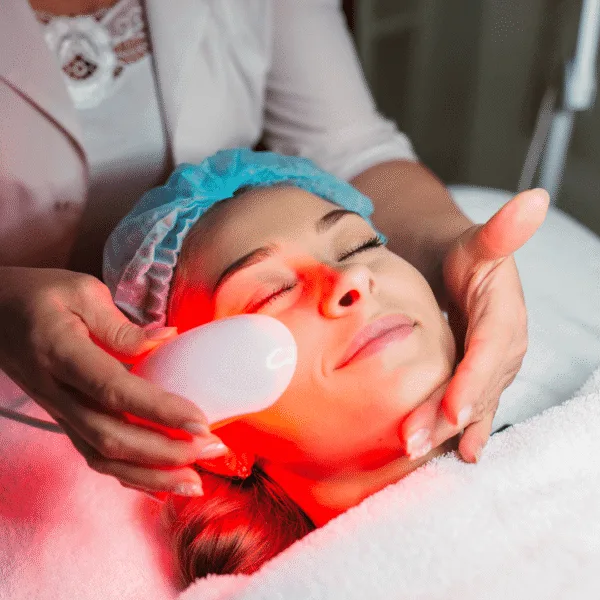
Red light therapy for skin works by delivering specific wavelengths of visible red light (630 to 700 nm) and near-infrared light (700 to 900 nm) into the dermal layer, where the photons stimulate mitochondria inside skin cells to produce more adenosine triphosphate (ATP). That increase in cellular energy activates fibroblasts, the cells responsible for producing collagen, elastin, and hyaluronic acid, which are the three structural proteins that give skin its firmness, elasticity, and hydration. A landmark 2014 randomized controlled trial published in Photomedicine and Laser Surgery found that subjects treated with combined 633 nm and 830 nm light experienced a mean 29% increase in collagen density, with 91% reporting improved skin complexion and 87% reporting improved skin tone after 30 sessions over 15 weeks. This article covers how red light therapy benefits your skin, which conditions respond best to treatment, what the clinical evidence actually shows, and how to get the most from each session.
How Does Red Light Therapy Improve Skin?
Red light therapy improves skin by stimulating the mitochondria inside skin cells to produce more ATP, which triggers a cascade of repair and regeneration processes at the cellular level. Mitochondria contain an enzyme called cytochrome c oxidase that absorbs red light photons at wavelengths between 630 and 700 nm. When cytochrome c oxidase absorbs those photons, it releases nitric oxide from the enzyme's binding site, which allows oxygen to bind more efficiently and increases ATP output. That boost in ATP provides skin cells with the energy they need to accelerate collagen synthesis, increase fibroblast proliferation, and reduce the inflammatory signaling molecules that contribute to redness, irritation, and premature aging.
The collagen synthesis pathway that red light activates operates through a specific chain of events. Fibroblasts in the dermis respond to increased ATP by upregulating procollagen type I and type III messenger RNA (mRNA) expression, which means they produce more of the precursor molecules that assemble into mature collagen fibers. Red light also reduces the activity of matrix metalloproteinases (MMPs), the enzymes responsible for breaking down existing collagen in aging skin. The combined effect of increased collagen production and decreased collagen breakdown produces a net gain in dermal collagen density that translates into firmer, smoother skin over time. Research published in the Journal of the American Academy of Dermatology confirmed that low-level red and infrared LED lights increase expression of collagen types Col1A1 and Col1A3, elastin (ELN), and hyaluronic acid synthase 2 (HAS2) within one week of treatment.
Is Red Light Therapy Actually Effective for Skin?
Yes, red light therapy is actually effective for skin, with multiple randomized controlled trials demonstrating measurable improvements in collagen density, wrinkle depth, skin elasticity, and overall complexion. The strongest evidence comes from the 2014 Wunsch and Matuschka trial, which enrolled 136 subjects and used a controlled, blinded design comparing red light treatment groups to a sham (placebo) group. The treatment groups showed significant improvements across every measured outcome, while the control group showed no change. A separate prospective RCT published in the Journal of Photochemistry and Photobiology treated 76 subjects with facial wrinkles and found wrinkle reductions of up to 36% and skin elasticity increases of up to 19% compared to baseline after just four weeks of twice-weekly LED treatment. Histological analysis confirmed increased collagen fibers, elastic fibers, and activated fibroblasts in the treated areas.
Dr. Rachel Reynolds, interim chair of the Department of Dermatology at Harvard-affiliated Beth Israel Deaconess Medical Center, acknowledged in a 2025 Harvard Health article that she was initially skeptical but found legitimate medical literature supporting red light therapy for skin conditions. Stanford Medicine dermatologists Dr. Zakia Rahman and Dr. Nour Kibbi similarly confirmed that hair regeneration and wrinkle reduction have strong clinical evidence, while other applications still need further study. The global red light therapy market was valued at $533.8 million in 2025, with cosmetic applications accounting for 59.5% of market share, according to Grand View Research. That growth reflects both expanding clinical evidence and increasing consumer confidence in photobiomodulation as a skin treatment.
What Skin Conditions Does Red Light Therapy Treat?
Red light therapy treats wrinkles and fine lines, acne, dark spots and hyperpigmentation, rosacea and facial redness, eczema, psoriasis, wounds, and scars. The American Academy of Dermatology (AAD) confirms that research supports red light therapy for reducing fine lines and wrinkles, lightening dark spots, smoothing skin texture, diminishing redness, accelerating wound healing, boosting hair regrowth, minimizing scars, and easing acne. Each condition responds to red light through a slightly different pathway, but all share the same foundational mechanism: increased cellular energy production that drives repair, reduces inflammation, and stimulates structural protein synthesis.
The breadth of skin conditions that respond to red light therapy reflects the fact that most skin problems involve some combination of inflammation, reduced cellular energy, and impaired collagen or elastin production. Red light addresses all three simultaneously. The WHO estimates that skin diseases affect approximately 900 million people globally, and photobiomodulation represents a growing non-pharmaceutical option for managing many of those conditions without the side effects associated with topical steroids, retinoids, or oral medications.
The skin conditions with the strongest clinical evidence for red light therapy include:
- Wrinkles and fine lines (collagen density increase of up to 29-31%, wrinkle reduction of up to 36%)
- Acne (45.3% reduction in inflammatory lesions with LED devices, per JAMA Dermatology meta-analysis)
- Hyperpigmentation and uneven skin tone (87% of subjects reported improved skin tone in the Wunsch trial)
- Rosacea and facial redness (anti-inflammatory cytokine modulation reduces vascular redness)
- Eczema and psoriasis (emerging evidence for reduced inflammation, itching, and plaque formation)
- Wound healing (increased fibroblast migration, collagen deposition, and neovascularization)
- Scars (collagen remodeling in scar tissue through sustained fibroblast activation)
- Sun-damaged skin (photoaging reversal through collagen and elastin restoration)
Does Red Light Therapy Help With Wrinkles?
Yes, red light therapy helps with wrinkles by increasing collagen density in the dermis and reducing the enzyme activity that breaks down existing collagen. The prospective RCT by Lee et al., published in the Journal of Photochemistry and Photobiology, found that LED phototherapy at 633 nm and 830 nm produced wrinkle reductions of up to 36% and skin elasticity increases of up to 19% after four weeks of twice-weekly treatment. Histological examination of skin specimens confirmed a marked increase in collagen and elastic fibers across all treatment groups. A separate study by Barolet et al. demonstrated that pulsed 660 nm LED treatment produced a 31% increase in type-1 procollagen production in tissue-engineered human skin models, and when applied to aged human subjects, over 90% showed measurable reduction in wrinkle depth after 12 treatments.
Wrinkle reduction from red light therapy occurs gradually because collagen remodeling is a slow biological process. New collagen fibers take weeks to mature and integrate into the existing dermal matrix. Most clinical studies measure wrinkle outcomes at the 8 to 12 week mark, which is the timeframe where cumulative collagen gains become visible to the eye and measurable by ultrasound. Consistency matters more than session length for wrinkle treatment. Short, regular sessions of 10 to 20 minutes, repeated 3 to 5 times per week, deliver better long-term results than occasional longer sessions.
Does Red Light Therapy Help Acne?
Yes, red light therapy helps acne by reducing the inflammation that drives breakouts and by supporting faster healing of active lesions. A 2025 meta-analysis published in JAMA Dermatology analyzed six randomized clinical trials encompassing 216 participants and found that at-home LED devices using red and blue light reduced inflammatory acne lesions by 45.3% and non-inflammatory lesions by 47.7% compared to control treatments. Dr. John Barbieri, assistant professor of dermatology at Harvard Medical School and director of the Advanced Acne Therapeutics Clinic at Brigham and Women's Hospital, confirmed that people using these devices had fewer breakouts and clearer skin after four to twelve weeks of regular use.
Red light targets acne through a different pathway than blue light. Blue light (415-420 nm) destroys Cutibacterium acnes bacteria by activating porphyrins inside the bacterial cells. Red light (630-660 nm) penetrates deeper into the dermis where inflammation occurs and calms the immune response that produces painful, swollen lesions. Combined blue and red light addresses both bacterial overgrowth and inflammation simultaneously. A randomized sham-controlled study found that combined 420 nm blue and 660 nm red light reduced inflammatory acne lesions by 77% and non-inflammatory lesions by 54% after four weeks of twice-daily treatment. The combination approach explains why many professional and at-home devices now include both wavelengths. Massage therapy sessions can complement acne treatment by improving lymphatic drainage and reducing stress-related cortisol that triggers breakouts.
Can Red Light Therapy Reduce Dark Spots?
Red light therapy can reduce dark spots by modulating melanocyte activity and improving overall skin tone through increased cellular turnover. In the 2014 Wunsch and Matuschka trial, 87% of subjects reported improved skin tone after 30 sessions, which included visible lightening of uneven pigmentation. Red light stimulates the natural exfoliation cycle by increasing keratinocyte proliferation, which gradually replaces hyperpigmented surface cells with new, evenly pigmented cells from the basal layer. The anti-inflammatory properties of red light also reduce post-inflammatory hyperpigmentation (PIH), the dark marks that linger after acne or skin injuries heal.
Can Red Light Therapy Help With Eczema or Psoriasis?
Red light therapy can help with eczema and psoriasis by reducing the inflammatory cytokines that drive both conditions. Research published in Lasers in Medical Science suggests that photobiomodulation at 660 nm (red) and 850 nm (near-infrared) can influence the production of pro-inflammatory cytokines including interleukin-17 (IL-17) and interleukin-23 (IL-23), which play central roles in psoriatic plaque formation and eczematous flares. Over 30 million Americans suffer from eczema and 8 million have some form of psoriasis, according to the National Eczema Association and the National Psoriasis Foundation. Red light therapy serves as a supportive tool alongside conventional dermatological care, not a replacement for prescribed treatments. Clients dealing with inflammatory pain and inflammation from chronic skin conditions often find that consistent red light sessions reduce flare intensity and shorten recovery time between episodes.
Does Red Light Therapy Help With Scars?
Red light therapy helps with scars by stimulating collagen remodeling in the scar tissue and increasing fibroblast activity that reorganizes disorganized collagen fibers. Scar tissue contains collagen arranged in parallel bundles rather than the basket-weave pattern found in healthy skin. Red light therapy promotes the gradual replacement of parallel scar collagen with more normal cross-linked collagen, which softens the scar's appearance and improves its texture. Stanford Medicine dermatologist Dr. Nour Kibbi referenced a study where red light-treated surgical scars healed in half the time compared to untreated scars in the same patient, though both sides had healed completely by six weeks. The evidence suggests that red light accelerates the early phases of wound healing and scar maturation.
Does Red Light Therapy Tighten Skin?
Red light therapy tightens skin by increasing both collagen and elastin production in the dermal layer. Elastin is the protein that gives skin its ability to stretch and snap back, and its decline is a primary driver of sagging skin as we age. Research published in the Journal of the American Academy of Dermatology confirmed that low-level red and infrared LED light increases expression of elastin (ELN) gene alongside collagen genes within one week of treatment. The 2014 clinical trial found skin elasticity increases of up to 19% compared to baseline after four weeks of LED treatment. Skin tightening from red light therapy is gradual and cumulative, with most clients noticing firmer skin texture between weeks 8 and 12 of consistent treatment. Our infrared sauna sessions combined with red light amplify the tightening effect by improving circulation and delivering deeper tissue warmth that supports collagen fiber cross-linking.
What Is the Best Wavelength for Skin Rejuvenation?
The best wavelength for skin rejuvenation depends on the target depth and condition, but 660 nm is the most extensively studied wavelength for collagen production and overall skin improvement. Different wavelengths of red and near-infrared light penetrate to different depths and activate different cellular processes. A 2017 study published in Photochemistry and Photobiology found that visible red wavelengths (610-670 nm) penetrate the skin to a maximum depth of 4 to 5 mm, which reaches the full thickness of the dermis where collagen-producing fibroblasts reside. Near-infrared wavelengths (810-850 nm) penetrate deeper, reaching subcutaneous tissue, muscle, and joint structures below the skin surface.
WavelengthPenetration DepthPrimary Skin ApplicationBest For630 nm (red)1.5 to 3 mm (upper dermis)Surface collagen stimulationFine lines, skin tone, complexion660 nm (deep red)3 to 5 mm (full dermis)Deep collagen and elastin productionWrinkles, elasticity, scar remodeling810-830 nm (near-infrared)5 to 10 mm (subcutaneous)Deep tissue inflammation reductionPsoriasis, eczema, joint pain, muscle recovery850 nm (near-infrared)Up to 10+ mmSystemic anti-inflammatory effectChronic inflammation, wound healing, deep scars
Sources: Photochemistry and Photobiology (2017 UK wavelength study); Journal of Biophotonics (STARS trials); Journal of the American Academy of Dermatology (PBM clinical applications review, 2024); Mito Red Light wavelength research compilation
Many professional and at-home devices combine multiple wavelengths to target several tissue depths simultaneously. The 2014 Wunsch trial used combined 633 nm and 830 nm light, and the Lee et al. study used both 633 nm and 830 nm as well. Combined wavelength devices address surface-level skin concerns and deeper structural repair in a single session, which is why multi-wavelength panels and masks tend to produce broader results than single-wavelength devices.
What Does Red Light Therapy Do for Your Face?
Red light therapy reduces fine lines on the face, improves skin tone and complexion, softens the appearance of pores, decreases redness, and promotes a firmer overall facial contour through sustained collagen and elastin production. The face responds particularly well to red light therapy because facial skin is thinner than skin on the body, allowing light photons to penetrate more efficiently to the dermal layer where fibroblasts reside. An LED study using the Omnilux system found that 74% of participants (n=22) reported reduced signs of photoaging and improved skin tone, smoothness, and clarity eight weeks after completing their treatment sessions. Another study using a 630 nm LED mask found decreased lateral wrinkles (crow's feet), reduced skin sagging, decreased skin roughness, and increased facial skin firmness, density, and elasticity after just 28 days of twice-weekly treatment.
Facial red light therapy works best on clean, bare skin. Makeup, sunscreen, and thick moisturizers absorb and scatter light photons before they reach the dermal layer. Remove all products from the face before each session and apply skincare products after the treatment is complete. We see this principle in action here at our Bedford Hills wellness center, where members consistently report the best facial results when they start each session with freshly cleansed skin and follow the recommended session parameters.
How Long to Use Red Light Therapy on Face?
Use red light therapy on your face for 10 to 20 minutes per session, depending on the power output of your specific device. Clinical studies that produced significant skin improvements used session lengths within this range at power densities of 20 to 50 milliwatts per square centimeter (mW/cm²). The total energy delivered to the skin (measured in joules per square centimeter, J/cm²) depends on both the duration and the power output. Most clinical protocols target a dose of 4 to 12 J/cm² per session for facial skin rejuvenation. A device delivering 30 mW/cm² reaches 12 J/cm² in approximately 6.5 minutes, while a weaker device delivering 15 mW/cm² needs about 13 minutes to deliver the same dose.
Red light therapy follows a biphasic dose response, which means there is an optimal dose window where benefits peak. Below that window, the cells do not receive enough energy to trigger a meaningful repair response. Above it, the mitochondrial enzyme cytochrome c oxidase reaches saturation, and additional light energy converts to heat rather than cellular energy, which can actually reduce the therapeutic benefit and cause mild irritation. This is why longer sessions do not produce faster results. PEMF therapy follows a similar dose-response principle, where consistent moderate sessions outperform aggressive single exposures.
How Often Should You Use Red Light Therapy for Skin?
You should use red light therapy for skin 3 to 5 times per week for the first 8 to 12 weeks, then taper to 2 to 3 maintenance sessions per week. The initial treatment phase requires consistent exposure to build cumulative collagen density and establish the cellular repair patterns that produce visible improvement. The 2014 Wunsch trial used approximately two sessions per week for 15 weeks (30 total sessions) to achieve its landmark 29% collagen density increase. Harvard Health's Dr. Reynolds noted that devices must be used multiple times a week for four to six months to achieve meaningful results, emphasizing that red light therapy is a gradual process rather than a quick fix.
Rest days between sessions matter because cells need time to complete the ATP-driven repair cycle that red light initiates. Collagen synthesis requires approximately 24 to 48 hours after fibroblast stimulation to produce and deposit new procollagen molecules. Treating the same area again before that cycle finishes can interrupt the process. Consistency over weeks and months delivers better outcomes than daily marathon sessions. Salt room therapy sessions between red light treatments can enhance relaxation and respiratory health without interfering with the skin repair cycle.
When Will I See Results From Red Light Therapy on Skin?
You will see initial results from red light therapy on skin within 1 to 3 weeks for redness and complexion, 4 to 8 weeks for acne, and 8 to 12 weeks for wrinkles and collagen density improvements. The timeline varies by condition because each skin concern involves different biological processes that operate at different speeds. Reduced redness and improved complexion appear first because vasodilation and anti-inflammatory effects begin during the first few sessions. Acne improvement takes longer because the inflammatory cascade that drives breakouts requires sustained modulation over multiple weeks. Wrinkle reduction and skin tightening take the longest because collagen remodeling is the slowest biological process in the chain.
Here is a condition-specific results timeline based on clinical trial data:
- Skin tone and complexion improvement: 1 to 3 weeks of consistent sessions (vasodilation and anti-inflammatory effects)
- Acne lesion reduction: 4 to 8 weeks (inflammatory modulation plus accelerated healing of active lesions)
- Fine line softening: 6 to 10 weeks (early collagen deposition begins filling shallow lines)
- Measurable wrinkle reduction and collagen density increase: 8 to 12 weeks (mature collagen fiber integration into dermal matrix)
- Scar texture improvement: 12 to 24 weeks (gradual collagen remodeling and reorganization of scar tissue)
- Maximum skin tightening and elasticity gains: 12 to 16 weeks (cumulative elastin and collagen cross-linking)
Is At-Home Red Light Therapy as Effective as Professional?
At-home red light therapy is effective for skin, but professional treatments deliver higher power density, more precise dose control, and faster results. Stanford Medicine dermatologist Dr. Zakia Rahman confirmed that red light therapy delivered in a clinic will almost always be more powerful than any at-home device. Professional panels and beds typically deliver 50 to 100+ mW/cm² at treatment distance, while at-home LED masks and wands commonly deliver 10 to 30 mW/cm². The difference in power output means that a professional session delivers the same total dose in less time, with more uniform coverage across the treatment area.
Harvard Health's Dr. Reynolds noted that over-the-counter products may be weaker and that it is hard to know which device would produce optimal results at home. Professional versions provide the ability to better control the dose and offer a greater range of calibrated settings. That said, the JAMA Dermatology meta-analysis demonstrated that at-home LED devices do produce statistically significant improvements in acne lesions, confirming that consumer devices work when used consistently and according to manufacturer guidelines. The FDA has cleared several at-home red light devices for treating aging skin and hair regrowth through the 510(k) pathway. We use professional-grade light therapy treatments with calibrated output in our Westchester County center to provide the precision and dosing control that at-home devices cannot match.
Is Red Light Therapy Better Than Retinol for Skin?
Red light therapy and retinol improve skin through different mechanisms, and they work well together rather than as replacements for each other. Retinol (vitamin A) stimulates collagen production by binding to retinoid receptors on fibroblasts and increasing cell turnover rate in the epidermis. Red light therapy stimulates collagen production by increasing ATP in the mitochondria, which energizes fibroblasts to produce more collagen without chemical receptor binding. The two approaches target the same outcome, firmer and smoother skin, through entirely different cellular pathways. Using both creates a complementary effect where retinol addresses surface cell turnover while red light addresses deep dermal collagen synthesis and inflammation.
One practical advantage of red light therapy is that it carries no risk of the irritation, dryness, peeling, or sun sensitivity that retinol commonly causes. People with sensitive skin, rosacea, or eczema who cannot tolerate retinol often find red light therapy to be a well-tolerated alternative that still delivers measurable collagen benefits. Nutritional counseling can further support skin health by addressing dietary factors that influence collagen production, including vitamin C intake, protein consumption, and antioxidant balance.
Can Red Light Therapy Cause Skin Damage?
No, red light therapy does not cause skin damage when used within standard therapeutic parameters. Red light operates at 630 to 700 nm wavelengths in the non-ionizing portion of the electromagnetic spectrum, which means it does not carry enough energy to break molecular bonds or damage cellular DNA. The American Academy of Dermatology confirms that red light therapy does not use ultraviolet (UV) light and does not increase the risk of skin cancer. Side effects are limited to mild temporary redness and warmth at the treatment site. A pair of randomized controlled trials published in the Journal of Biophotonics (the STARS 1 and STARS 2 studies, n=115 subjects) confirmed that LED red light produced no serious adverse events at standard therapeutic doses. Dermatologic surgeons performed over 3.2 million procedures using lasers, lights, and energy-based devices in 2017, according to the American Society for Dermatologic Surgery, reflecting the established safety record of light-based skin treatments.
One consideration for individuals with darker skin tones: the STARS trials found that skin of color has a lower maximum tolerated dose for red light (320 J/cm²) compared to lighter skin (480 J/cm²), because higher melanin content absorbs more light energy. Harvard's Dr. Reynolds also recommended that people with darker skin start with lower doses. Starting with shorter sessions, lower intensity settings, and gradually increasing exposure allows the skin to adapt safely. Our previous blog on side effects covers this topic in full detail.
Why Don't Doctors Recommend Red Light Therapy?
Some doctors do not recommend red light therapy because the optimal dosing protocols for many skin conditions have not yet been established through large-scale clinical trials. The Cleveland Clinic notes that while published studies show promise, the full effectiveness of red light therapy has yet to be determined, and many studies include small sample sizes or lack placebo controls. Stanford Medicine dermatologist Dr. Nour Kibbi described the wound healing data as "somewhat conflicting" and emphasized the need for further study. The gap between promising small trials and large-scale definitive evidence is what keeps some physicians cautious about formal recommendations.
That caution does not mean red light therapy is unsafe or ineffective. It means the evidence is still catching up to the consumer demand. The Journal of the American Academy of Dermatology published a 2024 continuing medical education review acknowledging that photobiomodulation offers a noninvasive, cost-effective treatment with a favorable safety profile, and can serve as an alternative or adjunct to pharmacotherapy for acne, alopecia, wounds, scars, and skin rejuvenation. Harvard's Dr. Reynolds was initially skeptical but changed her position after reviewing the medical literature. Stanford's Dr. Rahman stated plainly that red light can change biology, even if it is not a panacea. Medical acceptance is growing steadily, and as dosing protocols become standardized, more physicians are expected to integrate photobiomodulation into their clinical recommendations. Detox support and other holistic approaches at our center follow a similar evidence-informed philosophy, offering well-studied therapies alongside conventional medical care.
Frequently Asked Questions
Does Red Light Therapy Work Through Makeup or Sunscreen?
No, red light therapy does not work effectively through makeup or sunscreen. Cosmetic products, sunscreen, and thick moisturizers absorb and scatter light photons before they reach the dermal layer where collagen-producing fibroblasts reside. Always start each session with clean, dry, bare skin. Apply your skincare products after the treatment session is complete for maximum light absorption and therapeutic benefit.
Can You Use Red Light Therapy With Other Skincare Treatments?
Yes, red light therapy pairs well with many other skincare treatments. It is commonly used after microneedling, chemical peels, and laser treatments to reduce post-procedure inflammation, accelerate healing, and enhance collagen production. Wait 24 to 48 hours after aggressive exfoliation treatments before applying red light to give the skin barrier time to stabilize. Red light therapy can also be used alongside topical retinol, vitamin C serums, and hyaluronic acid products, which are applied after the light session.
Is Red Light Therapy Safe for Sensitive Skin?
Red light therapy is safe for sensitive skin and is often better tolerated than chemical treatments like retinol or glycolic acid. People with rosacea, eczema, or reactive skin frequently benefit from the anti-inflammatory properties of red light, which calm irritation rather than provoking it. Start with shorter sessions of 5 to 10 minutes and increase gradually. According to the American Academy of Dermatology, side effects are minimal and may include only temporary mild redness.
Does Red Light Therapy Help With Sun Damage?
Red light therapy helps with sun damage by stimulating the collagen and elastin repair processes that reverse the visible effects of photoaging. The Cleveland Clinic lists improvement of sun-damaged skin among the conditions red light therapy is being used to treat. Clinical trials have demonstrated that red light reduces fine lines, age spots, and skin roughness caused by UV exposure over time. Red light therapy does not replace sun protection; it complements it by repairing some of the cumulative damage that sunscreen alone cannot reverse.
Does Red Light Therapy Improve Skin Texture?
Yes, red light therapy improves skin texture by increasing collagen density, stimulating keratinocyte turnover, and reducing micro-inflammation that contributes to rough or uneven skin surface. The 2014 Wunsch trial reported significant improvements in skin roughness measurements alongside the collagen and wrinkle outcomes. Most users notice smoother, more refined skin texture within 4 to 8 weeks of consistent treatment, with continued improvement through week 12 and beyond.
Putting It All Together
Red light therapy for skin is backed by a growing body of clinical evidence that demonstrates real, measurable improvements in collagen density, wrinkle depth, skin elasticity, acne severity, and overall complexion. The mechanism is well understood at the cellular level: red light photons stimulate mitochondria in skin cells, increase ATP production, activate fibroblasts, and reduce the inflammatory signals that accelerate aging and drive skin disease. Controlled clinical trials have confirmed collagen density increases of 29% to 31%, wrinkle reductions of up to 36%, and skin elasticity gains of up to 19%. The results are gradual and cumulative, requiring consistent treatment over weeks to months, but the safety profile is excellent and the biological effects are real.
The most important factor for success is consistency. Short, regular sessions at the right wavelength and dose deliver better outcomes than sporadic or prolonged exposure. Whether you choose professional-grade sessions or at-home devices, the evidence supports red light therapy as a safe, effective, and non-invasive tool for improving skin health at nearly every level. If you want guidance on the right session parameters for your skin type and goals, Quantum Healing & Wellness offers professional infrared sauna and red light therapy sessions in a private, supportive environment. Reach us through our contact page or call (914) 218-3428 to schedule a free consultation with Dr. Adams.
Read our recent Blogs
Quantum Healing and Wellness PMA in Westchester NY is commited to wellness conent for you









.avif)
.png)

.png)